




As smog season descends, the urge to create a green sanctuary indoors is strong. But can a few houseplants truly defend your lungs against dangerous air pollution? It’s time to separate the comforting myth from the scientific reality.
The Green Myth We All Love
The belief that houseplants
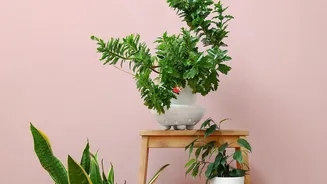
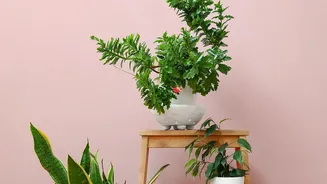
are powerful natural air purifiers is widespread and appealing. Much of this idea traces back to a 1989 NASA study which found that certain common plants could remove volatile organic compounds (VOCs) like benzene and formaldehyde from the air. The study showed that in a sealed, controlled environment, plants did indeed 'clean' the air. This finding blossomed in popular culture, leading many to believe that filling a home with snake plants, peace lilies, and spider plants was a frontline defence against all kinds of air pollution, including the smog that blankets our cities.
Reality Check: Your Home Isn't a Space Station
The problem is that the conditions in the NASA study have very little in common with a real home. The experiments were done in small, sealed chambers where a single dose of pollutants was introduced and measured over time. Your home, by contrast, has constant air exchange with the outdoors through drafts, windows, and doors. This ventilation already dilutes pollutants far more effectively than a few plants can. Furthermore, the NASA study focused on gaseous VOCs, not the fine particulate matter (PM2.5) that is the primary health threat in smog. Research has shown that plants have a negligible effect on PM2.5. To match the air-cleaning power of a typical building's ventilation system, you would need an impractical number of plants—somewhere between 10 and 1,000 per square meter.
What Plants Can Actually Do For You
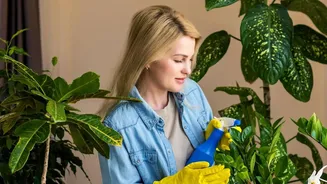
This doesn't mean your houseplants are useless—far from it. Their benefits are simply more psychological than physiological when it comes to air quality. Numerous studies have shown that the presence of indoor plants can reduce stress, improve mood, and increase feelings of happiness and well-being. The act of caring for a living thing provides a sense of purpose and routine, which is beneficial for mental health. Simply being around greenery connects us to nature, which can lower anxiety and improve focus. So, while your plants aren't scrubbing smog particles from the air, they are making your indoor environment a more pleasant and calming place to be.
The Real Heavy Lifter: HEPA Purifiers
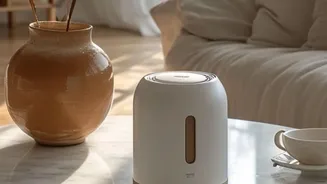
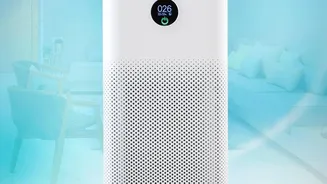
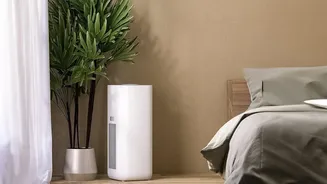
When it comes to removing the dangerous PM2.5 particles found in smog, the gold standard is a mechanical air purifier with a High-Efficiency Particulate Air (HEPA) filter. A true HEPA filter is certified to capture at least 99.97% of airborne particles at 0.3 microns—the size that is most difficult to trap. This makes them extremely effective at removing dust, pollen, and the fine particulate matter from smoke and pollution that can penetrate deep into your lungs and enter your bloodstream. Unlike plants, a properly-sized HEPA purifier can significantly reduce the concentration of harmful particles in a room, offering a measurable layer of protection for your respiratory health.
Your Smart Smog Strategy
The most effective approach to clean indoor air during smog events is a layered one that leverages the right tools for the right job. First, reduce the amount of pollution entering your home by closing windows and doors and sealing any obvious gaps. Second, run a HEPA air purifier continuously in the rooms where you spend the most time, like the bedroom and living room. Make sure its Clean Air Delivery Rate (CADR) is appropriate for the room size. Finally, embrace your houseplants for what they are: beautiful, mood-boosting companions that make your space feel alive. Let the purifiers handle the heavy lifting of particle removal, and let your plants provide the calm and connection to nature that is also essential for your well being.