


The Foundation: Bodyweight Squats
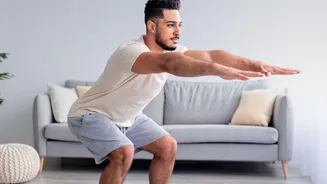
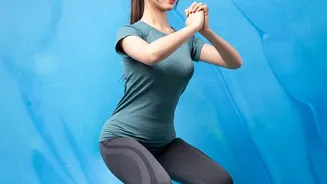
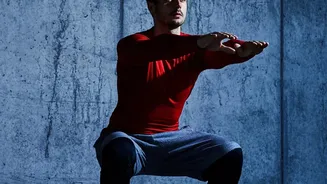
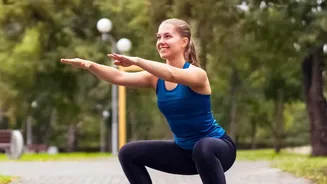
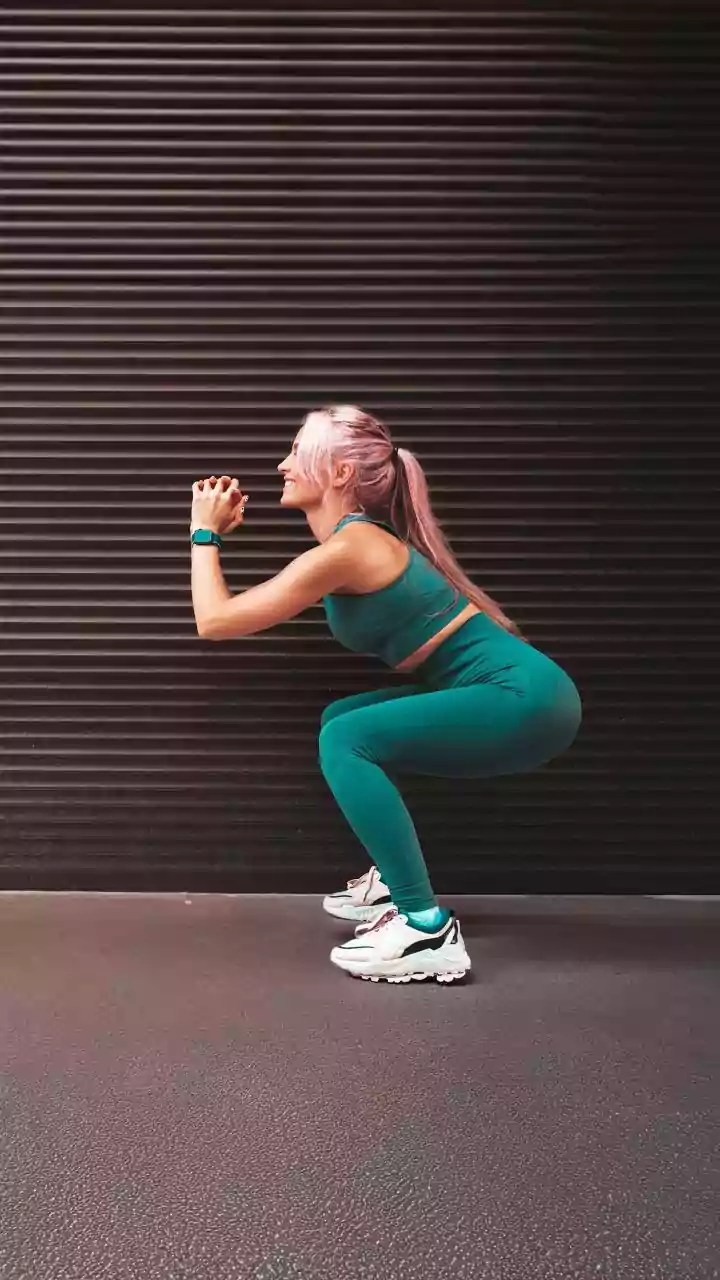
The squat is a fundamental movement that strengthens your entire lower body—including your quadriceps, hamstrings, and glutes—as well as your core. Mastering this exercise builds a strong foundation for both fitness and everyday activities. To perform
a squat, stand with your feet shoulder-width apart and your chest up. Lower your hips back and down as if you're sitting in a chair, keeping your back straight. Aim to get your thighs parallel to the floor, or as low as is comfortable, before pushing through your heels to return to the starting position. For beginners, a great way to learn the form is by squatting down to an actual chair and lightly tapping it before standing back up.
Upper Body Starter: Modified Push-ups
Push-ups are one of the most effective exercises for your chest, shoulders, and triceps. Full push-ups can be challenging, so beginners can start with a modified version to build strength progressively. The easiest variation is the wall push-up: stand facing a wall, place your hands on it, and perform the push-up motion. For a greater challenge, move to incline push-ups by placing your hands on a sturdy table or chair. The next step is a knee push-up, where you perform the exercise on the floor with your knees down. These modifications allow you to focus on form while engaging the same key muscles.
Core Stability Champion: The Plank
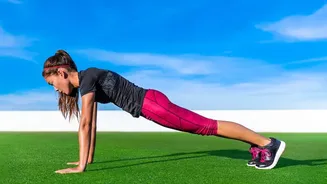
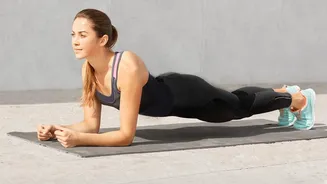
The plank is an isometric exercise, meaning you hold a single position. It's incredibly effective for building core strength, which is vital for good posture and preventing back strain. To perform a plank, lie on your stomach and then lift your body, supporting your weight on your forearms and toes. Your body should form a straight line from your head to your heels. Avoid letting your hips sag or rise too high. Engage your core by imagining you are bracing for a punch to the stomach. Start by holding the position for 15 to 30 seconds and gradually increase the time as you get stronger.
Posterior Power: Glute Bridges
Many of us spend a lot of time sitting, which can lead to weak glute muscles. The glute bridge targets your glutes and hamstrings, helping to improve posture and lower body strength. Lie on your back with your knees bent and feet flat on the floor, hip-width apart. Rest your arms by your sides. Squeeze your glutes and lift your hips off the floor until your body forms a straight line from your shoulders to your knees. Hold for a moment at the top before slowly lowering back down. This movement activates the backside of your body, creating better muscle balance.
Functional Fitness: Lunges
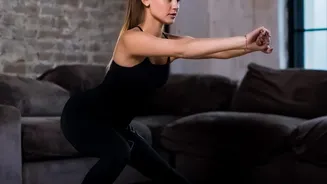
Lunges are excellent for building strength and stability in your legs and glutes independently. They also challenge your balance. To perform a basic lunge, stand tall and step forward with one leg. Lower your hips until both knees are bent at approximately a 90-degree angle, ensuring your front knee stays aligned over your ankle. Push off your front foot to return to the starting position, then repeat with the other leg. Reverse lunges, where you step backward instead of forward, can often be easier on the knees for beginners.
Putting It All Together: Your First Workout
Consistency is more important than intensity when you're just starting out. A great way to begin is by creating a simple circuit. Perform each of the exercises above for 10-12 repetitions (or hold the plank for 30 seconds). After completing one set of each exercise, rest for 60-90 seconds, then repeat the entire circuit 2-3 times. Aim to do this workout 2-3 times per week, with at least one day of rest in between to allow your muscles to recover and grow. Remember to warm up before each session with a few minutes of light cardio, like marching in place or jumping jacks.