



More Than Just a Pretty Garnish
For decades, parsley—especially the curly variety—was relegated to the role of a purely decorative item on restaurant plates. But to see it as mere decoration is to miss its greatest strength. Parsley has a clean, grassy, and slightly peppery flavour
that can cut through richness, brighten earthy tones, and make a store-bought soup taste homemade. When used correctly, it’s not just adding colour; it's adding a layer of fresh, herbaceous complexity that elevates the entire dish. The key is to move it from an afterthought to an intentional ingredient, added at the right time and in the right form to maximize its impact.
Choosing Your Parsley: Flat-Leaf vs. Curly
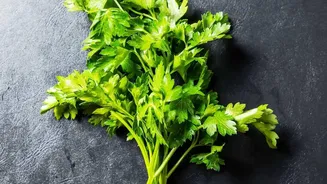
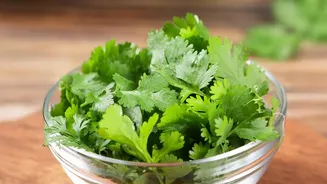
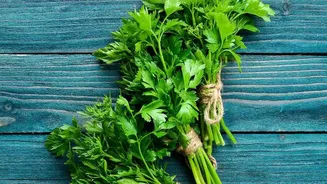
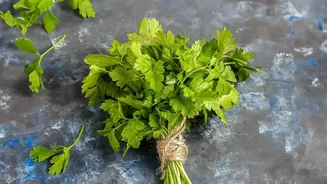
The two most common types of parsley are flat-leaf (Italian) and curly parsley, and they are not interchangeable. Flat-leaf parsley has a more robust, assertive flavour and a smoother texture, making it the preferred choice for cooking and for when you want a pronounced herbal taste. Its strong, peppery notes hold up well in hot dishes like stews and sauces. Curly parsley, on the other hand, is much milder in flavour. While it fell out of fashion due to its history as a simple garnish, its crisp, ruffled texture can add a pleasant crunch. For garnishing soups, flat-leaf is generally best for a burst of flavour, while curly can be used for a more subtle freshness and visual appeal.
The Art of Preparation
How you prepare parsley dramatically affects its contribution to a soup. For the best result, always wash and thoroughly dry the leaves first. A fine mince, achieved by gathering the leaves into a tight ball and rocking a sharp knife through them, releases the most flavour and is perfect for stirring into a soup just before serving. A rougher chop provides a bolder, more rustic texture and flavour in every spoonful. You can even use whole leaves, which deliver a fresh burst of vegetal flavour when you bite into them. And don't discard the stems! Parsley stems are packed with even more flavour than the leaves and can be tossed into the pot at the beginning of the cooking process to infuse the broth, then removed before serving.
Perfect Soup and Parsley Pairings
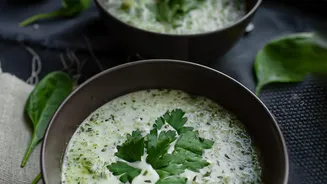
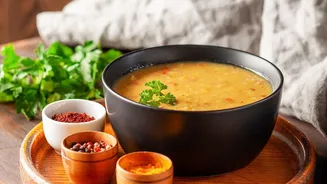
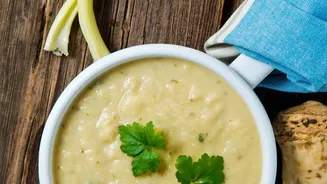
Parsley is incredibly versatile, but it shines brightest when paired thoughtfully. Its ability to complement other flavours makes it a kitchen staple. For rich, creamy soups like potato and leek or a New England clam chowder, a generous sprinkle of finely chopped flat-leaf parsley at the end can cut through the richness with its bitter notes. Earthy lentil, bean, or mushroom soups benefit from parsley's fresh, green taste, which brightens the entire bowl. In a classic chicken noodle soup, it adds a touch of freshness that feels both comforting and restorative. For tomato-based soups, parsley provides a savoury counterpoint to the acidity.
Beyond the Sprinkle: Creative Finishes
Think beyond simply scattering chopped parsley on top. For a truly professional touch, create a simple gremolata—a zesty Italian condiment made from finely chopped parsley, lemon zest, and garlic. A spoonful on top of a hearty beef or vegetable soup adds a powerful burst of freshness and complexity. Another option is to create a vibrant parsley oil. Briefly blanch the parsley to lock in its green colour, then blend it with good-quality olive oil and a pinch of salt. This beautiful, flavour-infused oil can be drizzled over any puréed vegetable soup, adding visual appeal and a concentrated herb flavour that takes your simple soup to a whole new level.