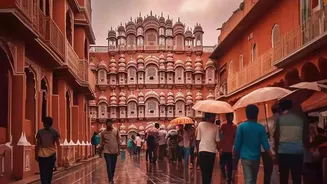

When winter arrives, Jaipur sheds its summer intensity for crisp mornings and pleasant, sunny days, making it the perfect time to explore. The Pink City's grandeur feels even more accessible when you can wander through its forts without the scorching
sun.
Amer Fort
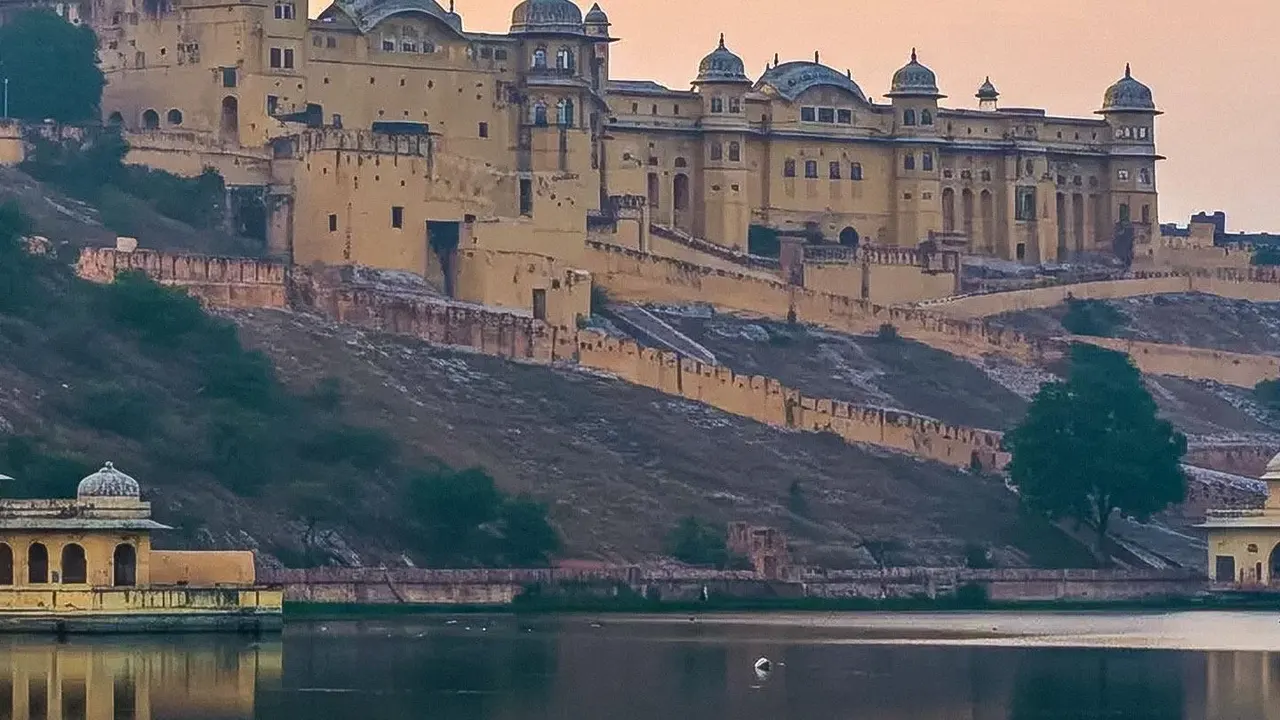
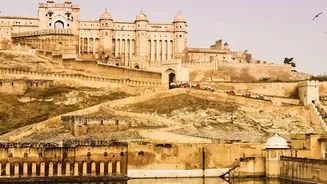
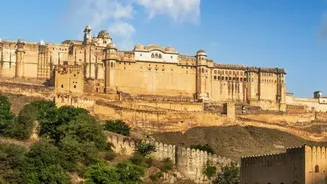
No trip to Jaipur is complete without visiting the magnificent Amer Fort. In winter, the comfortable temperatures make exploring its sprawling courtyards, intricate palaces like the Sheesh Mahal (Mirror Palace), and winding passages a true pleasure. The morning light is particularly beautiful, casting a golden glow on the red sandstone and marble structure. Arriving early, around 8:00 AM, helps you avoid the biggest crowds and enjoy a tranquil walk up the ramparts. The pleasant weather is ideal for spending a few hours discovering the history of the Kachwaha rulers.
Hawa Mahal
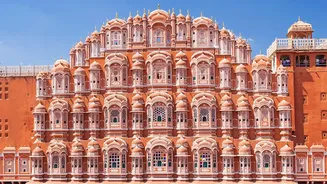
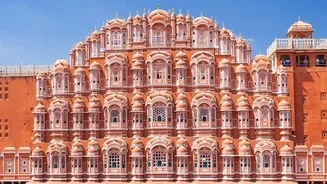
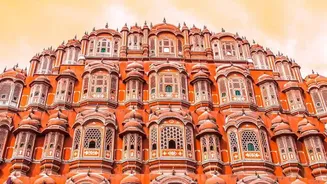
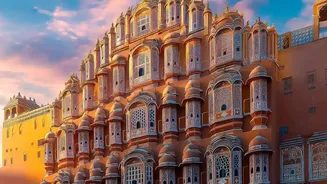
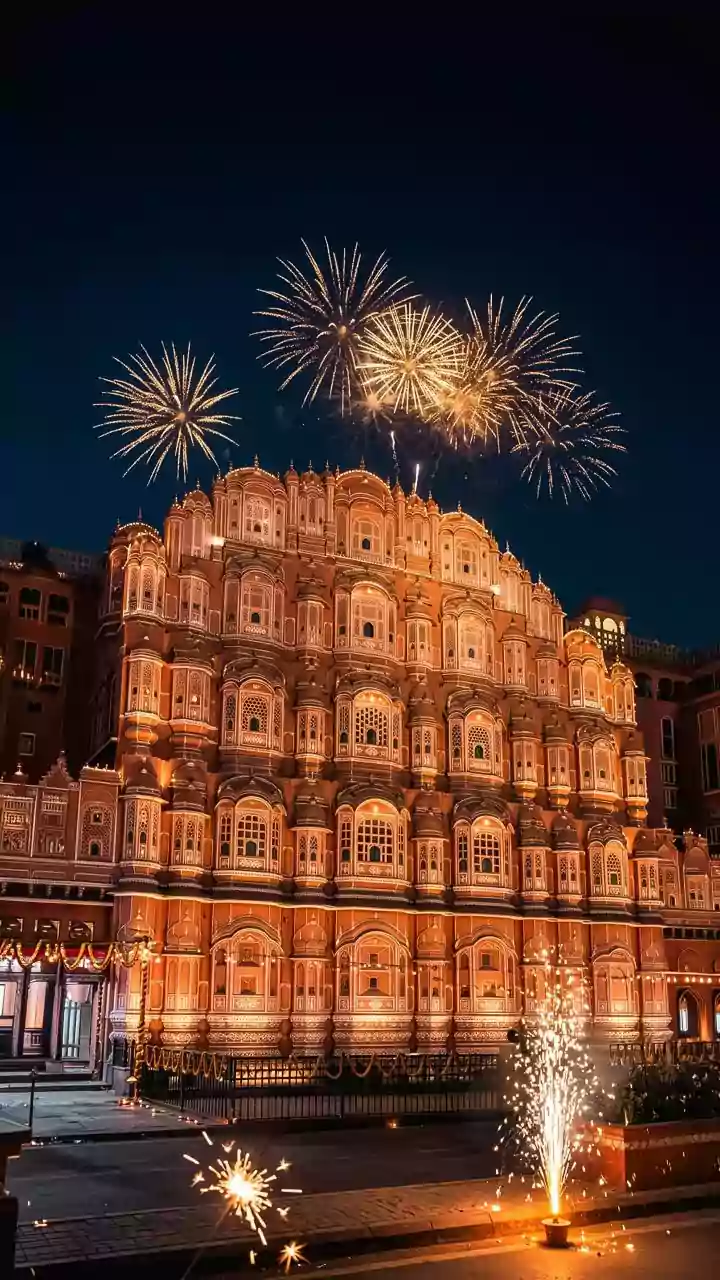
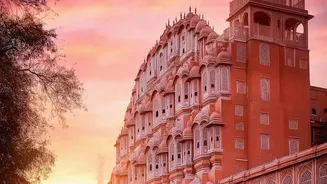
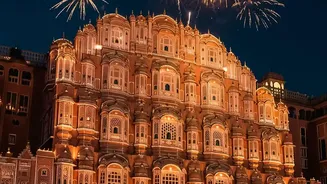
Jaipur's iconic 'Palace of Winds' is a must-see, and winter offers the clearest views from its 953 latticed windows, or 'jharokhas'. This five-storey facade was designed in 1799 to allow royal women to observe street festivities unseen. The cooler air flowing through the windows lives up to its name, making it a comfortable visit. The best time for photography is early in the morning when the sun illuminates its pink sandstone exterior. It’s not just a facade; you can go inside and climb the ramps to the top for a unique perspective of the city.
City Palace
Located in the heart of the old city, the City Palace is a sprawling complex of courtyards, gardens, and buildings that blend Rajput and Mughal architecture. A portion of it is still the residence of Jaipur's royal family. Winter is the ideal season to walk through its grounds, exploring the Mubarak Mahal, now a textile museum, and the Diwan-I-Khas with its famous giant silver urns. The pleasant daytime weather allows for a relaxed, unhurried exploration of its many gates and galleries. It’s conveniently located near Hawa Mahal and Jantar Mantar, making it easy to visit them together.
Nahargarh Fort
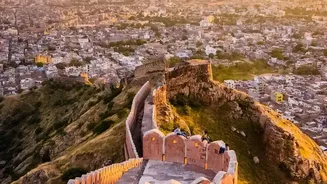
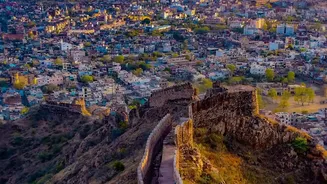
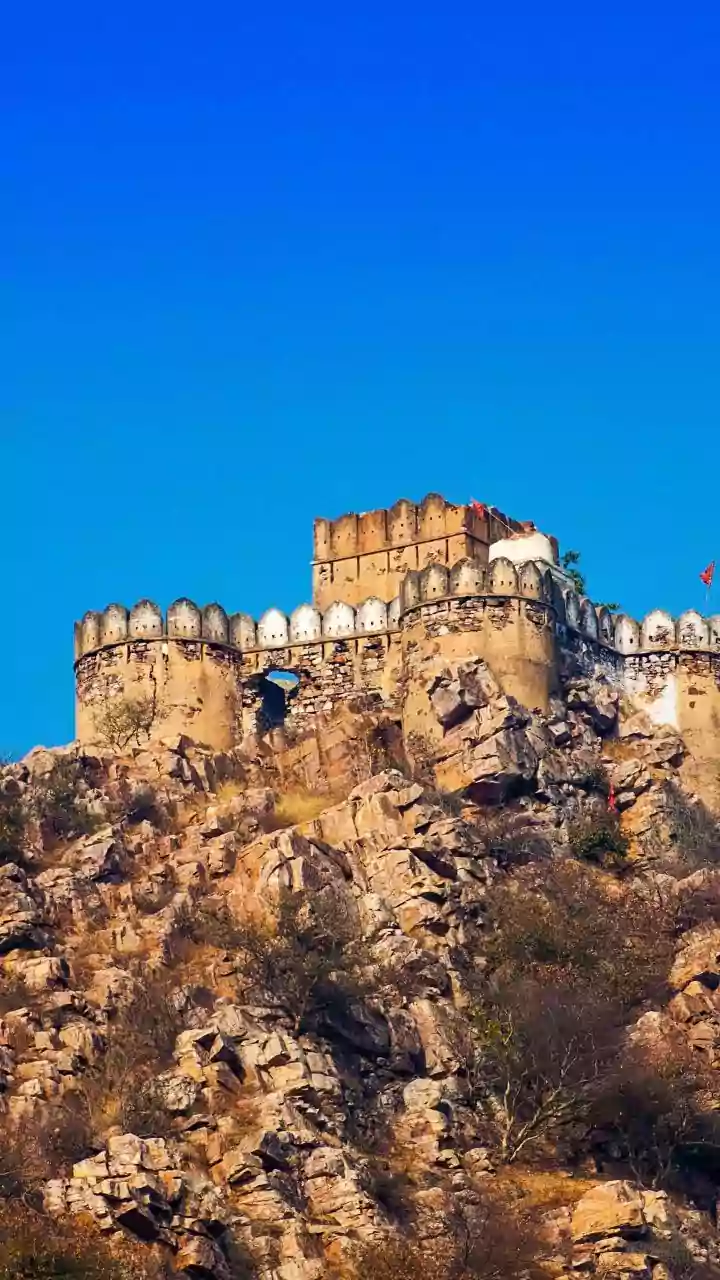
For the most breathtaking panoramic view of Jaipur, head to Nahargarh Fort for sunset. Perched on the Aravalli hills, the fort offers a stunning vantage point as the city below begins to light up. The crisp winter air makes the experience even more magical. Arrive about an hour before sunset to explore the Madhavendra Bhawan, a series of interconnected suites built for the queens, before finding your spot on the ramparts. While the main fort has closing times, viewpoints often remain accessible, making it Jaipur's most popular sunset spot.
Jantar Mantar
This UNESCO World Heritage site is a fascinating collection of nineteen architectural astronomical instruments built by Maharaja Sawai Jai Singh II in the 18th century. It's not just a historical relic; it's a testament to ancient scientific prowess. The clear, sunny skies of winter are perfect for understanding how these massive instruments use the principles of sun and shadow to tell time, track stars, and predict eclipses with remarkable accuracy. A guided tour is highly recommended to truly appreciate the genius behind this open-air observatory.
Albert Hall Museum
Set within the Ram Niwas Garden, the Albert Hall Museum is Rajasthan's oldest museum and a stunning example of Indo-Saracenic architecture. The building itself is as much an attraction as the treasures inside. Its collection is vast, featuring everything from miniature paintings and royal costumes to an intriguing Egyptian mummy. A winter afternoon is a wonderful time to wander through its sixteen galleries, escaping the slight midday chill while immersing yourself in centuries of art and history. The building is beautifully illuminated at night, offering a different but equally captivating view.
Jal Mahal
The 'Water Palace' appears to float ethereally in the middle of Man Sagar Lake, creating a picturesque scene that is especially serene on a calm winter morning. While you cannot go inside the palace, the view from the promenade is a classic Jaipur photo opportunity. Four of its five stories are submerged when the lake is full. The pleasant weather allows you to comfortably take a stroll along the lake's edge, enjoying the view and the migratory birds that often visit during this season.
The Bazaars of the Old City
A winter trip to Jaipur is incomplete without diving into the vibrant markets of the Old City. Johari Bazaar is famous for its jewellery, especially Kundan and Meenakari work, while Bapu Bazaar is a treasure trove for textiles, leather goods, and mojari footwear. The cool evenings are perfect for wandering through these bustling lanes, shopping for souvenirs, and soaking in the lively atmosphere. It's also a great opportunity to sample local winter street food delicacies from the many vendors.
Chokhi Dhani
For an immersive cultural evening, head to Chokhi Dhani, a mock Rajasthani village resort on the outskirts of Jaipur. Winter evenings are ideal for this experience. Your entry ticket typically includes access to a variety of attractions like folk dances, puppet shows, camel rides, and culminates in a traditional Rajasthani thali dinner. Arrive around 5 PM to enjoy all the performances before settling down for a hearty meal. It’s a fun, family-friendly way to experience the state's culture in one place.
Galtaji Temple (Monkey Temple)
Nestled in a crevice of the Aravalli hills, Galtaji is an ancient Hindu pilgrimage site built around a natural spring. The complex consists of several temples and sacred 'kunds' (water tanks) where pilgrims come to bathe. It is famously known as the Monkey Temple due to the large tribe of rhesus macaques that live here. The walk to the temple is more pleasant in the cool winter weather, offering a different, more spiritual side of Jaipur away from the main city's hustle.