




1. Know Exactly When to Look
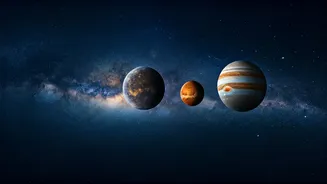
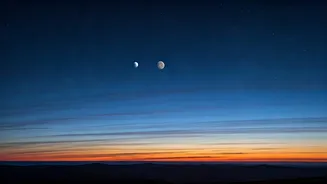
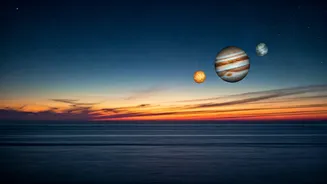
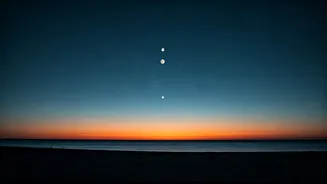
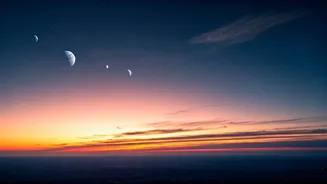
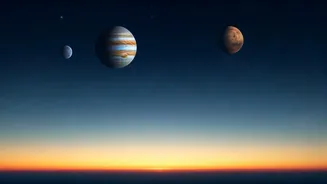
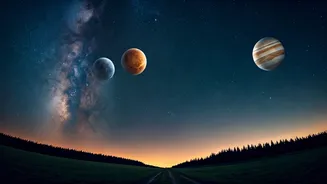
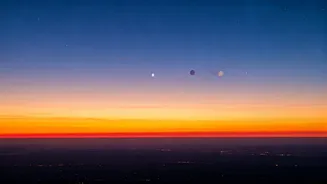
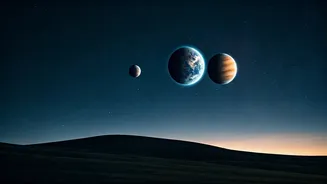
Timing is the single most important factor. Planetary alignments like this one are typically visible for a short window just after sunset or just before sunrise. For an evening lineup, start looking toward the western horizon about 30-45 minutes after the sun has
completely set. This is the 'blue hour' when the sky is dark enough to see the planets, but before they dip below the horizon. For a morning alignment, you’d look to the east before sunrise. Don't wait too long, or the sky will be too bright.
2. Find Your Viewing Direction
You can’t see the show if you’re looking the wrong way. Most planetary lineups occur along the ecliptic, which is the path the sun travels across the sky. For this evening event, you'll want a clear, unobstructed view of the western horizon. If you’re unsure which way is west, use the compass app on your phone or simply note where the sun went down. The planets will appear as a string of bright 'stars' in that general direction.
3. Escape Bright City Lights
Light pollution is the arch-nemesis of any stargazer. While the brightest planets like Venus and Jupiter can often punch through city haze, fainter ones like Mercury are much harder to spot. To give yourself the best chance, find a location away from direct streetlights and building lights. A local park, a field on the edge of town, or even a dark corner of your own backyard can make a huge difference. The darker your surroundings, the more your eyes will adapt and the more you will see.
4. Use a Stargazing App
Take the guesswork out of it with a little help from technology. Free smartphone apps like Stellarium, SkyView Lite, or Star Walk 2 are fantastic tools for beginners. Simply point your phone at the sky, and the app will use your location and internal compass to identify exactly what you're looking at. This is especially helpful for confirming you’ve found faint Mercury and for distinguishing the planets from nearby bright stars.
5. Know the Order of Appearance
Understanding the lineup will help you identify each planet. Venus is almost always the easiest to spot; it's the third-brightest object in the sky after the sun and moon, appearing as a brilliant, unwavering light. Jupiter will also be exceptionally bright, though typically less so than Venus. Mercury is the trickiest. It’s always close to the sun, so it will be the lowest on the horizon and visible for the shortest time. Look for it as a tiny, star-like point of light near where the sun just set.
6. Tell a Planet From a Star
Here's a classic trick: stars twinkle, planets don't (for the most part). Stars are so far away that their light comes to us as a single point, which is easily disturbed by Earth's atmosphere, causing it to scintillate or 'twinkle'. Planets are much closer, so their light comes from a tiny disk. This makes their light steadier and less prone to atmospheric distortion. If you see a bright point of light that is holding a steady glow, you're almost certainly looking at a planet.
7. Grab a Pair of Binoculars
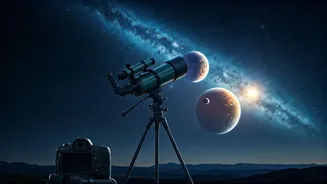
You don't need a fancy telescope to enhance your view. A standard pair of binoculars will work wonders. While the alignment is a naked-eye event, binoculars will make the planets appear brighter and more distinct. More excitingly, if you can hold them steady, you might even be able to spot Jupiter's four largest moons, known as the Galilean moons. They will look like tiny pinpricks of light in a neat line on either side of the planet.
8. Check the Weather Forecast
This may seem obvious, but it’s a step many eager sky-watchers forget. A beautiful celestial alignment means nothing if your view is blocked by a thick blanket of clouds. Check your local weather forecast before you head out. Look for predictions of clear or partly cloudy skies during the crucial post-sunset window. If it's cloudy tonight, don't despair—these alignments often remain visible for several consecutive days, so you may get another chance tomorrow.
9. Give Your Eyes Time to Adjust
Your eyes need time to adapt to the darkness. It can take up to 20 minutes for your pupils to fully dilate and for you to achieve your best 'night vision'. When you first step outside, things might seem disappointingly dark. Be patient. Avoid looking at bright sources of light, especially your phone screen (if you must use it, turn the brightness all the way down or use 'red light' mode). As your eyes adjust, you'll be amazed at how much more detail you can pick out in the sky.
10. Share the Moment
Stargazing is a wonderful activity, but it's even better when shared. Bring your family, call your friends, or tell your neighbours to look outside. Pointing out the planets and sharing in the collective awe of the cosmos is a special experience. It’s a perfect, free activity that connects us not only to the universe but to each other. Explaining what you're seeing to someone else is also a great way to solidify your own understanding.