





Saturn’s Time to Shine
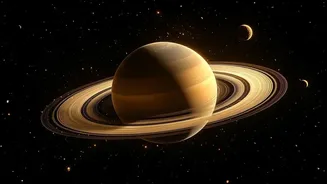
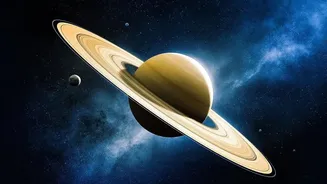
October 2026 is a fantastic month for planet-watching, and Saturn is the undisputed star of the show. Earlier in the month, on October 4, Saturn reached 'opposition'. This is the point in its orbit where it is directly opposite the Sun from our perspective
on Earth, effectively making it the closest, biggest, and brightest it will appear all year. This means that throughout October, the ringed giant is beautifully placed for viewing, rising around sunset and remaining visible for most of the night. This peak brightness sets the perfect stage for its close encounter with the Moon later in the month, making the planet incredibly easy to spot even for beginners.
A Celestial Meeting Explained
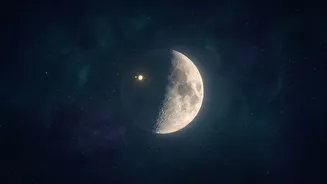
The upcoming event is called a conjunction. In astronomy, this simply means that two celestial objects appear to pass very close to each other in our sky. On the nights of the event, the Moon will glide past Saturn, creating a striking visual pair. It's important to remember that this is a line-of-sight effect; the two bodies are not actually close to each other at all. The Moon, our nearest cosmic neighbour, is about 3,84,000 kilometres away, while Saturn is a staggering 1.2 billion kilometres further in the distance. Still, from our vantage point here on Earth, they will look like temporary cosmic companions, offering a wonderful and easily identifiable spectacle.
Mark Your Calendar: When and Where to Look
The prime nights for observers in India to watch this celestial pairing will be October 24 and 25, 2026. The best time to start looking is just after sunset, once the sky begins to darken. You won't need any special directions; your guide will be the Moon itself. Look for the bright, nearly-full Moon in the sky. Shining steadily nearby will be a bright, yellowish point of light that doesn't twinkle—that will be Saturn. Unlike stars, which twinkle due to atmospheric disturbance, planets tend to shine with a more constant light because they are much closer to us and appear as tiny disks rather than distant points. This simple trick makes it easy to distinguish the planet from the stars around it.
Tips for the Best Viewing Experience
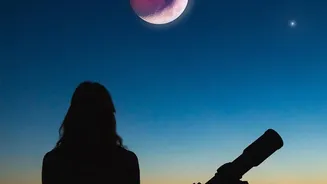
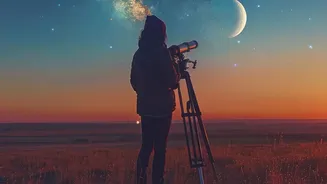
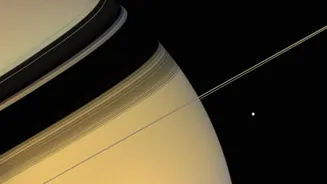
The great news is that this event is perfectly visible to the naked eye, no special equipment needed. However, to make the most of it, a few simple tips can elevate your experience. First, try to find a location with a clear view of the sky, away from the glare of city lights. Light pollution can wash out celestial objects, and a darker environment will make Saturn's golden hue appear more prominent. Second, give your eyes about 15-20 minutes to fully adapt to the darkness; you’ll be amazed at how much more you can see. Finally, if you have a pair of binoculars or a small telescope, point it towards Saturn. While you won't see the rings with the naked eye, even basic optical aid can transform that dot of light into a breathtaking view of the planet itself, with its iconic rings clearly visible.