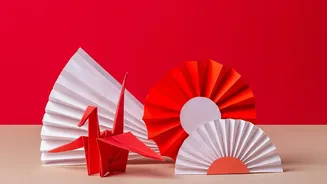






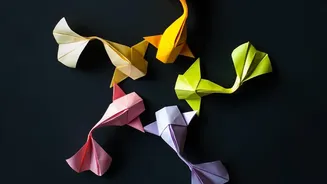
A blank wall holds endless possibilities, but finding the right decor can be a challenge. Enter origami, the ancient art of paper folding. It offers a unique, affordable, and deeply personal way to bring colour, texture, and creativity to your home.
Why Choose Origami for Your Walls?
Beyond
its delicate beauty, origami wall art has several compelling advantages. Firstly, it's incredibly budget-friendly. All you truly need is paper, making it one of the most accessible forms of home decor. Secondly, the process itself is a benefit. Many find the repetitive, focused nature of folding paper to be a meditative practice that helps relieve stress and improve concentration. It’s a craft that encourages mindfulness and patience. Finally, the potential for customisation is limitless. You choose the models, colours, sizes, and arrangement, ensuring the final piece is a true reflection of your personal style. It’s a chance to move beyond mass-produced prints and create something that is uniquely yours.
Gathering Your Simple Supplies
Getting started with origami decor doesn't require a long shopping list. The most crucial item is paper. While you can practice with standard A4 printer paper cut into squares, investing in proper origami paper, or 'kami', is recommended. It's lightweight, holds creases well, and comes in countless colours and patterns. For more durable or geometric designs, a slightly heavier paper like 'Tant' can be a great choice as it provides crisp folds. You may also consider washi paper for its traditional textures or foil-backed paper for complex models that need to hold their shape. Aside from paper, you'll want a ruler, scissors or a craft knife for cutting, and an adhesive for mounting, like double-sided tape or removable mounting putty.
Beginner-Friendly Models That Wow
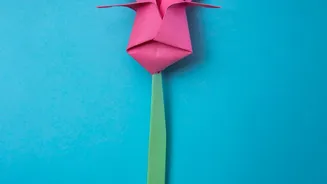
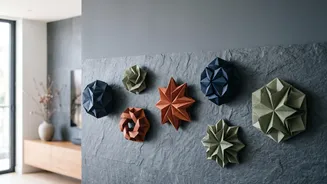
You don't need to be an origami master to create stunning wall art. The key is to choose simple models and create them in multiples. The classic paper crane is a timeless symbol of peace and a fantastic starting point. Other excellent choices for beginners include butterflies, hearts, simple flowers, sailboats, and stars. These shapes are relatively easy to fold but create a dramatic effect when grouped. For a more modern, geometric look, a simple folded square module, sometimes used in Sonobe origami, can be arranged into striking patterns. The repetition of a single, simple shape is often more visually powerful than one or two highly complex models.
Designing Your Wall Composition
Before you start sticking things to the wall, take time to plan your design. You could arrange your folded pieces in a classic grid for a clean, orderly look. For a more organic and dynamic feel, consider a clustered arrangement, perhaps flowing out from a corner or creating a swirling pattern. A colour gradient, where pieces transition from one shade to another, can create a beautiful, calming effect. Another idea is to use your origami to form a larger shape, like a giant heart made of smaller folded hearts or a cloud of butterflies. Lay your pieces on the floor first to experiment with spacing and flow until you find a composition that you love.
Mounting Your Masterpiece
How you hang your art is just as important as the art itself. For a renter-friendly solution that won't damage walls, use lightweight removable adhesives like mounting putty or gentle washi tape. For a more permanent display, small dots of clear craft glue or small pieces of strong double sided tape work well. Another elegant option is to create a mobile or garland by stringing your origami pieces onto a thread. You can hang these strands from a small hook, a decorative branch, or a simple dowel. For a more formal presentation, arrange and glue your origami onto a piece of foam board or sturdy cardstock, which can then be placed inside a shadow box frame. This protects the paper from dust and creates a polished, gallery like feel.