
The 'Just Right' Starting Point
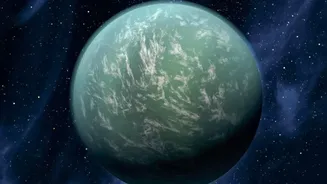
The concept of the circumstellar habitable zone, or 'Goldilocks Zone,' has been an incredibly useful guide for astronomers. It gives them a way to narrow down the immense number of exoplanets—planets orbiting other stars—to a manageable list of promising
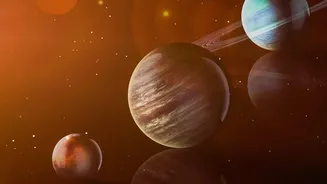
candidates. The logic is straightforward: life as we know it requires liquid water. Therefore, we should look for planets at a distance from their star where the temperature could permit oceans, rivers, and lakes. If a planet is too close, its water will boil away, as likely happened on Venus. If it's too far, its water will be locked away as ice. This zone’s size and distance vary depending on the star's brightness and temperature; a cool, dim red dwarf will have a much tighter and closer habitable zone than a large, brilliant star like our Sun. For many years, finding a rocky planet within this zone was the primary goal, but science now shows us it's only a preliminary filter.
The Critical Planetary Blanket
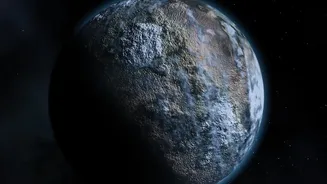
An address in the right cosmic neighborhood means nothing if the planet doesn't have the right attire. A planet's atmosphere is a game-changer for habitability, acting as a crucial thermostat. A sufficiently dense atmosphere traps heat through the greenhouse effect, potentially warming a planet on the outer edge of the habitable zone enough to maintain liquid water. Conversely, a world in a perfect location could be a frozen desert if it has too thin an atmosphere to hold onto heat, a fate that befell Mars. Venus is the ultimate cautionary tale: though it might have once been habitable, its runaway greenhouse effect, with an atmosphere 100 times thicker than Earth's, has created a scorching surface too hot for life. The atmosphere also needs to exert enough pressure to allow water to remain liquid on the surface and provides a vital shield against harmful cosmic radiation. Advanced tools like the James Webb Space Telescope (JWST) are now allowing scientists to analyze the chemical makeup of these atmospheres from light-years away, searching for water vapor, methane, and other potential signs of life.
The Dance of an Unstable Orbit
Even with a great location and a perfect atmosphere, a planet's chances for life can be ruined by a bad orbit. Stability is key. A planet's orbital eccentricity—how much its path deviates from a perfect circle—can have drastic effects on its climate. Earth's orbit is nearly circular, ensuring we receive a relatively consistent amount of energy from the Sun year-round. However, a planet on a highly eccentric, or oval-shaped, orbit could experience wild temperature swings, getting scorched when it swings close to its star and then plunging into a deep freeze as it moves far away. Such extreme fluctuations would make it incredibly difficult for complex life to gain a foothold. Furthermore, the stability of the entire planetary system matters. The gravitational pull of large, neighboring planets can disrupt a smaller world's orbit, potentially flinging it out of the habitable zone entirely. A stable, predictable cosmic dance is just as important as being in the right place.
A More Sophisticated Search
Combining these factors—distance, atmosphere, and orbital stability—provides a much more nuanced and realistic definition of habitability. It’s not just a zone; it's a complex interplay of variables. This new understanding explains why scientists are so excited about the capabilities of telescopes like the JWST. They are no longer just counting planets in the Goldilocks Zone; they are characterizing them. By analyzing the light that passes through or is emitted from an exoplanet's atmosphere, they can identify its chemical composition. Recent discoveries have revealed planets with water vapor, methane, and carbon dioxide, providing the first real data on the conditions of these distant worlds. Some studies even suggest that certain eccentric orbits could, under the right conditions, help a planet avoid a 'snowball' state by providing periodic warming. This complexity means finding an 'Earth 2.0' is less about checking a box and more about building a complete planetary profile.