






Not too long ago, the rhythm of Indian households was set by the TV schedule. Dinner was timed around the 9 PM news, and social plans were cancelled for epic shows. Today, we carry a universe of content in our pockets. This is the story of that shift.
The Era of the Single Screen
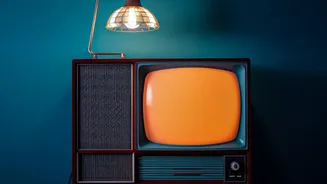
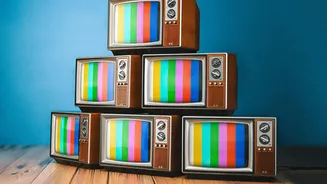
Television first arrived in India as a modest experiment in 1959. For decades, it was the era of a single, state-owned broadcaster: Doordarshan. This was the age of collective viewing. Families and even neighbours would gather around a bulky television set, a prized possession, to watch programming that was a mix of education and entertainment. Shows like 'Hum Log', 'Buniyaad', and the mythological epics 'Ramayan' and 'Mahabharat' weren't just serials; they were national events that brought the country to a standstill. The concept of 'my show' didn't exist; it was always 'our show', a shared experience dictated by a fixed weekly schedule. This period cemented the television as the living room's focal point, a symbol of family togetherness.
The Cable and Satellite Boom
The 1990s changed everything. Following the country's economic liberalization, private and foreign broadcasters were allowed entry, unleashing a media revolution. The Gulf War broadcast live on CNN gave Indians a taste of what was possible, and soon, satellite dishes began cropping up on rooftops. Channels like Zee TV, launched in 1992, and Sony Entertainment Television started broadcasting, breaking Doordarshan's monopoly. This led to an explosion of choice. The primetime slot, especially from 9 PM to 11 PM, became a fierce battleground. This era gave rise to the 'saas-bahu' genre, with daily soaps like 'Kyunki Saas Bhi Kabhi Bahu Thi' and 'Kahaani Ghar Ghar Kii' dominating viewership for over a decade. These shows, often centred on sprawling joint families, dictated the schedules of millions of households, making appointment viewing a powerful cultural habit.
The Jio Disruption: Data Gets Democratic
For years, the high cost of internet data kept online streaming a niche activity. That changed dramatically in 2016 with the launch of Reliance Jio. By offering incredibly cheap 4G data and free voice calls, Jio made the internet accessible to millions of Indians, particularly in smaller towns and rural areas. This wasn't just a telecom revolution; it was a content consumption revolution. Suddenly, watching videos on a smartphone was no longer a luxury. The power began to shift from the family's shared television remote to the individual's mobile screen. This laid the groundwork for the next massive wave of change, moving viewership from a shared space to a personal one.
The Age of On-Demand and Personal Screens
With affordable data came the meteoric rise of Over-The-Top (OTT) platforms like Netflix, Amazon Prime Video, and homegrown players like Hotstar and JioCinema. The concept of a fixed television schedule began to feel antiquated. Viewers were no longer passive recipients; they were curators of their own entertainment. This ushered in the age of binge-watching, where audiences could consume an entire season of a show at their own pace. The content landscape also diversified immensely. Viewers now have access to a vast library of international films, regional cinema, documentaries, and original series that cater to specific tastes rather than the whole family. Recent data shows India's OTT audience has swelled to over 664 million, with formats like micro-dramas, Korean dramas, and anime seeing massive growth. This reflects a shift towards more individualised and varied content choices.
From the Living Room TV to a Two-Screen Ecosystem
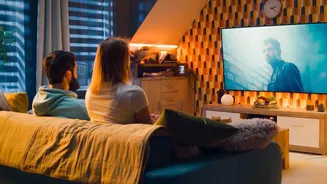
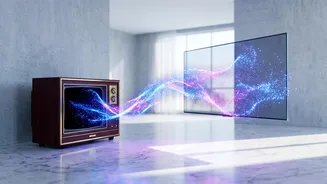
Today, home viewership is a hybrid experience. While the large television screen in the living room hasn't disappeared, it's no longer the sole monarch. The rapid growth of connected TVs—smart TVs or those connected via devices—means that on-demand content is now a big-screen experience too. India is evolving into a 'two-screen ecosystem', where audiences move seamlessly between their personal mobile phones and the shared family TV. A person might watch a short video on their phone during the day and stream a blockbuster movie with family on the smart TV at night. The fight is no longer just for primetime slots, but for a viewer's attention across multiple devices and platforms, at all hours of the day.