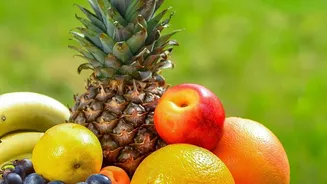






In the world of fruit, both pineapples and pears are top contenders for taste and convenience. But how do they stack up nutritionally? Here’s a look at what each brings to the table, helping you choose based on your health goals.
The Calorie and Carb Count
When looking at basic
macronutrients, pineapple and pear are quite similar. A one-cup serving of pineapple chunks contains about 83 calories and 22 grams of carbohydrates. A medium-sized pear, which is roughly equivalent in volume, has around 101 calories and 27 grams of carbohydrates. Both fruits are naturally fat-free and cholesterol-free, making them a light and healthy choice for a snack or dessert. While pineapple is slightly lower in calories, the difference is minimal in the context of a balanced diet. The sugar content is also comparable, with a cup of pineapple containing about 16 grams and a medium pear having around 17 grams of natural sugar.
The Vitamin C Superstar
This is where pineapple truly stands out. A single cup of fresh pineapple can provide nearly 90% of your recommended daily intake of Vitamin C. This powerful antioxidant is crucial for a healthy immune system, skin health, and tissue repair. Pears also contain Vitamin C, but in much smaller amounts; a medium pear offers about 8 to 10% of your daily needs. So, if you are looking to ward off a cold or give your immune system a significant boost, pineapple is the more potent choice.
Fiber for Gut Health
When it comes to digestive health, the pear takes the lead. A single medium pear packs an impressive 6 grams of dietary fiber, which is about 21-24% of the daily recommended intake. This includes both soluble fiber, like pectin, and insoluble fiber. Soluble fiber helps feed good gut bacteria and can assist in managing cholesterol, while insoluble fiber promotes regularity. Pineapple contains fiber too, but a one-cup serving provides around 2.3 grams, less than half that of a pear. For anyone focused on increasing their fiber intake for better digestion and a feeling of fullness, pears are an excellent option.
Unique Compounds: Bromelain and Beyond
Pineapple's claim to fame, beyond its Vitamin C content, is an enzyme mixture called bromelain. Found only in pineapple, bromelain helps break down protein, which can aid digestion. It is also studied for its anti_inflammatory properties, which may help reduce swelling and pain from injuries or conditions like osteoarthritis. Pears, on the other hand, are rich in polyphenol antioxidants, particularly in their skin. These compounds, including flavonoids and anthocyanins (in red_skinned varieties), help protect the body against oxidative stress and are linked to heart health and a lower risk of type 2 diabetes.
A Look at Key Minerals
Both fruits offer a variety of essential minerals. Pineapple is an exceptional source of manganese, with a single cup providing well over $100%$ of the daily requirement for women and a significant amount for men. Manganese is vital for bone formation, metabolism, and immune response. Pears contribute important minerals like potassium, which helps regulate blood pressure, and copper, which is important for immunity and nerve function. While pineapple has a more diverse mineral profile overall, including small amounts of copper, magnesium, and iron, the pear's potassium content is a notable benefit for heart health.