





Why Hangers Are the Enemy of Heavy Knits
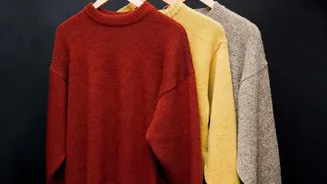
The fundamental problem with storing heavy woollens on a hanger comes down to one simple force: gravity. Wool, cashmere, and other natural fibres are prized for their soft, pliable structure. When you hang a heavy sweater, its own weight constantly pulls
down on the fibres. Over time, this causes irreversible stretching, especially at the shoulders and neckline. This is what leads to those dreaded 'shoulder bumps'—distorted points where the hanger ends have pushed the fabric out of shape. While a quick steam might offer a temporary fix, prevention is the only way to truly preserve the garment's intended silhouette. The rule is simple: the heavier the knit, the more critical it is to keep it off a hanger.
The Art of a Supportive Fold
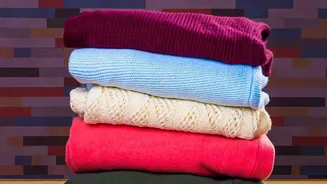
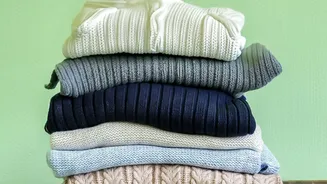
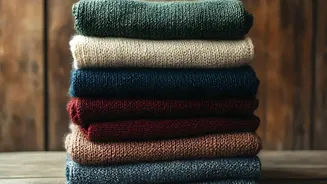
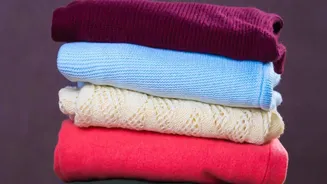
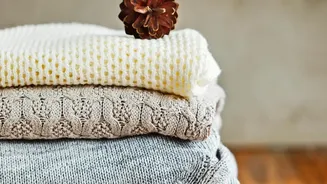
Folding a sweater correctly is about creating a stable, compact shape that minimises stress on the fibres and prevents deep creases. Start by laying the sweater face down on a flat surface, smoothing out any wrinkles. Fold one sleeve straight across the back, then repeat with the other sleeve to create a neat rectangle. From there, simply fold the body of the sweater in half from the bottom up. For longer or bulkier sweaters, folding it into thirds might create a more manageable shape. The goal is a tidy package that can be stacked without putting too much pressure on the garment at the bottom. Stacking no more than three or four heavy sweaters is a good rule of thumb to avoid crushing the loft of the wool.
Creating the Ideal Storage Environment
Once folded, where you store your woollens is just as important as how. Wool thrives in a cool, dry, and dark environment with good air circulation. Attics and basements, which often experience fluctuations in temperature and humidity, are generally poor choices as this can lead to moisture damage or make fibres brittle. A closet shelf or a dresser drawer within your main living area is usually ideal. For long-term, off-season storage, breathable containers are your best friend. Look for bags made of cotton or canvas, which protect from dust while still allowing air to circulate. Avoid sealing wool in plastic bags or airtight containers for long periods, as this can trap residual moisture and lead to musty odours or even mildew.
Preparing for Long-Term Storage
Before you pack away your winter woollens for the summer, a couple of extra steps can ensure they emerge in perfect condition. First, always clean your garments before storing them. Moths and other pests are not necessarily attracted to the wool itself, but to the microscopic skin cells, body oils, and food residue left on the fabric. A thorough wash or dry-clean removes this attractant. Make sure every item is completely dry before it's put away to prevent mildew. To further deter pests, consider adding a natural repellent. Cedar blocks or lavender sachets are effective and pleasant-smelling alternatives to chemical mothballs. The scent from cedar can diminish over time, so giving cedar blocks a light sanding once a year can refresh their potency.
What About Lighter Sweaters?
While folding is non-negotiable for heavy, chunky knits, some lighter-weight wool or cashmere sweaters can be hung if done correctly. If you must hang a lighter knit, never use thin wire hangers, which create sharp pressure points. Instead, opt for wide, padded, or felted hangers that distribute the weight more evenly across the shoulders. An even better method is to fold the sweater in half vertically, and then drape it over the horizontal bar of the hanger. This technique supports the sweater's weight from the middle, completely removing any stress from the delicate shoulder seams and preventing any stretching or distortion.