




The Science of Sugar's Thirst
The secret villain in this festive story is a scientific principle called hygroscopy. Sugar is naturally hygroscopic, meaning it actively attracts and absorbs moisture from the surrounding air. During the post-monsoon period, the relative humidity in many
parts of India is high—often well above the ideal 35-50% for candy making. When the air is damp, the sugar in sweets acts like a sponge, pulling water molecules directly from the atmosphere. This process disrupts the carefully balanced structure of the mithai, kickstarting a series of undesirable changes that can ruin both texture and shelf life.
From Crisp and Flaky to Sticky and Soggy
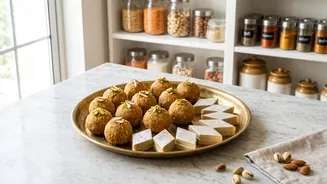
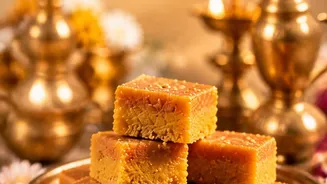
The effects of humidity vary depending on the type of sweet. For dry, flaky sweets like soan papdi, which get their texture from low water content, absorbing moisture causes them to lose their crispness and become dense. For khoya-based sweets like barfi and peda, excess moisture makes the surface sticky or 'weep' syrup. This added water not only ruins the texture but also creates a breeding ground for bacteria and mould, drastically shortening the sweet's shelf life from a week in dry weather to just a day or two in humid conditions. Fried sweets such as gujiya or shankarpali lose their satisfying crunch, while hard candies like chikki can become tacky and soft.
The Halwai’s Art of Climate Control
Professional sweet makers, or 'halwais', have honed techniques over generations to combat humidity. Many now work in climate-controlled kitchens with air conditioning and dehumidifiers to keep the environment stable. Traditional methods also play a crucial role. For instance, halwais may cook milk solids for khoya longer to drive out every last bit of moisture. The sugar syrup might be cooked to a higher temperature, creating a more stable structure less susceptible to humidity. Furthermore, incorporating more ghee can help; as a fat, ghee is hydrophobic (it repels water), creating a microscopic barrier that slows down moisture absorption. These meticulous adjustments are essential for producing consistent, high-quality mithai during the challenging festive season.
Protecting Your Sweets at Home
For home cooks and anyone looking to preserve their festive treats, the principles are the same: fight the moisture. The most critical step is proper storage. Always let sweets cool completely before packing them, as trapped heat creates condensation. Use airtight containers—glass or steel are often better than plastic—to create a barrier against the humid air. It is also wise to store different types of sweets separately. The high moisture in a gulab jamun can easily transfer to a dry besan laddoo in the same container, making it soggy. For particularly humid climates, some suggest placing a small pouch of uncooked rice in the storage cupboard to act as a natural desiccant. While some milk-based sweets require refrigeration, be cautious. Taking a cold box of mithai into a warm, humid room can cause condensation to form on the sweets, making them sticky. Let the container come to room temperature before opening it.