





The Perfect Storm of Flavour
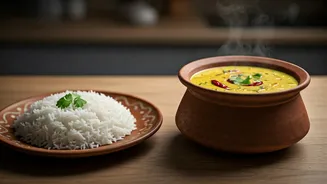
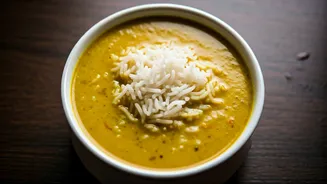
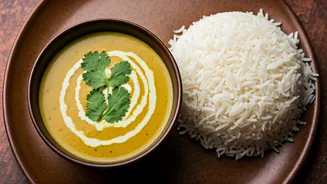
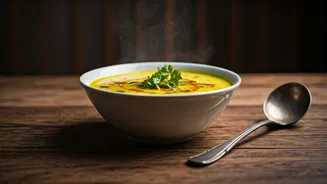
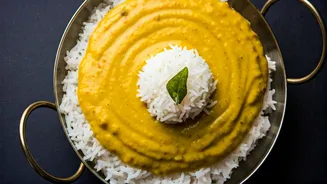
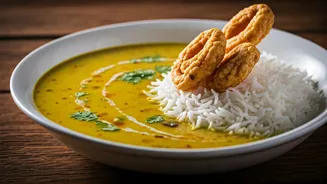
What is it about kadhi that makes it the undisputed champion of monsoon comfort food? The magic lies in its fundamental simplicity and the beautiful contrast of its core ingredients. At its heart, kadhi is a slow-simmered yogurt (dahi) and chickpea flour
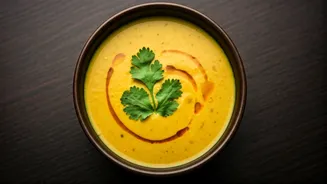
(besan) curry. This base creates a flavour profile that is uniquely Indian: tangy, savoury, and profoundly soothing. The yogurt provides a gentle sourness that cuts through the monsoon humidity, while the besan lends a creamy, earthy body that coats the tongue and warms you from the inside out. But the base is just the beginning. Often, this golden-yellow gravy is studded with pakoras—spiced fritters made from that same chickpea flour. These fluffy, porous dumplings soak up the liquid, becoming little flavour bombs that burst in your mouth. The combination of the smooth, flowing curry and the textured, substantial pakoras creates a culinary experience that is both light and satisfying, simple yet complex.
The All-Important Tadka
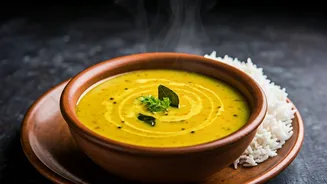
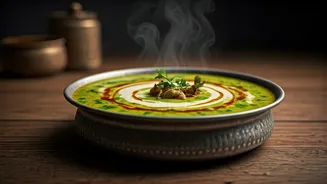
A bowl of kadhi is incomplete without its crown jewel: the tadka, or tempering. This is where the dish truly comes alive, where aromatics are sizzled in hot ghee or oil and poured over the curry just before serving. It’s a final flourish of flavour and a feast for the senses. The sound of mustard seeds popping, the heady aroma of asafoetida (hing) blooming in the heat, the fragrance of curry leaves and dried red chillies—it’s a symphony that signals a meal made with care. The tadka doesn't just add flavour; it adds character. Depending on the region and the family recipe, the spices can vary, but common stars include cumin seeds for earthiness, fenugreek seeds for a hint of bitterness, and a pinch of turmeric for its vibrant colour and health benefits. This final, fragrant layer of spiced fat transforms the humble kadhi from a simple soup into a masterpiece of Indian home cooking.
A Tale of Many States
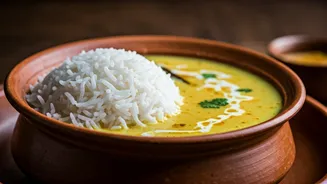
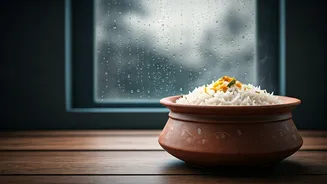
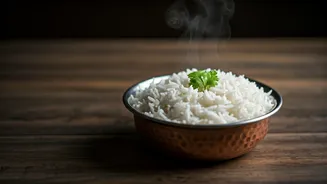
To speak of ‘kadhi’ as one dish is to miss the point entirely. It is a concept, a culinary canvas that every region of India has painted with its own unique palette. Travel west to Gujarat, and you’ll find a kadhi that is thin, light, and distinctively sweet and sour, often perfumed with cinnamon and cloves and served without pakoras. It’s a delicate dance of flavours, designed to be poured generously over rice. Head north to Punjab, and the kadhi transforms. It becomes thick, rich, and unapologetically spicy, packed with large, fluffy besan pakoras. This is a robust, hearty version, a full meal in itself when paired with steamed rice. Venture into Rajasthan, and you’ll find a spicier, more rustic kadhi, often made without pakoras to conserve resources in a desert climate, but no less flavourful. Each variation tells a story about its land, its people, and its produce.
A Hug in a Bowl
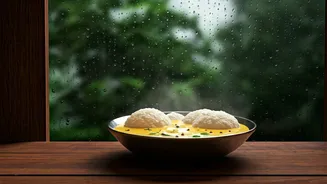
More than the sum of its ingredients, kadhi is a dish steeped in nostalgia. For millions, it is the taste of home, the smell of a mother’s kitchen, and the feeling of being cared for. It’s the go-to meal for when you’re feeling under the weather or just emotionally drained. It’s ‘maa ke haath ka khana’ (food cooked by a mother’s hands) in its purest form. That emotional connection is what makes it so perfect for a rainy day. The rain brings a pensive, introspective mood, a desire to retreat and find solace. A bowl of kadhi offers just that. It’s not a fancy, restaurant-style dish. It’s a hug in a bowl, a simple, unpretentious source of warmth and well-being. It reminds us that sometimes, the greatest joys are found not in grand feasts, but in a simple, perfectly made bowl of food that feels like coming home.