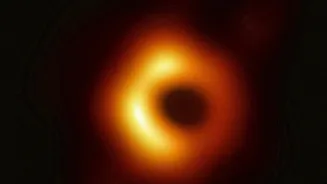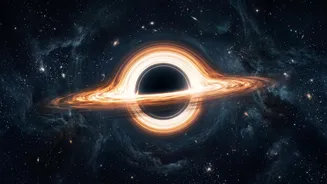



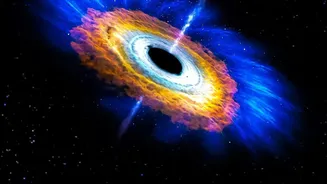
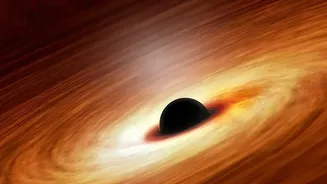
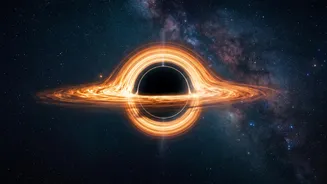
What if you could discover a black hole from your living room? A groundbreaking citizen science project called Black Hole Hunters is making this possible, allowing anyone to help sift through NASA data to find these invisible cosmic giants.
The Universe at Your Fingertips
For centuries,
the search for cosmic wonders was reserved for professional astronomers with access to powerful telescopes. Today, that is changing. Citizen science, a movement that enlists the public in scientific research, has opened up the frontiers of discovery to everyone. The Black Hole Hunters project, hosted on the Zooniverse online platform, is a prime example. It invites volunteers—no expertise required—to help solve one of the biggest mysteries in our galaxy: locating the millions of black holes that are thought to exist but have never been seen. Astronomers estimate there could be over 10 million stellar-mass black holes in the Milky Way, but so far, only about 70 have been confirmed. This project aims to close that enormous gap, one volunteer at a time.
NASA's Unintentional Black Hole Detector
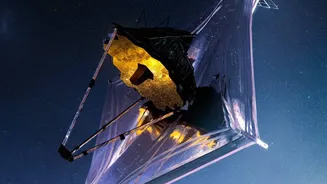
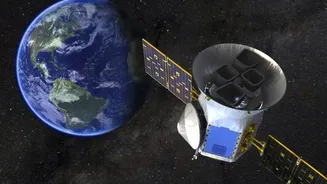
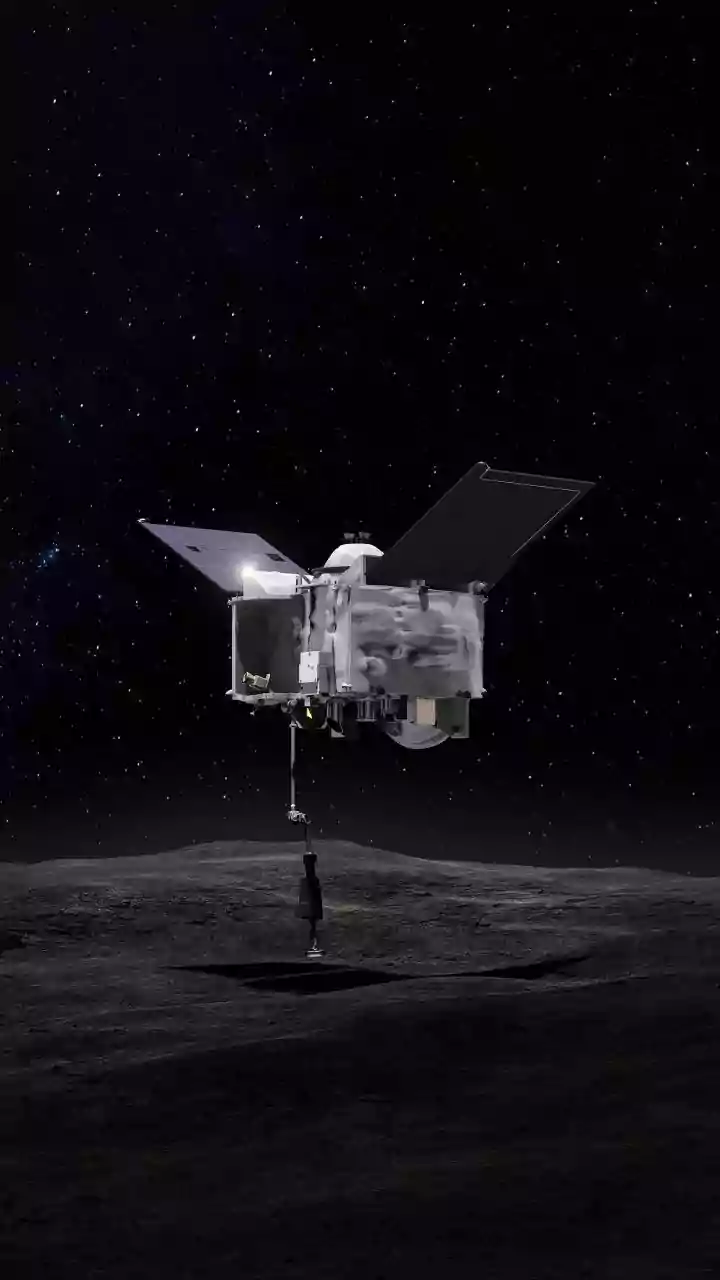
The key to this galactic treasure hunt is data from NASA's Transiting Exoplanet Survey Satellite (TESS). TESS was launched in 2018 with the primary mission of finding planets outside our solar system, known as exoplanets. It does this by staring at stars and measuring their brightness over time, looking for tiny, periodic dips in light caused by a planet passing in front of its star. However, this same method of tracking stellar brightness makes TESS an ideal tool for finding black holes. While the satellite wasn't designed for this purpose, its vast and continuous stream of high-quality data from space provides a perfect hunting ground for the subtle clues that betray a black hole's presence.
How to See the Invisible
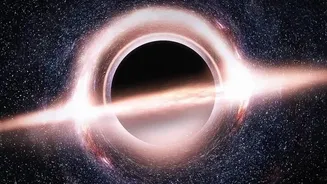
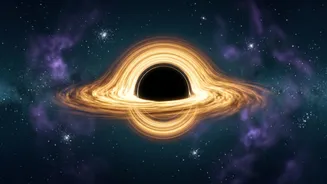
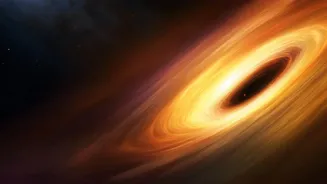
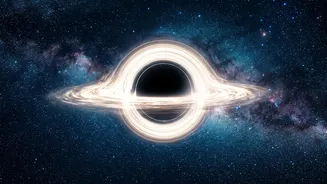
Black holes are, by definition, invisible; their gravitational pull is so strong that not even light can escape. So, how do you find one? The Black Hole Hunters project looks for an effect called 'gravitational microlensing'. This occurs when a massive object, like a black hole, passes directly between us and a distant star. The black hole's immense gravity bends and magnifies the star's light, acting like a cosmic magnifying glass. From our perspective, the star will appear to briefly and characteristically brighten. By looking for these specific brightening events in the TESS data, citizen scientists can flag potential black hole candidates that would otherwise remain completely hidden.
Why Human Eyes Still Matter
In an age of artificial intelligence, one might wonder why human volunteers are necessary. While AI is used to perform a first pass on the millions of light curves from TESS, it often struggles to distinguish real candidates from false positives. Things like stellar flares or the natural pulsation of stars can create patterns that fool algorithms. The human brain, however, is exceptionally good at pattern recognition. Volunteers are shown examples of the tell-tale brightening signals and can quickly learn to spot the unique shape of a gravitational lensing event. By having multiple volunteers review each candidate, the project filters out errors and creates a high-quality shortlist for professional astronomers to investigate further with powerful telescopes.
Join the Galactic Hunt
Since its launch, the Black Hole Hunters project has attracted nearly 23,000 volunteers who have made almost 12 million classifications. The project's leaders at institutions like the University of Southampton believe there could be thousands of new discoveries waiting in the data. Anyone with a computer or smartphone can participate. No prior knowledge of astronomy is needed; all that is required is an interest in space and a willingness to learn how to spot the patterns. By contributing, you are not just playing a game—you are participating in real scientific research and helping to map the hidden structure of our galaxy. Each classification brings astronomers one step closer to understanding these enigmatic objects.