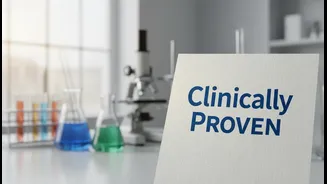







The 'Clinically Proven' Illusion
The term 'clinically proven' sounds impressive, suggesting rigorous scientific backing. However, its meaning can be surprisingly flexible. A claim might be based on a tiny, poorly designed study funded by the brand itself, rather than a large, independent,
and peer-reviewed trial. Cosmetic companies often use the language of science to create an illusion of efficacy without necessarily having robust evidence to support it. For instance, a 'wash-out' period before a skincare trial, where subjects stop using all products, can create ideal 'before' photos showing fine lines that any basic moisturiser could then appear to 'fix'. This is why it's crucial to look past the headline claim and question the evidence behind it.
What Makes a Study Trustworthy?
A legitimate study has several key features. The gold standard is a randomised, double-blind, placebo-controlled trial. This means participants are randomly assigned to receive either the product or a placebo, and neither the participants nor the researchers know who is getting what until the end. This design minimises bias. Look for a significant sample size, clear objectives, and whether the results were published in a reputable, peer-reviewed scientific journal. A 'consumer perception' study, where a small group of people simply say they feel the product works, is not the same as a clinical trial that measures objective results.
Red Flags on Indian Shelves
In India, the Advertising Standards Council of India (ASCI) sets a self-regulatory code for ads, stating they must be honest and not misleading. The Consumer Protection Act, 2019, also empowers the Central Consumer Protection Authority (CCPA) to penalise brands for making false claims. Despite this, misleading phrases are common. Be wary of vague terms like 'dermatologist-recommended' (which dermatologists, and were they paid?), 'up to 90% saw results' (this highlights the best-case scenario, not the average), and 'natural' or 'organic' without official certification. The FSSAI has also been cracking down on unsubstantiated health claims on food products, from 'vegan' to 'zero maida'.
Your Smart Consumer Toolkit
Becoming a more discerning shopper doesn't require a science degree. Start by ignoring the hype on the front of the package and turning it over to read the ingredient list. Ingredients are listed in descending order of concentration, so the first five make up the bulk of the product. If a 'miracle' ingredient is at the very end of the list, it's likely present in a tiny, ineffective amount. Be sceptical of products promising instant, dramatic results for conditions that are medically complex, like permanent acne cures or reversing ageing. Search for independent reviews from trusted sources and remember that for cosmetics, claims of curing or preventing a disease are legally reserved for drugs, not skincare.