





From Backstage to Centre Stage
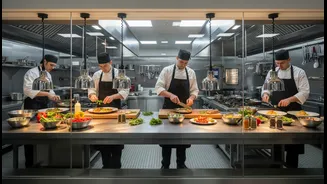
Not long ago, the kitchen was the mysterious, unseen engine of a restaurant. Today, it’s increasingly the main event. The rise of 'culinary theatre'—where chefs prepare meals in full view of diners—is driven by a modern appetite for transparency and entertainment.
In an age of social media and foodie culture, customers crave a connection to their food's journey. This desire transforms the cooking process into a performance, turning chefs into artisans on display and giving diners a multisensory experience of sights, sounds, and smells that a closed kitchen cannot offer. This trend has taken root in India, where the concept of an open kitchen aligns with a cultural emphasis on togetherness and interactive family spaces.
The Psychology of Transparency
Putting the kitchen on display is a powerful statement of confidence. It tells diners the restaurant has nothing to hide regarding cleanliness, ingredient quality, or the skill of its staff. This transparency builds a significant amount of trust and can reduce a customer's uncertainty about their meal. Psychologically, when diners see a clean, organised, and professional kitchen, they are more likely to perceive the food as being of higher quality, a cognitive bias known as the 'Halo Effect'. This visible craftsmanship enhances the perceived value of the food, making the meal feel more authentic and justifying a higher price point in the minds of many consumers.
A Complete Operational Overhaul
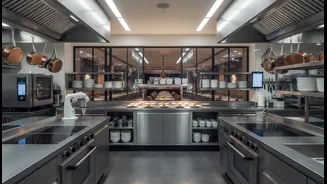
Designing a restaurant around an open kitchen alters core architectural principles. It's not as simple as just removing a wall. The biggest challenges are managing the sensory output: noise, smells, smoke, and heat. Traditional back-of-house ventilation and acoustics are insufficient when the kitchen is part of the dining space. This requires investing in advanced, high-capacity, and quiet ventilation systems to manage odours and smoke without disturbing diners. Sound-absorbing materials like acoustic panels and soft furnishings become crucial to dampen the clatter of pots and pans. Furthermore, the entire workflow must be re-engineered for both efficiency and aesthetics. Every station's placement is a balance between a chef's practical needs and the visual story being told to the customer.
The Chef as a Performer
When the kitchen becomes a stage, the chef's role expands. Beyond their culinary duties, they are now performers and brand ambassadors. This has a direct impact on hiring and training. Kitchen staff must not only be skilled but also composed under pressure and mindful of their every action, as they are constantly being observed. The intense pressure of a professional kitchen is amplified when there's an audience. This environment demands a high level of professionalism, as a messy or chaotic open kitchen can quickly create a negative impression, undermining the very trust it was meant to build. Communication among staff must be seamless and discreet, as shouted orders can disrupt the dining ambience.
A New Material and Aesthetic Language
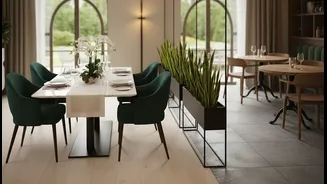
The purely functional, stainless-steel look of a traditional commercial kitchen no longer suffices. A front-facing kitchen must be aesthetically integrated with the dining room. This has led to a shift in materials and lighting. Designers now incorporate elements like decorative tiles, warm woods, stone countertops, and strategic lighting to create a space that is both beautiful and functional. Lighting, in particular, plays a dual role: it needs to be bright enough for chefs to work safely while also creating a warm and inviting atmosphere for guests. Storage solutions also become a design feature, with a mix of open shelving to showcase fresh ingredients and stylishly concealed drawers to keep clutter out of sight. The result is a cohesive environment where the line between front-of-house and back-of-house is blurred into a single, immersive experience.