




India's Ambitious Next Step
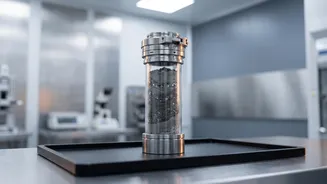
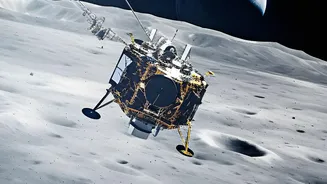
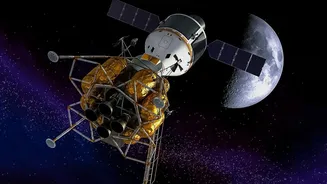
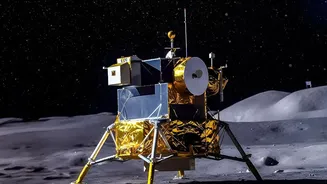
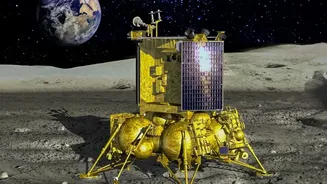
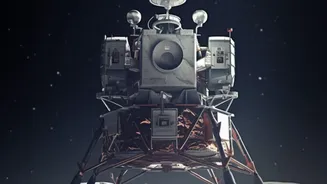
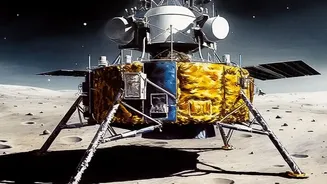
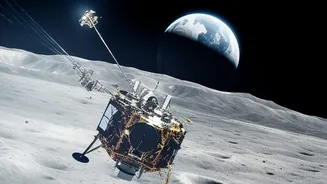
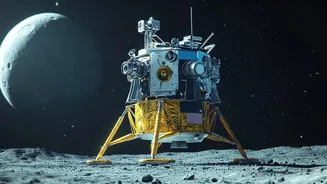
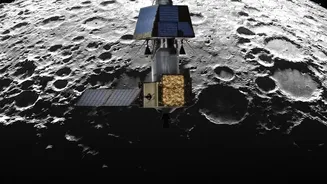
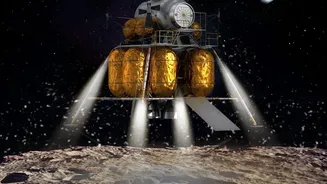
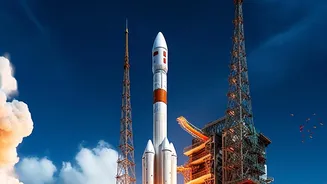
Following the historic success of Chandrayaan-3, which made India the first nation to soft-land near the lunar south pole, the Indian Space Research Organisation (ISRO) is setting its sights on an even more complex goal. Chandrayaan-4 is designed as a sample-return
mission. This means it won't just land and explore; it will land, collect lunar soil and rock, and then launch from the Moon to bring those precious samples back to Earth. This multi-stage mission, involving several modules for descent, ascent, and transfer, demonstrates a significant jump in technological capability, positioning India among a select few nations to have accomplished such a feat. The primary target for this mission is once again the Moon's south pole, a region of immense scientific interest.
The Moon's Buried Treasure: Water Ice
So, what makes the lunar south pole so special? The answer is water, frozen solid as ice in permanently shadowed regions (PSRs). These are craters and depressions that have not seen direct sunlight for billions of years, creating super-chilled 'cold traps' where water ice can accumulate and remain stable. Past missions, including India's own Chandrayaan-1, provided the first definitive evidence of this water. This lunar ice is now considered the most valuable resource on the Moon. It's not just a scientific curiosity; it's the foundational element that could make long-term human habitation on the Moon possible. Chandrayaan-4’s goal is to collect and return samples from this very region, which could include this crucial ice.
From Ice to Air and Rocket Fuel
The value of lunar ice extends far beyond a source of drinking water for astronauts. Through a process called electrolysis, water (H₂O) can be split into its constituent elements: hydrogen and oxygen. The oxygen can be used to create breathable air for a lunar habitat, while the hydrogen and oxygen together form a potent rocket propellant. This simple chemical process completely changes the equation for lunar exploration. Instead of having to launch every drop of water, every breath of air, and every kilogram of fuel from Earth—at an astronomical cost—a lunar base could theoretically produce its own life support and fuel. This concept, known as In-Situ Resource Utilization (ISRU), or 'living off the land', is central to the vision of a sustainable human presence on the Moon.
The Game-Changing Economics of ISRU
Every kilogram of mass launched from Earth into space is incredibly expensive. To establish and sustain a moon base by shipping everything needed would be prohibitively costly. This is where ISRU becomes a game-changer. By proving that lunar resources can be harvested and used, missions like Chandrayaan-4 pave the way for a more affordable and sustainable model of space exploration. Developing the technologies to extract water from lunar regolith (the loose soil and dust), purify it, and process it is a critical step. Chandrayaan-4's sample return will provide invaluable ground truth, allowing scientists on Earth to analyze the composition of the ice-bearing soil and perfect the techniques needed to turn it into usable resources.
A Lunar Base as a Gateway to Mars
The ultimate vision for a lunar base goes beyond just exploring the Moon itself. Many space agencies, including NASA, see the Moon as a crucial stepping stone for future human missions to Mars and deeper into the solar system. A Moon base with the ability to produce its own rocket fuel could function as a cosmic refueling station. Spacecraft could launch from Earth with just enough fuel to get to the Moon, top up their tanks with lunar-derived propellant, and then continue their journey to Mars. This would dramatically reduce the mass that needs to be launched from Earth's deep gravity well, making interplanetary travel far more feasible. By mastering the technologies for a sample return, India is contributing vital knowledge and capabilities to this grand international vision.