

The Sun’s 11-Year Heartbeat
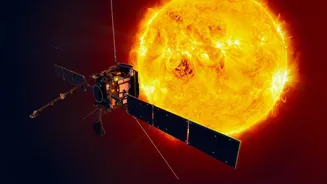
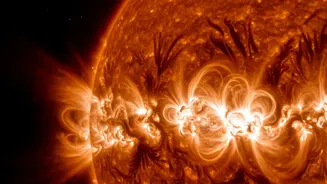
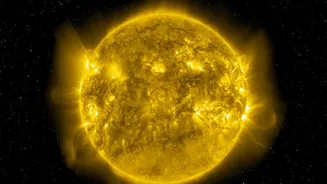
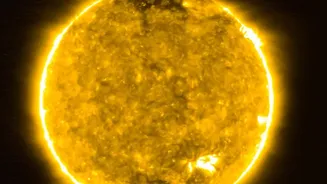
The Sun operates on an approximately 11-year cycle, driven by the flipping of its magnetic field. This period is marked by two extremes: solar minimum and solar maximum. During a solar minimum, the Sun is quiet, with very few sunspots—dark, magnetically
complex areas on its surface. As the cycle progresses towards solar maximum, sunspot activity dramatically increases. This isn't just a cosmetic change; these sunspots are epicentres of intense magnetic energy, setting the stage for major solar events. Scientists track these cycles by counting sunspots, with the most recent cycle, Solar Cycle 25, having started in December 2019.
What Is a Geomagnetic Storm?
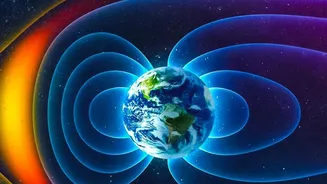
A geomagnetic storm is a significant disturbance of Earth's magnetosphere, the protective magnetic bubble that surrounds our planet. This disturbance happens when there's an efficient exchange of energy from the solar wind—a continuous stream of charged particles flowing from the Sun—into our space environment. Think of it as a powerful gust of space weather hitting Earth's magnetic shield. While our magnetosphere deflects most of the solar wind, intense events can compress and rattle this shield, causing widespread effects that are felt both in space and on the ground.
Flares and Ejections: The Triggers
The primary culprits behind major geomagnetic storms are two types of solar explosions: solar flares and coronal mass ejections (CMEs). A solar flare is an intense burst of radiation from the Sun's surface, which travels at the speed of light and can reach Earth in about eight minutes. A CME, on the other hand, is a massive eruption of solar plasma and magnetic fields into space. CMEs are like cannonballs, slower but carrying immense force, sometimes weighing billions of tons and taking one to three days to reach Earth. When a CME is aimed at Earth, it slams into our magnetosphere, triggering the most significant geomagnetic storms.
Connecting the Cycle to the Storms
The link is direct: the phase of the solar cycle determines the frequency and intensity of these solar eruptions. During solar maximum, the Sun's magnetic field is more tangled, unstable, and energetic. This chaotic magnetic environment leads to a dramatic increase in the number and power of sunspots, which are the breeding grounds for flares and CMEs. Flares can be up to 50 times more frequent at solar maximum compared to solar minimum. Consequently, strong geomagnetic storms are far more common during the active phase of the solar cycle because the Sun is simply more eruptive. More CMEs and flares mean more disturbances arriving at Earth's doorstep.
Impacts on Earth: Auroras and Outages
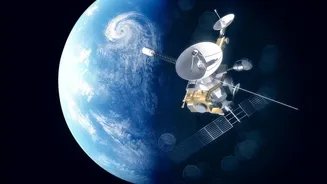
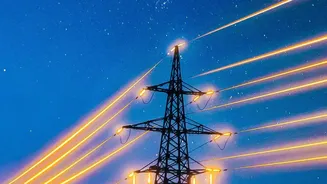
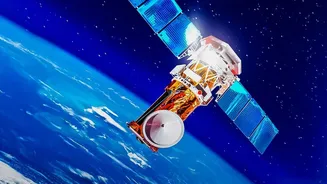
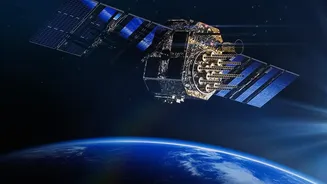
The effects of geomagnetic storms are twofold. On the beautiful side, they are responsible for the stunning auroras (the Northern and Southern Lights), which occur when solar particles interact with gases in our atmosphere. During strong storms, these light shows can be seen at much lower latitudes than usual. However, the disruptive effects are a serious concern. These storms can induce powerful electrical currents in power grids, potentially damaging transformers and causing widespread blackouts. They can also disrupt high-frequency radio communications, degrade GPS accuracy, and increase atmospheric drag on satellites in low-Earth orbit, potentially altering their orbits and even causing damage.