





The Rain Shadow Explained
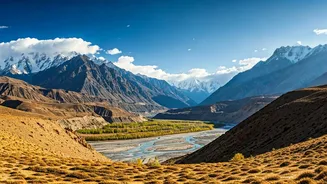
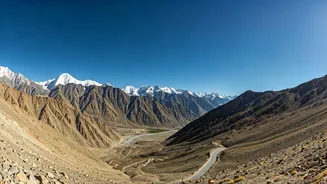
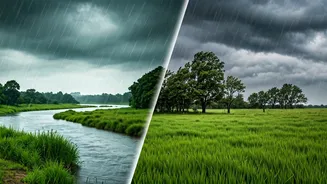
The magic behind this dry phenomenon is the 'rain shadow' effect. The towering Himalayan peaks act as a colossal barrier, blocking the moisture-laden monsoon clouds that travel up from the Indian Ocean. These clouds are forced to release their rain on the southern
slopes, leaving the land to the north, like Ladakh and Spiti, remarkably arid and sunny. This creates a cold desert environment where rainfall is minimal, making July an ideal time to visit, a stark contrast to the rest of the subcontinent which is experiencing its wettest period.
Ladakh: Land of High Passes and Blue Lakes
Often called the 'Land of High Passes', Ladakh is India’s quintessential rain shadow destination. In July, while other mountain regions face landslides and downpours, Ladakh boasts clear blue skies and pleasant daytime temperatures hovering around 21-25°C. This is peak season, when the roads are fully accessible, connecting the capital, Leh, to the breathtaking Nubra Valley and the mesmerising, colour-shifting Pangong Tso. Adventure is in full swing with opportunities for river rafting on the Indus, trekking through the Markha Valley, and attending vibrant monastery festivals like the Hemis Tsechu, which sometimes falls in July. The accessibility and lively atmosphere make it a perfect, albeit popular, monsoon escape.
Spiti Valley: A World Within a World
For those seeking a more rugged and remote experience, Spiti Valley in Himachal Pradesh is an unparalleled choice. Like Ladakh, Spiti is a cold desert that receives very little rainfall during the monsoon. The journey itself is an adventure, with the route from Shimla via Kinnaur generally being more reliable than the Manali approach in July, which can be prone to weather-related disruptions. The reward is a landscape of stark, raw beauty. You can explore ancient Buddhist monasteries like Key and Tabo, visit some of the world's highest villages like Kibber and Hikkim, and marvel at the celestial Chandratal Lake. While the approach can be challenging, the valley itself offers fewer crowds and a profound sense of tranquility.
Zanskar Valley: The Hidden Kingdom
Even more isolated than Spiti is the Zanskar Valley, a sub-district of Kargil that is one of the most untouched parts of Ladakh. July is one of the best months to visit, as the summer weather makes this remote region fully accessible. The journey to its administrative centre, Padum, is long but spectacular, carving through deep gorges and past dramatic mountain scenery. Zanskar offers a glimpse into a deeply traditional way of life, centred around ancient monasteries like Phuktal, which appears to be spectacularly embedded in a cliff face. The weather is generally stable and ideal for trekking and exploration, offering a true escape from the modern world.