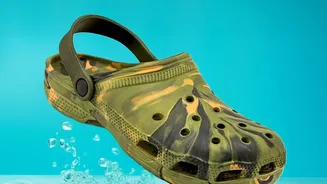






Why Humidity Is the Enemy of Dry Shoes
Drying is a process of evaporation, where water turns into vapour and disappears into the air. However, when the weather is humid, the air is already saturated with a high amount of water vapour. This dramatically slows down the evaporation process from
your shoes. Think of it like trying to add water to a full glass—there's simply no room for more. This is why leaving wet shoes in a damp corner during the monsoon season can feel futile; they remain soggy, creating a perfect breeding ground for mould, mildew, and bacteria that cause unpleasant odours and can even lead to skin infections. Over time, this trapped moisture can also weaken the glues and materials of the shoe, causing them to lose their shape and fall apart.
The Simple Science of Airflow
If humid air is the problem, moving that air is the solution. Airflow accelerates drying by constantly replacing the moist air surrounding the shoe with drier air. This moving air effectively whisks away the water molecules as they evaporate from the shoe's surface, allowing more moisture to escape. A simple fan doesn't just blow air; it creates a consistent, circulating environment that prevents the air immediately around the shoe from becoming saturated. This makes evaporation possible even when the general humidity is high. It’s the safest and one of the most effective ways to dry footwear without resorting to damaging heat.
Step 1: Prep Your Shoes for Success
Before you begin drying, a few preparatory steps are crucial for the best results. First, if your shoes are muddy, give them a quick clean. Next, remove the insoles and loosen the laces as much as possible, pulling the tongue forward. This opens up the shoe, allowing air to circulate deep inside where moisture hides. If the shoes are dripping wet, blot them inside and out with a towel to remove excess water. These simple actions ensure that the airflow you create can reach every part of the shoe, both inside and out, for even and efficient drying.
Step 2: Harness the Power of a Fan
Using a standard household fan is one of the fastest and safest methods for drying shoes. Position your prepared shoes in front of a floor or table fan, ensuring there is some space for the air to move around them. For maximum effect, you can hang the shoes from the fan's grille using S-shaped hooks made from an old wire hanger. This allows the air to blow directly into the shoe opening. If you don't have hooks, prop the shoes up so the air can flow inside. Let the fan run for a few hours; you'll be surprised how quickly they dry compared to just leaving them out.
Alternative Method: Newspaper Plus Ventilation
The classic newspaper trick is effective because paper is highly absorbent. Crumple up balls of black-and-white newsprint (avoid glossy pages) and stuff them firmly into your shoes, all the way to the toe. Wrap the outside of the shoes in newspaper as well. In humid conditions, however, the newspaper will become saturated quickly. For this method to work, you must replace the damp paper with fresh, dry sheets every few hours. To boost its effectiveness, place the newspaper-stuffed shoes in a well-ventilated area, or even in front of a fan, to combine absorption with airflow.
What to Avoid: The Danger of Direct Heat
It might be tempting to place your wet shoes near a radiator, in front of a heater, or use a hairdryer, but direct heat is a shoe's worst enemy. High heat can cause leather to crack, shrink, and become brittle. It can also melt the adhesives that hold the shoe together, leading to delamination and sole separation. Throwing shoes in a tumble dryer can also cause them to shrink and damage both the shoe and the machine. Gentle, room-temperature air circulation is always the safer and more effective choice for preserving the life of your footwear.