
The Sun’s Invisible Threat
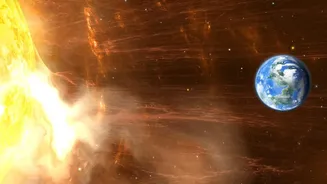
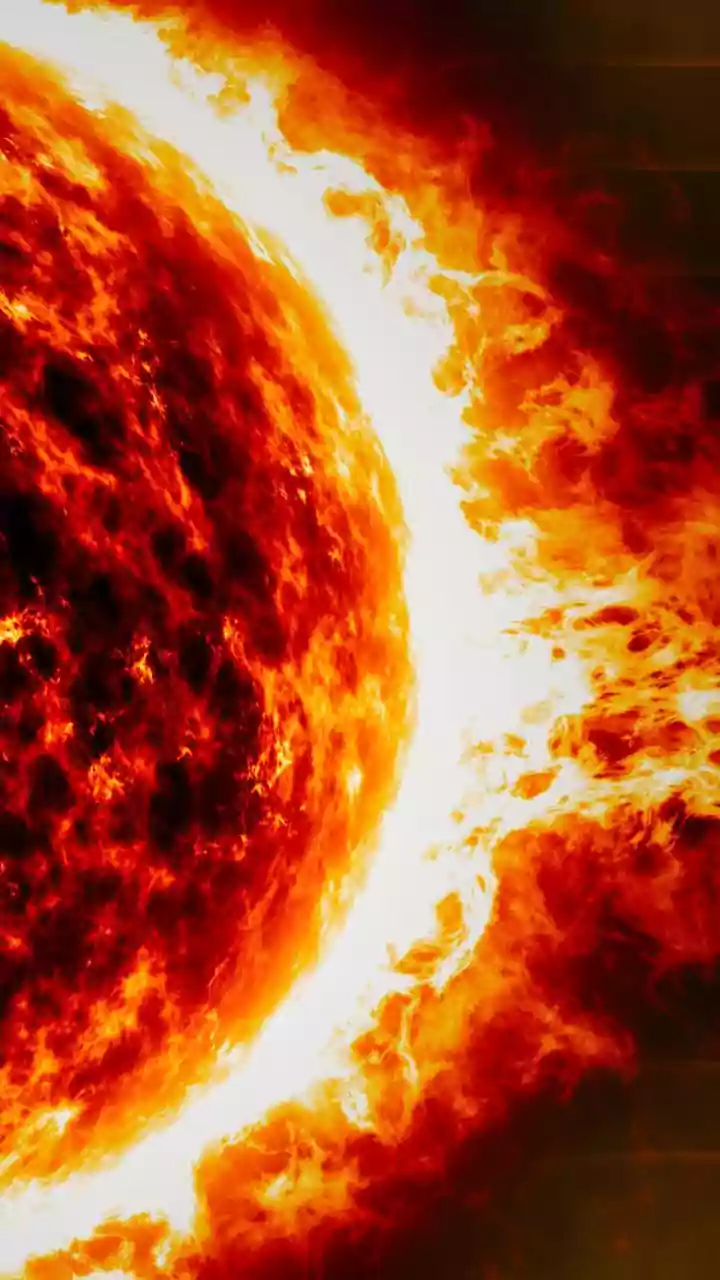
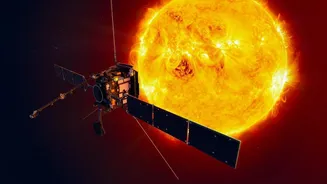
The sun, our life-giving star, has a turbulent side. It constantly releases a stream of charged particles—mostly electrons and protons—known as the solar wind. This wind travels at speeds of up to 1.5 million km/h, carrying with it the Sun's magnetic
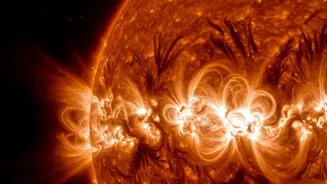
field. While Earth's own magnetic field, the magnetosphere, deflects most of this barrage, intense bursts can and do break through. These events, often powered by solar flares or massive eruptions called Coronal Mass Ejections (CMEs), can compress and disturb our planet's magnetic shield, creating what scientists call space weather storms. These storms aren't just a curiosity; they pose a direct risk to our high-tech civilisation.
Why Satellites Are Vulnerable
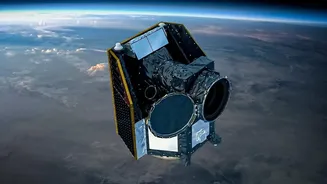
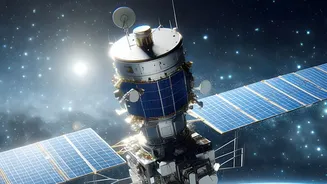
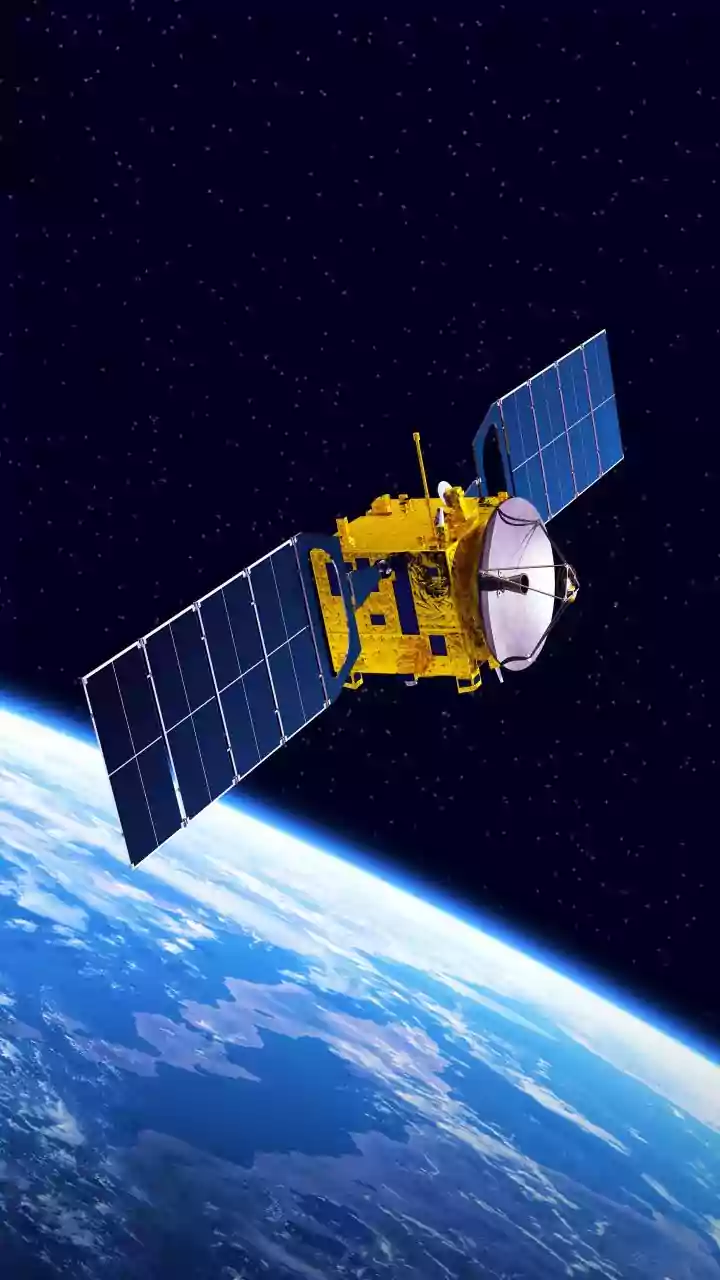
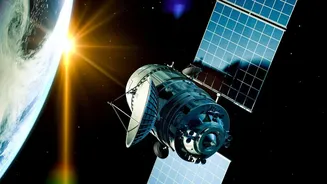
Satellites, particularly those in Low Earth Orbit (LEO) and Geosynchronous Orbit (GEO), are on the front lines of space weather. An intense solar storm can impact them in several ways. Firstly, it can heat Earth's outer atmosphere, causing it to expand. This increases the atmospheric drag on LEO satellites, causing their orbits to decay faster than predicted. Without correction, they risk re-entering the atmosphere prematurely. Secondly, high-energy particles can damage critical hardware. They can degrade solar panels, reducing a satellite's lifespan, or build up a charge on surfaces, leading to electrostatic discharges that can fry sensitive electronics. Finally, the charged environment can disrupt GPS signals and radio communications between the ground and the satellites, affecting everything from navigation to financial transactions.
An Early Warning System on the Ground
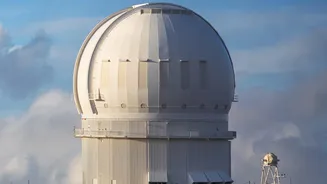
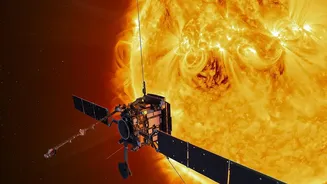
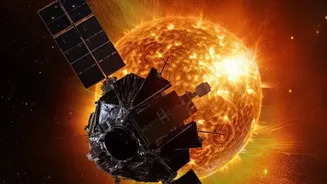
While space-based probes like India's Aditya-L1 provide crucial in-situ data, our first line of defense often begins on the ground. A global network of observatories constantly monitors the Sun and Earth's magnetic field for signs of an impending storm. In India, facilities like the Udaipur Solar Observatory (USO) play a key role. Situated on an island to ensure clearer observations, USO uses advanced telescopes to study sunspots and solar flares, which are often precursors to CMEs. By combining data from multiple ground stations, scientists can build a 24/7 picture of solar activity and track disturbances as they race towards Earth.
The Tools of the Trade
Ground observatories use several ingenious methods to measure the solar wind's impact indirectly. One of the most important tools is the magnetometer. Networks of these instruments, including those operated by the Indian Institute of Geomagnetism (IIG), measure fluctuations in Earth's magnetic field. A sudden, sharp change can signal that a CME has arrived and is compressing the magnetosphere. Another method involves using radio telescopes to observe Solar Radio Bursts (SRBs). Certain types of these bursts are associated with fast-moving CMEs, and since radio waves travel at the speed of light, detecting them provides a much faster warning than waiting for the CME particles themselves, which can take one to five days to reach us. Scientists can also study the ionosphere—the charged upper layer of our atmosphere—to see how it responds to incoming energy, giving another clue to the intensity of a solar event.
From Data to Actionable Forecasts
Raw data from magnetometers and radio telescopes is just the beginning. This information is fed into sophisticated models at prediction centres like the Regional Warning Centre (RWC) India, run by the National Physical Laboratory. These centres correlate the ground-based observations with data from space missions to create comprehensive space weather forecasts. These forecasts are not just academic; they are vital operational tools. An alert might prompt satellite operators to temporarily shut down sensitive electronics or adjust a satellite's orbit to reduce drag. Power grid operators can be warned of potential surges, and airlines can be advised on routes to avoid communication blackouts. This predictive capability is becoming increasingly critical as our reliance on space-based technology grows.