







A Sudden, Shocking Decline
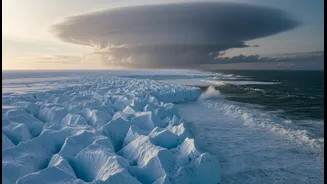
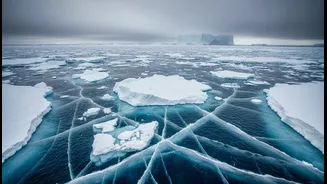
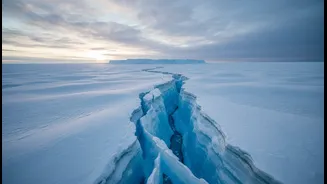
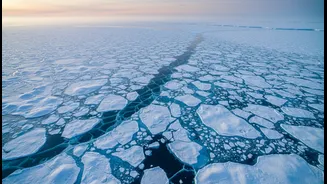
For decades, while Arctic sea ice was in a clear and worrying decline, its southern counterpart in Antarctica was surprisingly stable, even expanding slightly. But since 2016, that picture has changed dramatically. Antarctic sea ice extent has plunged
to record lows, leaving scientists stunned. In February 2023, it hit its lowest level in the 45-year satellite record. This sudden flip is linked to warmer ocean water, which had been trapped in deeper layers, being brought to the surface by changing wind patterns. This isn't just a temporary dip; the system has struggled to recover, suggesting a potential long-term shift.
Earth's Air Conditioner Is Faltering
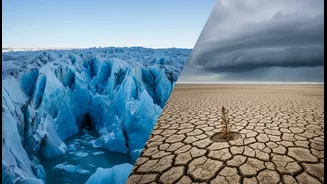
Think of Antarctica's vast white sea ice as a giant mirror. Its bright surface has a high albedo, meaning it reflects most of the sun's energy back into space, helping to keep the planet cool. When sea ice melts, it exposes the darker ocean beneath. This dark water absorbs far more solar radiation—up to 90 percent more—creating a vicious feedback loop. The more ice that melts, the more the ocean warms, which in turn melts more ice. This process, known as ice-albedo feedback, effectively turns down the planet's natural air conditioning, amplifying global warming.
The Link to India's Coastline
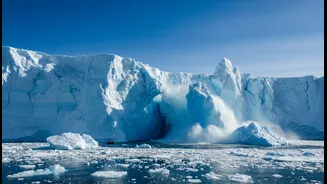
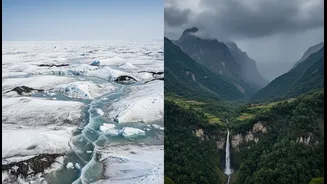
While melting floating sea ice itself doesn't significantly raise sea levels, its disappearance has a dangerous knock-on effect. The sea ice acts as a protective barrier, or buttress, for Antarctica's massive land-based ice sheets. Without this barrier, the warmer ocean and bigger waves can more easily reach and melt the edges of the glaciers on land. It is the melting of this land ice that is a primary driver of global sea-level rise. If the entire Antarctic Ice Sheet were to melt, it holds enough water to raise global sea levels by about 60 metres. For India, with its long, low-lying, and densely populated coastline, even a fraction of that potential rise threatens cities like Mumbai, Kolkata, and Chennai.
A Disturbance in the Monsoon
The changes in Antarctica don't just stay at the pole; they create ripples in global weather patterns that can reach India. The continent is a key driver of the world's ocean currents, including the massive Antarctic Circumpolar Current (ACC), which connects the Atlantic, Pacific, and Indian oceans. Research suggests that an increase in freshwater from melting ice can alter ocean circulation and sea surface temperatures thousands of kilometres away. Some studies have found a teleconnection, or long-distance link, between Antarctic sea ice variability and the strength of the Mascarene High, an atmospheric pressure system crucial for driving the Indian summer monsoon. Other research indicates that freshwater influx from Antarctica can influence Pacific Ocean patterns in ways that ultimately increase the intensity of the Indian summer monsoon rainfall, affecting the agricultural heartland that depends on predictable rains.
A Global Chain Reaction
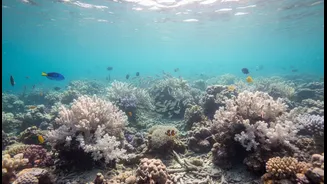
The impacts extend beyond weather and sea levels. The entire Southern Ocean ecosystem is built around the seasonal cycle of sea ice. It provides a vital habitat for krill, the tiny crustaceans that form the base of the food web. Less krill means less food for penguins, seals, and whales. The changes also disrupt the global ocean conveyor belt, a system of currents that transfers heat around the planet and helps sequester carbon in the deep ocean. A weakening of this system could further accelerate climate change and have unpredictable consequences for marine life and global weather systems for centuries to come.