



The Challenge of Traditional Spraying
For generations, grape farmers in Nashik have contended with pests and diseases like downy and powdery mildew that can devastate a harvest. The traditional solution has been manual spraying of pesticides and fungicides using knapsack sprayers. This method
is not only labour-intensive and slow but also poses health risks to workers from chemical exposure. Furthermore, manual spraying is often inefficient, leading to overuse of chemicals as it's difficult to ensure uniform coverage. This results in higher input costs for farmers and potential harm to the environment through chemical runoff and soil contamination. In a business with tight margins, every rupee spent on wasted pesticides is a rupee off the bottom line.
An Eye in the Sky with a Brain
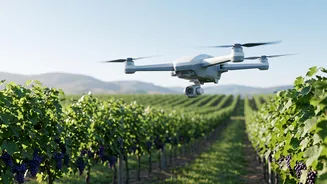
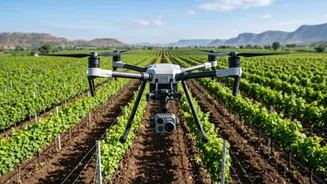
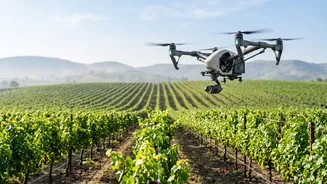
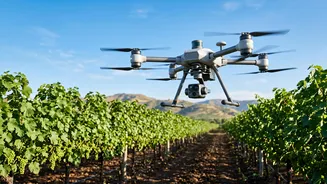
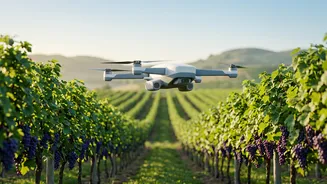
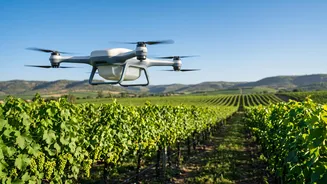
Enter the agricultural drone, equipped with Artificial Intelligence. These are not just remote-controlled sprayers; they are sophisticated data-gathering and analysis tools. AI-integrated drones use high-resolution multispectral cameras to fly over the vineyard, capturing data invisible to the human eye. The AI algorithms analyse these images to identify early signs of plant stress, disease, or pest infestation on a vine-by-vine basis. This creates a precise “health map” of the vineyard, pinpointing exactly which areas need treatment. The drone then uses this map for a targeted spraying mission, applying chemicals only where they are needed. This is the essence of precision agriculture: moving from blanket application to a surgical strike.
Significant Savings and Healthier Grapes
The benefits for Nashik's vineyard owners are tangible. The most immediate impact is on the cost of pesticides. By shifting from covering entire fields to spot-spraying affected plants, farmers can dramatically reduce chemical usage, with some studies showing reductions of up to 40%. This directly translates into lower operational expenses. Efficiency is another major gain. A drone can spray an acre of land in minutes, a task that could take a worker hours. This speed allows for rapid response when an outbreak is detected. Moreover, eliminating manual spraying reduces farm workers' direct exposure to potentially harmful chemicals, improving overall safety. Ultimately, healthier vines free from chemical overuse can lead to better quality grapes and improved yields.
Adoption Hurdles for Small Farmers
Despite the clear advantages, the path to adoption is not without its challenges, especially for small-scale farmers. The high initial cost of purchasing a high-end agricultural drone, which can run into several lakhs of rupees, is a major barrier. Beyond the hardware, there are costs for training, maintenance, and obtaining the necessary pilot certifications from the Directorate General of Civil Aviation (DGCA). To operate a drone for commercial spraying, a pilot needs to be certified by an approved training organisation. Recognizing these hurdles, a more accessible model is emerging: Farming as a Service (FaaS). Instead of buying a drone, farmers can hire local, certified drone service providers for a per-acre fee, which typically ranges from ₹600 to ₹900 for vineyards.
A Boost from Policy and Local Initiatives
The government is actively encouraging this technological shift. Schemes like the Sub-Mission on Agricultural Mechanization (SMAM) provide significant subsidies to make drone technology more affordable. Recently, Nashik's District Planning Committee sanctioned a plan to provide 48 farmer groups with subsidies of up to 90% for purchasing 'Kisan Drones', with a focus on empowering women-led self-help groups. This local push, combined with a growing ecosystem of drone startups and service providers in Maharashtra, is making the technology more accessible than ever. It signals a future where data-driven agriculture is not just for large corporations but is a practical tool for the small farmer in the heart of India's wine country.