





The True Spirit of Pookalam
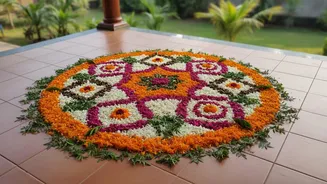
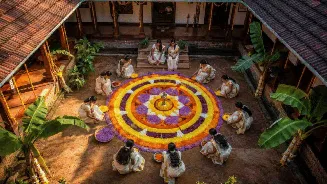
A pookalam, which translates to 'flower art', is a cherished symbol of Onam, representing joy, prosperity, and gratitude for nature's abundance. Traditionally, these intricate designs were made with locally available flowers, starting simply on the first
day, Atham, and growing more elaborate each day leading up to Thiruvonam. The essence lies not in the cost of the flowers, but in the spirit of coming together to create something beautiful. By exploring alternatives, you can honour this tradition in a way that is both modern and mindful, focusing on resourcefulness and creativity.
Go Green with Leaves and Foliage
Flowers get all the attention, but leaves offer an incredible variety of shapes, textures, and shades of green. Use finely chopped green leaves, like those from a gulmohar or even lemon leaves, to create lush backgrounds or sharp outlines. Mango leaves, with their different shades of green and reddish-brown, can add depth. Don't forget herbs like mint for a fragrant touch. You can create entire sections of your pookalam with just foliage, using flowers sparingly as bright highlights. This approach not only saves money but also adds a rich, natural feel to your design.
Find Colour in Your Kitchen
Your kitchen pantry is a treasure trove of vibrant, natural colours. Think of creating sections with yellow turmeric powder, red chilli powder, earthy brown coffee grounds, or the varied hues of different pulses and lentils. Coloured rice is another fantastic option; you can dye it yourself using food colouring and let it dry. These materials provide bold, consistent colours that are perfect for filling in geometric patterns or creating a base for more intricate details. Black sesame seeds or mustard seeds can be used for creating sharp, dark outlines or details, like in a Kathakali face design.
Embrace Powders and Sawdust
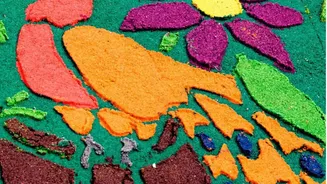
For a finish that mimics the texture of petals, consider using coloured sawdust or salt. Sawdust can be easily sourced from local carpenters and dyed in various colours. Similarly, coarse salt can be mixed with rangoli powders to create bright, sparkling textures. These materials are excellent for covering larger areas of your design efficiently. You can also use chalk, either as a powder or by drawing thick lines, to create clean borders and patterns for your design. These powders allow for smooth blending and can be a great canvas for a few strategically placed petals.
Use Flowers as a Final Accent
This guide isn't about eliminating flowers entirely, but using them thoughtfully. Instead of building your entire pookalam with expensive petals, treat them as the final, precious touch. Use a base of green leaves, coloured rice, or sawdust, and then use bright marigold, rose, or jasmine petals to highlight key parts of your design. A single ring of vibrant flowers around a centre filled with coloured salt can be incredibly striking. This minimalist approach makes each petal count, drawing the eye to the most important elements of your floral carpet and celebrating their beauty without excess.
Creative and Reusable Options
For a truly sustainable pookalam you can use year after year, think beyond perishable materials. You can create beautiful designs using reusable fabric petals, coloured felt paper, or even painted pasta shapes. Another innovative idea involves creating a permanent design on a cardboard base or a transparent plastic sheet. You can paint your pattern or glue on reusable elements, allowing you to bring out your stunning 'pookalam' every Onam with zero last-minute fuss. These are also great activities to involve children in the festive preparations.