



Why Sitting Causes Tight Hips
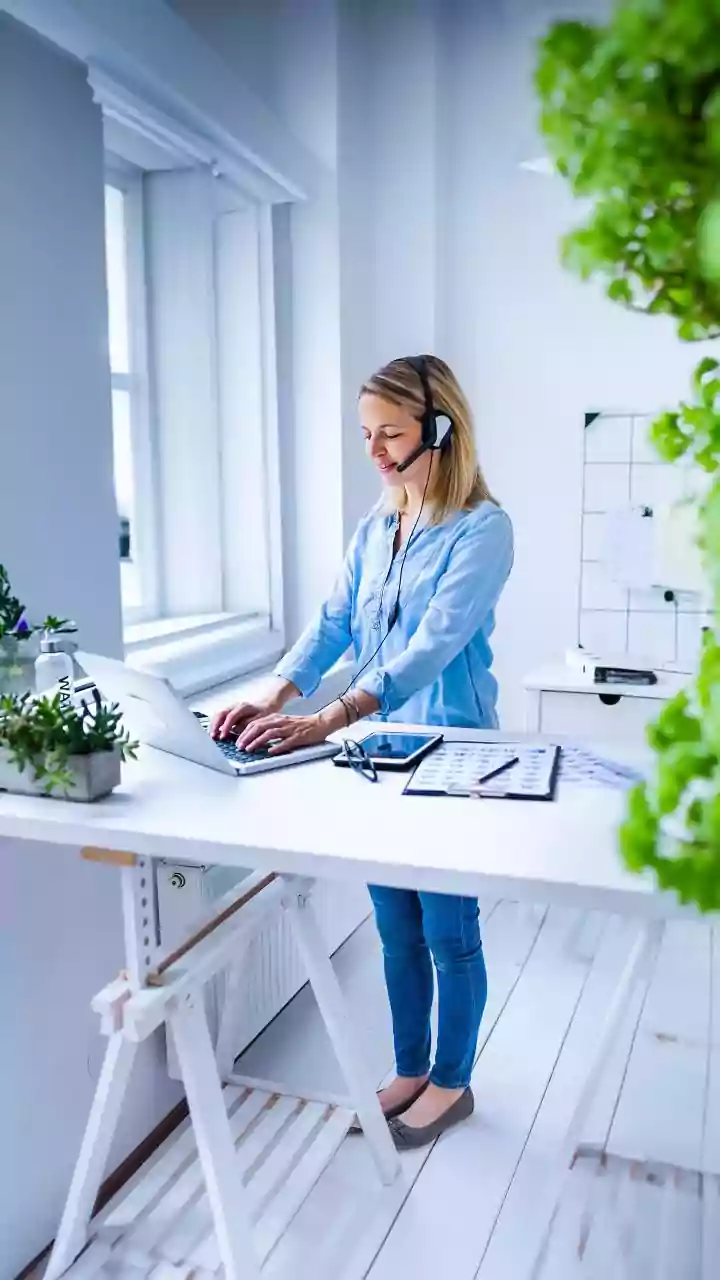
When you sit for extended periods, the muscles at the front of your hips, known as the hip flexors, are held in a shortened, compressed position. This chronic shortening leads to tightness and can cause your pelvis to tilt forward, contributing to lower
back pain and affecting your posture. At the same time, your glute muscles, which should be supporting your pelvis, can become weak and inactive from lack of use, a phenomenon sometimes called 'gluteal amnesia'. This combination of tight hip flexors and weak glutes creates an imbalance that results in stiffness, reduced mobility, and discomfort. The key to countering this is to reintroduce movement and encourage your joints and muscles to go through their full range of motion.
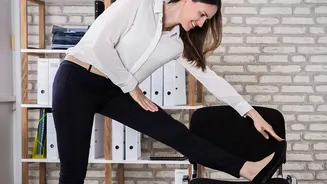
1. Seated Figure-Four Stretch
This is an excellent stretch you can do right at your desk without drawing too much attention. It targets the deep gluteal muscles, including the piriformis, which can become tight and contribute to hip pain. To perform it, sit tall in your chair with both feet flat on the floor. Cross your right ankle over your left knee, creating a '4' shape with your legs. Keeping your back straight, gently lean forward from your hips until you feel a comfortable stretch in your right glute and hip. Hold this position for 20-30 seconds, breathing deeply. Avoid rounding your back; the movement should come from your hips. Slowly return to the starting position and repeat on the other side.
2. Kneeling Hip Flexor Stretch
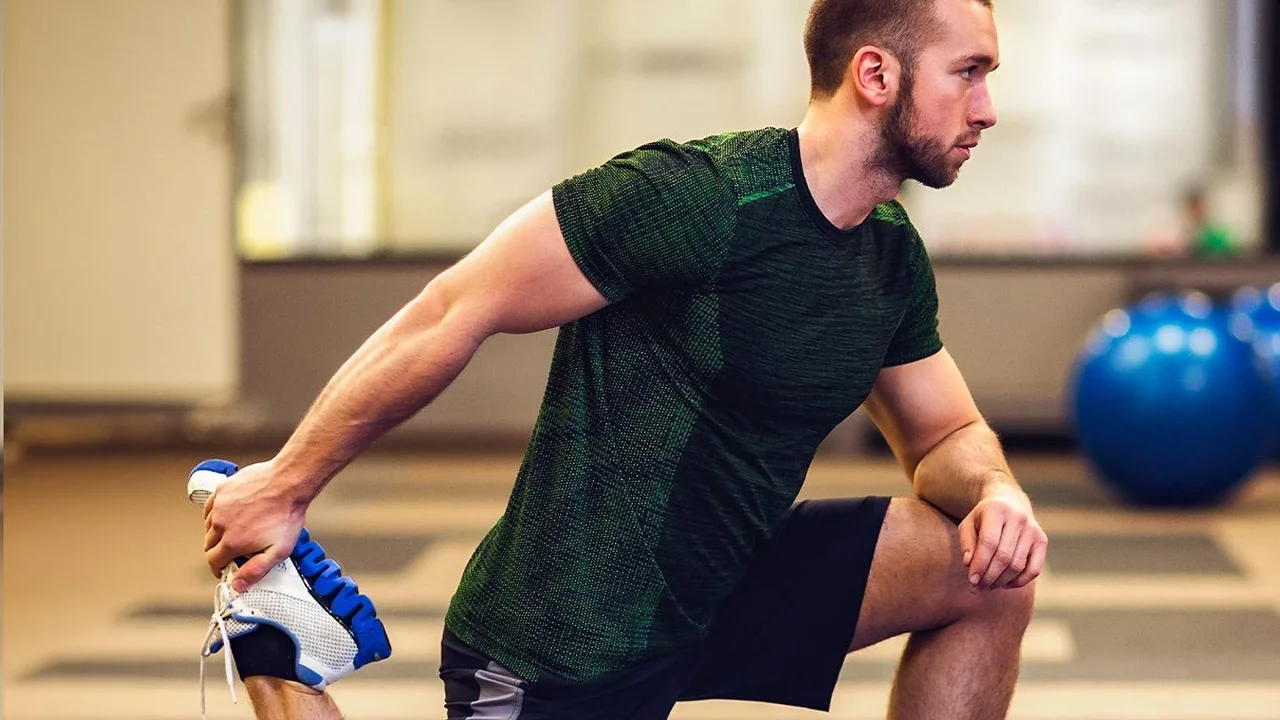
Considered one of the most effective stretches for tight hip flexors, this movement directly lengthens the muscles at the front of your hip. Find a comfortable spot on the floor (a yoga mat or carpeted area is ideal) and come into a kneeling lunge position. Place your right foot forward with the knee bent at a 90-degree angle, directly over your ankle. Your left knee should be on the floor, directly under your hip. For comfort, you can place a cushion under your kneeling knee. Gently tuck your tailbone under and squeeze the glute of your left leg. You should feel a stretch in the front of your left hip. For a deeper stretch, you can slowly shift your weight forward. Hold for 30 seconds, then switch sides. The key is to avoid arching your lower back.
3. Glute Bridge
This exercise is crucial for 'waking up' the glute muscles that become inactive from prolonged sitting. Strong glutes help support your pelvis and take the strain off your hip flexors and lower back. Lie on your back with your knees bent, feet flat on the floor about hip-width apart, and your arms resting by your sides. Engage your core and glutes to lift your hips off the floor until your body forms a straight line from your shoulders to your knees. Hold this position for a few seconds at the top, focusing on squeezing your glutes. Slowly lower your hips back down to the floor. Aim for 10-15 repetitions.
4. Standing Hip Circles
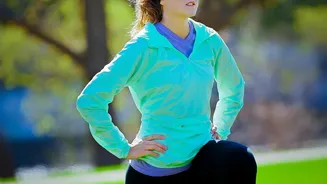
Mobility isn't just about stretching; it's about actively moving your joints. Hip circles are a gentle way to warm up the hip joint and improve its range of motion. Stand with your feet hip-width apart and place your hands on your hips for balance. Lift one knee up to about hip height. From here, slowly begin to draw large, controlled circles with your knee. Make 5-10 circles in one direction, then reverse and make 5-10 circles in the other direction. The movement should be smooth and initiated from the hip joint. Repeat on the other leg. This is a great exercise to do during a quick standing break from your desk.
Making It a Daily Habit
Consistency is more important than intensity. The goal is to counteract the daily effects of sitting, which requires daily attention. Try to incorporate these movements into your workday. Set a reminder to get up and move every 30-60 minutes, even if it's just for a quick walk around the office. You can do the Seated Figure-Four stretch while on a phone call or the Standing Hip Circles while waiting for your coffee to brew. By making these small, consistent efforts a part of your routine, you can significantly reduce stiffness, improve your posture, and keep your hips healthy and mobile.