



One Family, Two Personalities
It might surprise you to learn that fiery chillies and sweet, crunchy capsicums (often called bell peppers) belong to the same botanical family, Capsicum. Think of them as cousins with wildly different personalities who show up to the same family dinner.
One brings the electrifying conversation and heat, the other brings substance, sweetness, and vibrant colour. While a chilli's purpose is to add a spicy kick, a capsicum's role is to be a vegetable, adding bulk, texture, and mild flavour. In essence, all chillies are peppers, but not all peppers are chillies. The defining factor is the presence and intensity of a compound called capsaicin, which is responsible for the burning sensation we associate with 'heat'. Capsicums have virtually none, which is why they are sweet and mild.
The Soul of Spice: The Chilli
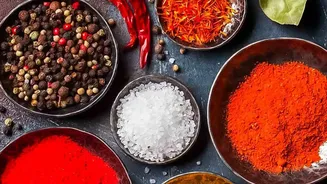
The chilli pepper is the backbone of spice in Indian cuisine. From the mild warmth of a Kashmiri chilli to the blistering fire of a Bhut Jolokia (ghost pepper), the variety is astounding. India cultivates hundreds of types, each with a specific role. Varieties like Kashmiri and Byadgi are prized for imparting a deep red colour without overwhelming heat, making them perfect for dishes like Rogan Josh. Workhorse chillies like the Guntur from Andhra Pradesh provide the confident, everyday heat found in many curries and powders. Then there are regional gems, like the Jwala, popular in Gujarat, or the tiny but potent Kanthari from Kerala. The 'heat' from chillies isn't just about pain; it's a flavour enhancer that can cut through richness and add an exciting dimension to everything from a simple dal tadka to complex gravies. Using them is an art: some are used fresh, some dried, and some powdered, each method releasing a different facet of its flavour.
The Champion of Crunch: The Capsicum
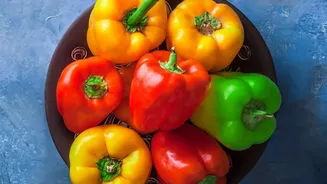
If the chilli is the soul of spice, the capsicum is the champion of substance and texture. Available in a rainbow of colours—green, yellow, orange, and red—each has a slightly different flavour profile. Green capsicums are harvested earliest and have a slightly bitter, grassy flavour. As they ripen on the vine, they turn yellow, then orange, and finally red, becoming progressively sweeter and more nutritious along the way. A red capsicum is simply a fully ripened green one. Their thick, juicy walls are perfect for adding a satisfying crunch to salads, stir-fries, and noodle dishes. In Indian cooking, capsicum is a star in dishes like Capsicum Masala, Paneer Jalfrezi, and vegetable Kolhapuri, where it provides a sweet counterpoint to the spices and adds welcome bulk and texture to the gravy. Unlike chillies, where the seeds are often the hottest part, capsicum seeds are typically removed because they can taste bitter.
A Nutritional Snapshot
Both chillies and capsicums are nutritional powerhouses. They are low in calories and excellent sources of Vitamin C. In fact, a single red capsicum can contain more Vitamin C than an orange. Red capsicums are also packed with Vitamin A and antioxidants like beta-carotene. Chillies, while consumed in smaller quantities, are also rich in Vitamins A and C and are noted for containing capsaicin, which some studies suggest can have anti-inflammatory properties and may even slightly boost metabolism. While capsicums offer more dietary fibre due to the larger quantities in which they're eaten, both are a healthy addition to any meal.
Better Together in the Kitchen
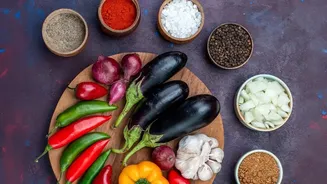
The real magic happens when these two pantry staples work together. They are not rivals but a dynamic duo. Imagine a classic kadai paneer: the base gravy is built on aromatics and the heat of green chillies, while chunks of crisp capsicum are added towards the end to retain their bite and add a fresh, sweet dimension. For a simple weeknight meal, a quick stir-fry might use finely chopped chillies for a base heat, with long strips of yellow and red capsicum adding colour, crunch, and sweetness. You can even stuff larger, milder chillies (like Bhavnagri) or small capsicums with a spiced potato or paneer filling for a delicious appetiser. Understanding their individual strengths is the key. Use chillies for foundational heat and flavour, and use capsicums for texture, sweetness, and bulk.
Shopping and Storage Tips
When buying fresh, look for peppers with firm, glossy skin free of blemishes or soft spots. Store both whole chillies and capsicums in a paper bag or a perforated plastic bag in the vegetable drawer of your refrigerator; they should last for about a week. For longer storage, both can be frozen. Simply wash, chop them (removing seeds from the capsicum), and spread them on a baking sheet to freeze individually before transferring to a freezer bag. Frozen peppers lose their crispness but are perfect for adding to cooked dishes like curries, soups, and sauces.