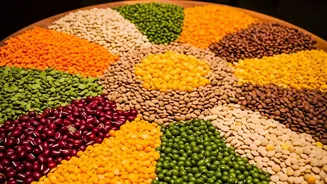






Why Soaking Matters (And When It Doesn't)
Soaking pulses before cooking does more than just speed up the process. It rehydrates the dried seeds, ensuring they cook evenly. More importantly, soaking helps break down compounds like phytic acid and oligosaccharides. These 'anti-nutrients' can interfere
with mineral absorption and are often responsible for causing bloating and gas. By soaking pulses for a few hours and then discarding the water, you make them easier to digest and their nutrients more available to your body. However, not all pulses need this treatment. Small, split lentils like masoor dal (red lentils) cook so quickly that soaking isn't necessary, though it can still be done to reduce cooking time.
The Quick-Cook Dals: Moong, Masoor, and Toor
These are the everyday heroes of the Indian kitchen, known for their creamy texture and fast cooking times. Masoor Dal (Split Red/Orange Lentils): Requires no soaking. Simply rinse and cook. It becomes tender in about 15-20 minutes on the stovetop and even faster in a pressure cooker (about 5-7 minutes). Moong Dal (Split Yellow Mung Beans): Soaking is optional. A 30-minute soak is plenty if you choose to. It cooks in about 20-25 minutes on the stovetop and quickly in a pressure cooker. Toor/Arhar Dal (Split Pigeon Peas): This dal benefits from a short soak of about 30 minutes to an hour to ensure it cooks evenly and becomes soft. It generally takes about 3-4 whistles in a pressure cooker.
The Sturdier Dals: Chana, Urad, and Whole Lentils
These pulses have more structure and require a bit more attention to achieve a tender, creamy consistency. Chana Dal (Split Bengal Gram): Soaking is highly recommended for at least 3-4 hours, or even overnight. This is crucial for it to cook through without remaining tough. In a pressure cooker, soaked chana dal will need around 6-7 whistles to become perfectly soft. Urad Dal (Split and Whole Black Gram): Split white urad dal benefits from a 1-2 hour soak. Whole black urad dal, the star of Dal Makhani, absolutely requires an overnight soak of at least 8 hours to soften its tough skin and achieve its signature creamy texture. Expect a long cooking time, even in a pressure cooker. Sabut Moong (Whole Green Gram): While it can be cooked without soaking, a 4-6 hour soak (or overnight) significantly reduces cooking time and makes it more digestible.
The Big Beans: Rajma and Chole
For these beloved North Indian staples, soaking is non-negotiable. Their large size and dense texture mean they need extensive rehydration. Rajma (Kidney Beans): Must be soaked for a minimum of 8 hours, or ideally overnight. After soaking, discard the water and rinse well. In a pressure cooker, soaked rajma typically needs 7-8 whistles or about 25-30 minutes on high pressure to become fully tender and creamy. Chole (Chickpeas/Garbanzo Beans): Like rajma, chickpeas must be soaked for at least 8 hours or overnight. This drastically cuts down on cooking time. Soaked chickpeas will cook in a pressure cooker in about 15-20 minutes at high pressure, followed by a natural pressure release. Without soaking, they could take 40-50 minutes or longer.
Key Tips for Perfect Pulses
A few final rules of thumb can elevate your dal and bean dishes. First, always rinse pulses before soaking and cooking to remove dust or debris. Second, always use fresh water for cooking; never use the soaking water, as it contains the compounds you want to get rid of. Third, hold the salt. Adding salt at the beginning of the cooking process can sometimes make the skins of beans and lentils tough. It's best to add salt and other acidic ingredients like tomatoes or lemon juice towards the end of cooking, once the pulses are tender. Finally, be patient with a pressure cooker. Allowing the pressure to release naturally, especially for larger beans, helps them finish cooking gently and absorb liquid, resulting in a better texture.