

A New Window to the Cosmos
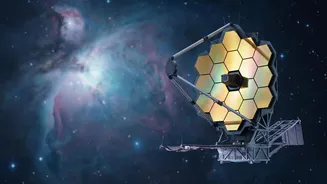
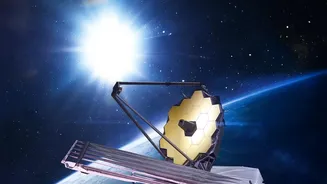
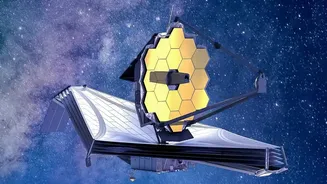
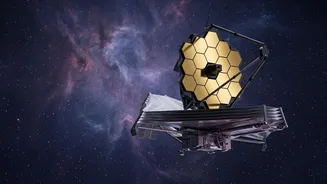
The James Webb Space Telescope is the most powerful space observatory ever built, but its true strength lies in its ability to see the universe in infrared light. This is crucial because the chemical elements that make up a planet's atmosphere absorb
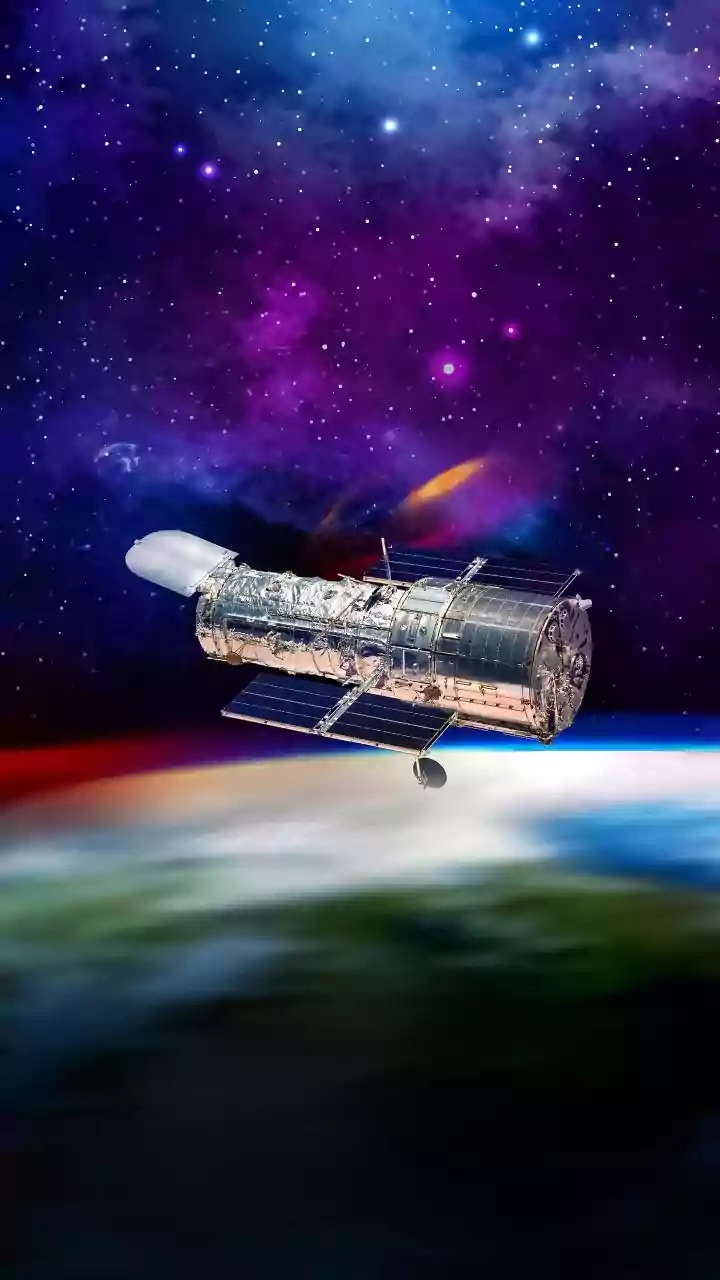
light at specific infrared wavelengths. While the Hubble Space Telescope could detect some atmospheric components like water, JWST's larger mirror and advanced instruments provide a much clearer and more detailed view, allowing it to analyze atmospheres hundreds of light-years away with unprecedented precision. This capability has opened a new frontier in the search for worlds that might harbour life.
The Art of Reading Starlight
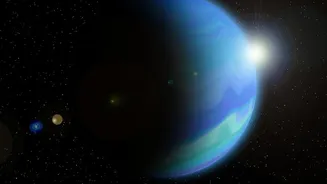
The primary method JWST uses is called transmission spectroscopy. It sounds complex, but the idea is quite simple. When an exoplanet passes in front of its host star from our perspective—an event called a 'transit'—a tiny fraction of the starlight filters through the planet's atmosphere. As this light travels through the atmospheric gases, different molecules absorb specific colours, or wavelengths, of light. This leaves a unique chemical 'fingerprint' imprinted on the starlight that reaches the telescope. JWST’s sensitive spectrographs can capture this filtered light and spread it out like a rainbow, revealing which wavelengths are missing.
Decoding a Planet’s Barcode
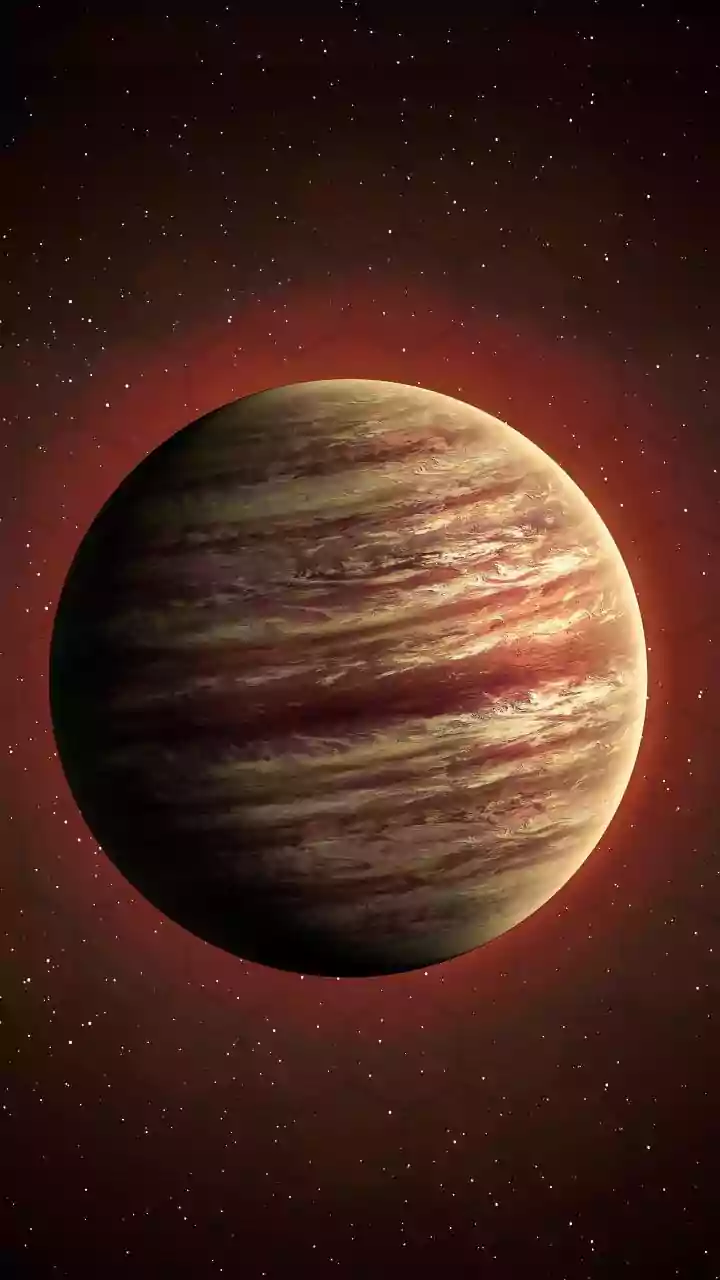
Each chemical element or compound has a unique absorption pattern, similar to a barcode. Water vapour, for example, has a very recognisable signature. By analysing the spectrum of starlight after it has passed through an exoplanet's atmosphere, scientists can identify the presence of specific gases. For instance, on the gas giant WASP-96 b, JWST captured the distinct signature of water, along with evidence of clouds. This process allows astronomers to determine the chemical makeup of an alien world's sky without ever visiting it, a task that was much more difficult before JWST's launch.
The Significance of Water
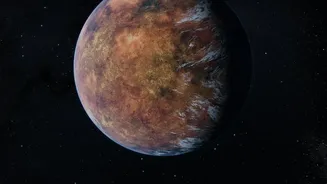
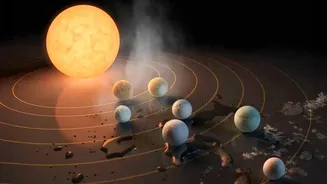
Finding water is a major milestone because, as far as we know, liquid water is an essential ingredient for life. All life on Earth depends on it to facilitate the chemical reactions necessary for survival. This is why astronomers often 'follow the water' when searching for potentially habitable worlds. JWST has already confirmed water vapour in the atmospheres of several exoplanets, including the much-discussed K2-18 b. This exoplanet, located 124 light-years away, orbits within its star's habitable zone, the region where temperatures could allow for liquid water to exist on a planet's surface.
Beyond Water: The Hunt for Biosignatures
While finding water is exciting, it doesn't automatically mean a planet hosts life. JWST’s scans are also searching for a cocktail of chemicals known as biosignatures. For example, on Earth, life produces gases like methane and oxygen. Finding a combination of gases that are out of chemical balance, such as methane and carbon dioxide together without carbon monoxide, could suggest the presence of biological processes. JWST detected both methane and carbon dioxide in the atmosphere of K2-18 b, making it a compelling target for further study. Scientists are now exploring whether JWST can detect even more complex biosignatures, taking us one step closer to answering that age-old question.