



A Reality Check on Green Lungs
Before turning your home into a jungle, it is crucial to set realistic expectations. Houseplants are often cited for their air-purifying qualities, a claim popularised by a 1989 NASA study which found that certain plants could remove volatile organic
compounds (VOCs) like benzene and formaldehyde from sealed chambers. However, our homes are not sealed labs. While plants are fantastic at removing these gaseous pollutants, their effect on the fine particulate matter (PM2.5) that characterizes much of Delhi's smog is less pronounced. Think of houseplants not as a replacement for a high-quality air purifier during peak pollution, but as a vital, living supplement. They are part of a multi-layered approach to creating a healthier indoor environment, working alongside ventilation and other purification methods.
The Hardy and Resilient Snake Plant
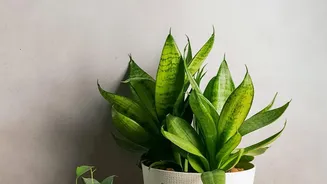
If you are new to plant care, the Snake Plant (Sansevieria trifasciata) is your perfect starting point. It is famously difficult to kill, thriving in low light and requiring minimal watering, making it ideal for busy households. Its superpower lies in its ability to filter toxins like formaldehyde, benzene, xylene, and nitrogen oxides. Uniquely, the Snake Plant performs a type of photosynthesis that allows it to release oxygen at night, a rarity among houseplants. This makes it an excellent companion for the bedroom, quietly working to improve air quality while you sleep.
The Lush and Humidifying Areca Palm
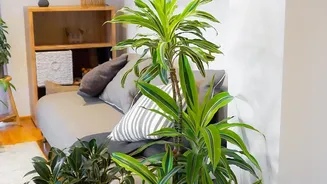
The Areca Palm (Dypsis lutescens) is a popular choice for its lush, feathery fronds that bring a tropical feel indoors. Beyond its aesthetic appeal, it's a workhorse for air purification. It is particularly effective at removing toxins like formaldehyde and xylene. One of its significant benefits for dry Delhi winters is its high transpiration rate, which means it releases a good amount of moisture into the air, acting as a natural humidifier. This can help combat the dryness caused by indoor heating. It prefers bright, indirect light to thrive and can make a big statement in a living room corner.
The Ubiquitous and Versatile Money Plant
Found in countless Indian homes, the Money Plant (Epipremnum aureum or Pothos) is more than just a symbol of good fortune. It is an incredibly effective and low-maintenance air purifier. This fast-growing vine is adept at removing harmful VOCs, including formaldehyde and benzene, which are often emitted by furniture, paints, and cleaning products. It is exceptionally tolerant of various conditions, from low light to bright, indirect sunlight, and can be grown easily in both soil and water. Its versatility allows you to place it on shelves, in hanging baskets, or on tabletops, adding a touch of green to any room.
The Elegant Peace Lily
The Peace Lily (Spathiphyllum) is one of the few air-purifying plants that also produces beautiful white flowers indoors with minimal sunlight. It is recognized for its ability to break down a wide range of toxins, including ammonia, benzene, formaldehyde, and trichloroethylene. Like the Areca Palm, it also helps to humidify the air. It prefers shady spots and consistently moist soil. A word of caution is necessary, however: the Peace Lily is toxic if ingested, so it should be kept out of reach of curious pets and small children.
The Prolific Spider Plant
The Spider Plant (Chlorophytum comosum) is a champion purifier that is also incredibly easy to grow and propagate. It's particularly effective against formaldehyde, xylene, and carbon monoxide. Known for the little 'spiderettes' or offshoots it produces, a single plant can quickly lead to many more, allowing you to expand your green army against pollution. It is also non-toxic, making it a safe and cheerful addition to homes with pets and children. Its arching leaves look great in a hanging pot near a window, where it can get bright, indirect light.