



Beyond the Physical Lens
For decades, astrophotography was the domain of expensive telescopes and dedicated cameras with large sensors. Smartphones, with their tiny sensors and compact lenses, seemed physically incapable of capturing the faint light of distant stars. The hardware
limitations are real; small sensors struggle in low light, often producing grainy, underexposed images. The breakthrough came not from bigger hardware, but from smarter software. This is the world of computational photography, where algorithms are used to overcome the physical limitations of a camera. Instead of trying to capture one perfect shot, your phone captures a series of images and uses software to intelligently combine them into something far greater than the sum of its parts.
The Power of Stacking Images
The core technique behind modern mobile astrophotography is called image stacking. When you put your phone on a tripod and activate a 'Night' or 'Astro' mode, it doesn't just take one long picture. Instead, it captures multiple frames over a period that can last up to several minutes. For example, it might take fifteen separate 16-second exposures. Each individual photo will likely have some 'noise'—a random speckling of pixels that makes the image look grainy. However, because this noise is random in each frame, software can average them all out. The random noise cancels itself out, while the constant light from the stars and celestial objects gets reinforced, becoming clearer and more prominent in the final image.
An AI-Powered Celestial Artist
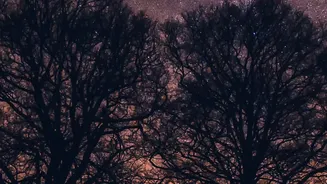
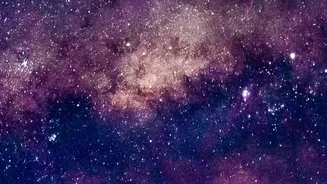
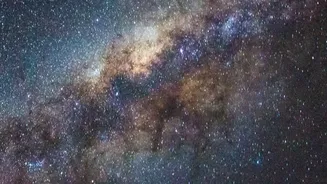
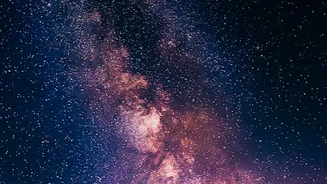
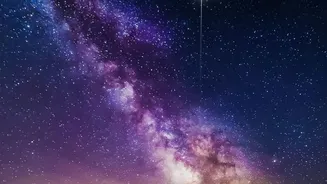
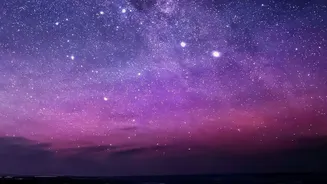
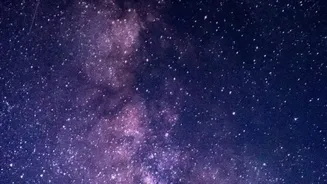
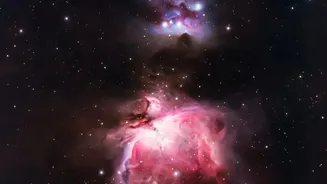
This is where Artificial Intelligence takes the reins. After stacking the images to improve the signal-to-noise ratio, AI algorithms perform the detailed work of refining the picture. These AI models are often trained on thousands of professionally captured astrophotographs to learn what a high-quality night sky image should look like. The software can identify stars, nebulae, and even the faint band of the Milky Way, differentiating them from leftover noise or atmospheric haze. Some algorithms can perform 'semantic segmentation,' identifying the sky and treating it differently from the landscape in the foreground. This allows for intelligent brightening of the stars without blowing out the highlights of a tree or building. It also adjusts contrast and colour balance to produce a final image that is both scientifically plausible and aesthetically pleasing.
Correcting for a Moving Target
Taking a photo over several minutes presents another major challenge: the Earth is constantly rotating. In a traditional long-exposure photo, this movement would cause stars to appear as streaks across the sky. Smartphone astrophotography algorithms are designed to counteract this. By identifying the stars in each frame, the software can digitally align each image in the stack, effectively 'un-doing' the Earth's rotation. This ensures that each star remains a sharp, distinct point of light. Some advanced algorithms can even perform this alignment without needing a specialised star tracker, making the process seamless for the user.
Putting It All Together
So, when you press the shutter button for that night sky photo, a complex symphony begins. First, the phone must be held perfectly still, which is why a tripod is essential for the best results. The camera then captures a sequence of long-exposure shots, gathering as much faint light as possible. The stacking algorithm layers these images to dramatically reduce noise. Simultaneously, alignment algorithms correct for the Earth's rotation to keep stars sharp. Finally, an AI-powered processing engine enhances colours, boosts clarity, and makes intelligent adjustments to deliver a final, stunning photograph that would have been unimaginable from a pocket device just a few years ago. It's a powerful fusion of optics and code that has put the cosmos within reach of everyone.