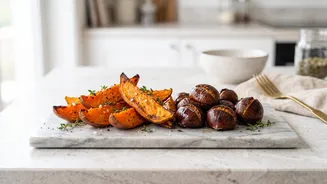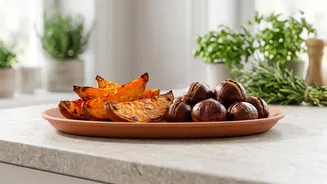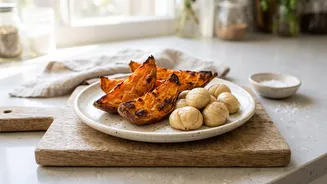

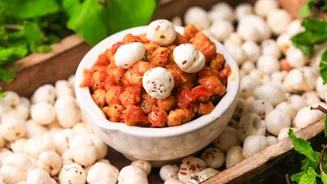
As the weather cools, two seasonal favourites often appear on our plates: the humble sweet potato and the festive chestnut. While both are delicious and nutritious, they are far from interchangeable. Understanding their unique profiles is key.
A Tale of Two Starches
At a glance,
sweet potatoes and chestnuts seem to occupy a similar space in our diets. Both are starchy, comforting, and can be roasted to delicious effect. However, botanically and nutritionally, they are worlds apart. The sweet potato, or 'shakarkandi', is a root vegetable celebrated for its vibrant colour and versatility. Chestnuts, on the other hand, are the fruit of a tree. Unlike other nuts which are high in fat, chestnuts are primarily composed of carbohydrates and water, giving them a softer texture more akin to a baked potato than an almond. This fundamental difference in composition is where our story of portion sizes truly begins.
The Nutritional Divide
Let’s break down what’s inside. A 100-gram serving of boiled sweet potato has around 76-90 calories, is virtually fat-free, and contains about 18-21 grams of carbohydrates. Its most famous feature is its incredible vitamin A content; a single medium sweet potato can provide well over the daily recommended intake, which is crucial for vision and immune health. It's also a good source of vitamin C and potassium. Roasted chestnuts, in contrast, are more calorie-dense. A 100-gram portion contains roughly 245 calories and about 53 grams of carbohydrates. Where chestnuts shine is in their unique offering of being the only nut to contain a significant amount of vitamin C, even after cooking. They also provide B vitamins, manganese, copper, and a good dose of dietary fibre.
Carbohydrates and Calories
This is where the 'portion size matters' argument comes into sharp focus. With more than double the calories and carbohydrates of sweet potatoes, mindlessly snacking on roasted chestnuts can quickly add up. While both provide complex carbohydrates that offer sustained energy, the density is vastly different. Think of it this way: a portion of chestnuts should be treated more like a serving of rice or pasta rather than a light snack. The fibre in both foods helps to slow down the absorption of sugar, supporting better blood sugar management. However, the cooking method for sweet potatoes can dramatically alter their glycemic index (GI), which measures how quickly a food raises blood sugar. Boiled sweet potatoes have a low-to-medium GI, while baking can cause it to spike significantly.
Health Benefits Beyond the Basics
Beyond the main numbers, each food offers distinct advantages. Sweet potatoes are antioxidant powerhouses, largely thanks to beta-carotene (the precursor to vitamin A), which helps protect the body from cellular damage. Their combination of soluble and insoluble fibre promotes a healthy gut microbiome and aids digestion. Chestnuts, being low in fat, are a heart-friendly nut. The fibre helps manage cholesterol levels, and they are a good source of minerals like potassium, which helps regulate blood pressure. Their unique profile makes them a filling, gluten-free option that can contribute to weight management when eaten in moderation.
The Portion Size Puzzle Solved
So, how much is a sensible portion? For sweet potato, a medium-sized one (around 130–150 grams) is a perfect serving, counting as one of your five–a–day. This provides ample nutrients without an excessive calorie load. It's an ideal carbohydrate to pair with a protein and plenty of non–starchy vegetables for a balanced meal. For chestnuts, a healthy handful, which is about 30 grams or roughly four roasted chestnuts, is a good serving size for a snack. If you plan to eat more, consider it a replacement for other carbs in your meal, not an addition. For example, 60–80 grams of boiled chestnuts can work as a dessert if you've reduced the carbohydrate portion of your main course.