


Fighting the Heat: Your First Line of Defence
Windows are a primary source of unwanted heat gain in homes, especially during peak summer months. A bare window can let in a significant amount of solar heat, forcing your air conditioner to work overtime. The most effective window treatments for heat management
are those designed for insulation. Cellular shades, also known as honeycomb shades, are a top performer. Their unique honeycomb-shaped pockets trap air, creating a barrier that reduces heat transfer by up to 60%. For even greater efficiency, double-cell versions offer an extra layer of insulation. Thermal curtains are another excellent choice. Unlike standard curtains, they feature multiple layers, often including a foam core or dense lining, which provides a thermal barrier. This construction helps keep rooms cooler in the summer and warmer in the winter. When choosing, look for curtains with a light-coloured backing to reflect sunlight away from the window. Layering treatments, such as pairing a sheer curtain with a thermal blackout curtain, offers flexibility: you can enjoy soft, diffused light during the day and block heat completely during the hottest hours.
Winning the War on Glare
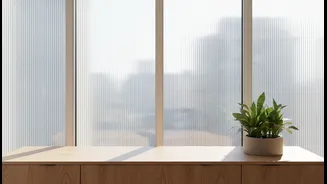
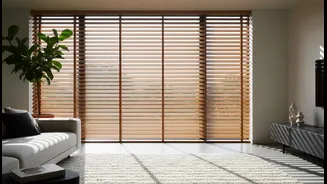
Glare from windows can make it difficult to watch television, work on a computer, or even relax comfortably. The goal is to diffuse harsh sunlight without plunging the room into darkness. Solar shades are specifically engineered for this purpose. Often described as sunglasses for your windows, they are made of a special screen-like fabric that reduces glare and blocks harmful UV rays while preserving your outside view. They come in various 'openness factors' (typically 1% to 14%), which determines how much light and visibility is maintained. A lower percentage means less glare and more UV protection. Light-filtering fabrics in Roman shades or roller shades can also soften incoming light effectively. For home offices, where screen glare is a major issue, positioning your monitor perpendicular to the window is a good first step. Combining this with adjustable blinds, like Venetian or vertical blinds, allows you to tilt the slats and redirect sunlight towards the ceiling, away from your screen.
Mastering Privacy Without Sacrificing Light
Privacy is a key concern, especially for ground-floor homes or windows that face neighbouring buildings. However, achieving privacy often comes at the cost of natural light. Traditional curtains, when closed, offer complete privacy but block all light. This is where innovative designs like top-down/bottom-up shades excel. Available in cellular and Roman styles, these shades can be lowered from the top as well as raised from the bottom. This allows you to cover the lower portion of your window for privacy while letting natural light stream in from above, creating a bright yet secluded space. Layering is also a highly effective strategy for privacy. For instance, a sheer curtain can provide privacy during the day when the light outside is brighter than the light inside. However, at night, when you have lights on, sheers become transparent. Pairing them with an opaque blackout curtain or blind provides a second layer that you can draw for complete privacy after dark. Bamboo chick blinds are a popular option in India that filter light while allowing airflow, but they also require an inner curtain for nighttime privacy.
The Right Material Makes a Difference
The material of your window treatment directly impacts its performance. For heat control, natural fabrics like cotton and linen are preferable to synthetics like polyester, as they breathe and don't trap heat. For curtains intended to block heat, the key is not the face fabric but the insulating lining. Thermal curtains use technical, multi-layered constructions to achieve their insulating properties. For durability against the strong Indian sun, solution-dyed polyesters or specialised UV-blocking fabrics are a wise investment, as they resist fading and deterioration far better than natural fibres like raw silk or standard cotton. In the world of shades, cellular shades trap air in their fabric pockets for insulation, while solar shades use a woven mesh to filter light. Even blinds come in different materials; wooden Venetian blinds are natural insulators and don't conduct heat like metal or PVC blinds do.