

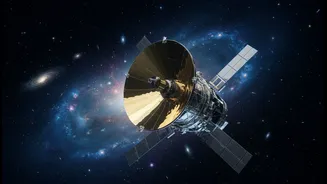
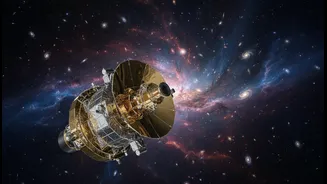


A New Eye on the Cosmos
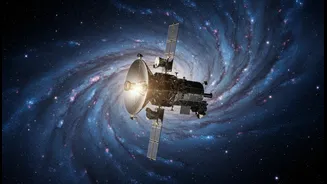
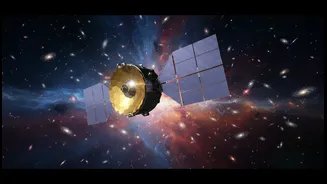
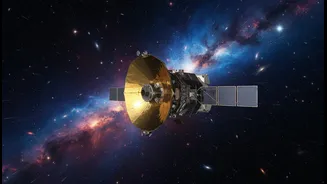
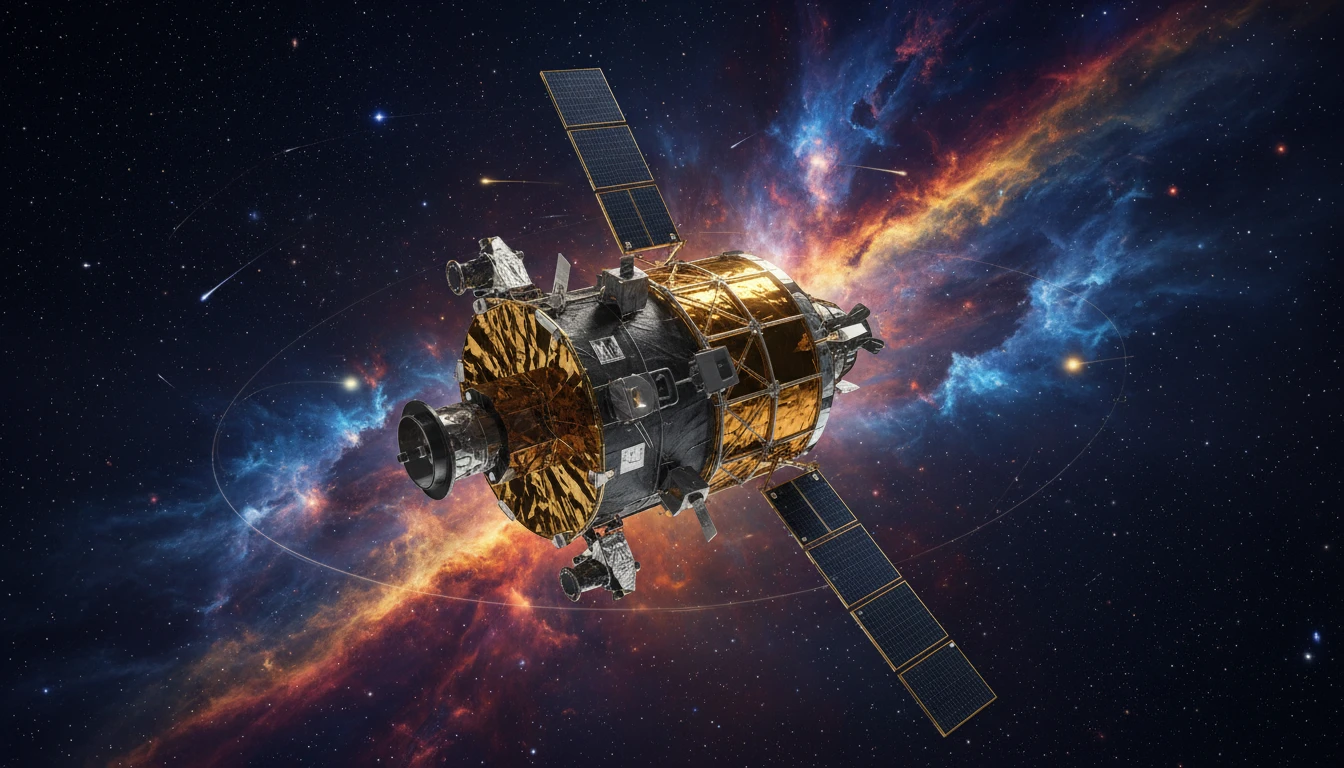
Set for launch on August 30, 2026, the Nancy Grace Roman Space Telescope is NASA's next flagship astrophysics mission. Named after NASA's first chief of astronomy, who is often called the 'Mother of Hubble', the Roman telescope honours a legacy of cosmic
exploration. The observatory features a 2.4-meter primary mirror, the same size as the Hubble Space Telescope's, but its instrumentation is designed for a completely different purpose. Having arrived at Kennedy Space Center in Florida for final preparations, the telescope is in the home stretch before it begins its five-year primary mission from a stable orbit about 1.5 million kilometers from Earth.
Seeing the Bigger Picture
The Roman telescope’s defining feature is its Wide Field Instrument (WFI), a 300.8-megapixel camera that gives it a field of view at least 100 times larger than that of Hubble's infrared camera. While iconic telescopes like Hubble and Webb provide deep, high-resolution views akin to looking through a keyhole, Roman is designed to capture the entire vista. This vast, panoramic capability will allow it to survey huge patches of the sky with incredible speed and efficiency. In fact, what would take the Hubble telescope years to image, Roman could capture in a matter of days or weeks, creating enormous cosmic maps with the same sharp resolution.
A Different Mission from Webb
While both the James Webb Space Telescope (JWST) and Roman observe the universe in infrared light, they are complementary, not competitors. Webb is designed for sensitivity, peering deep into space to study the very first stars and galaxies. Roman, on the other hand, is a survey telescope built for breadth. Its job is to rapidly map the cosmos, identifying points of interest that Webb and other telescopes can then study in greater detail. Think of Roman as the scout that charts the territory, creating a catalogue of millions of galaxies and other phenomena, and Webb as the specialist that performs the deep-dive investigations on the most compelling targets Roman finds.
Tackling Cosmic Mysteries
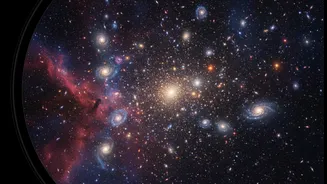
Roman has two primary science goals: understanding the nature of dark energy and dark matter, and discovering thousands of new exoplanets. By surveying over a billion galaxies, Roman will map the large-scale structure of the universe, observing how its expansion has changed over time. This data will provide crucial clues about dark energy, the mysterious force causing the universe's expansion to accelerate. For exoplanets, Roman will use a technique called microlensing to detect potentially thousands of new worlds, from massive gas giants to small rocky planets, dramatically expanding our planetary census. It is expected to find more than 100,000 transiting planets, a haul larger than all previously confirmed exoplanets combined.
The Path to First Light
The observatory was fully assembled and completed its final tests at NASA's Goddard Space Flight Center before being shipped to Florida. At the Kennedy Space Center, it is currently undergoing final preparations inside the Payload Hazardous Servicing Facility. This involves fueling the spacecraft and integrating it with the powerful SpaceX Falcon Heavy rocket that will carry it into space. After a planned 90-day commissioning period in orbit, the telescope is expected to begin its science operations by early 2027. Scientists from around the world have already submitted hundreds of proposals for using the telescope, demonstrating the immense anticipation for the data it will provide.