




Lost Civilisations and Hidden Ruins
Archaeology has long been a discipline of patience, relying on painstaking manual excavation and survey. Now, artificial intelligence is revolutionising the search for our past. By training AI models on satellite imagery and LiDAR data—which uses lasers
to map terrain in 3D—archaeologists can scan vast, remote, or densely forested areas in hours instead of years. These systems learn to spot the subtle, tell-tale signs of human activity, like faint earthworks or patterns in vegetation that are nearly invisible to the human eye. For example, AI has been used to identify potential new sites in Mesopotamia with high accuracy and discover hundreds of new glyphs among Peru's enigmatic Nazca Lines. By sifting through gigabytes of data, AI can pinpoint promising locations, allowing researchers to focus their efforts and uncover lost settlements, temples, and tombs hidden beneath jungle canopies or desert sands.
New Materials From Scratch
The creation of new materials is traditionally a slow process of trial and error, sometimes taking years to develop a compound with specific properties. AI is dramatically accelerating this timeline, reducing discovery cycles from decades to mere months or even days. Scientists are using AI to design and predict the properties of materials that have never existed before. By inputting desired characteristics—such as strength, flexibility, or conductivity—machine learning models can suggest chemical compositions and synthesis methods most likely to succeed. This AI-driven approach has already led to the discovery of new polymers that are both strong and flexible, overcoming a common trade-off in materials science. In another project, AI identified dozens of new magnetic materials without relying on the rare-earth elements that are currently essential for technologies like electric vehicles and wind turbines. This doesn't just speed up innovation; it helps create more sustainable and cost-effective technologies.
Cosmic Needles in a Haystack
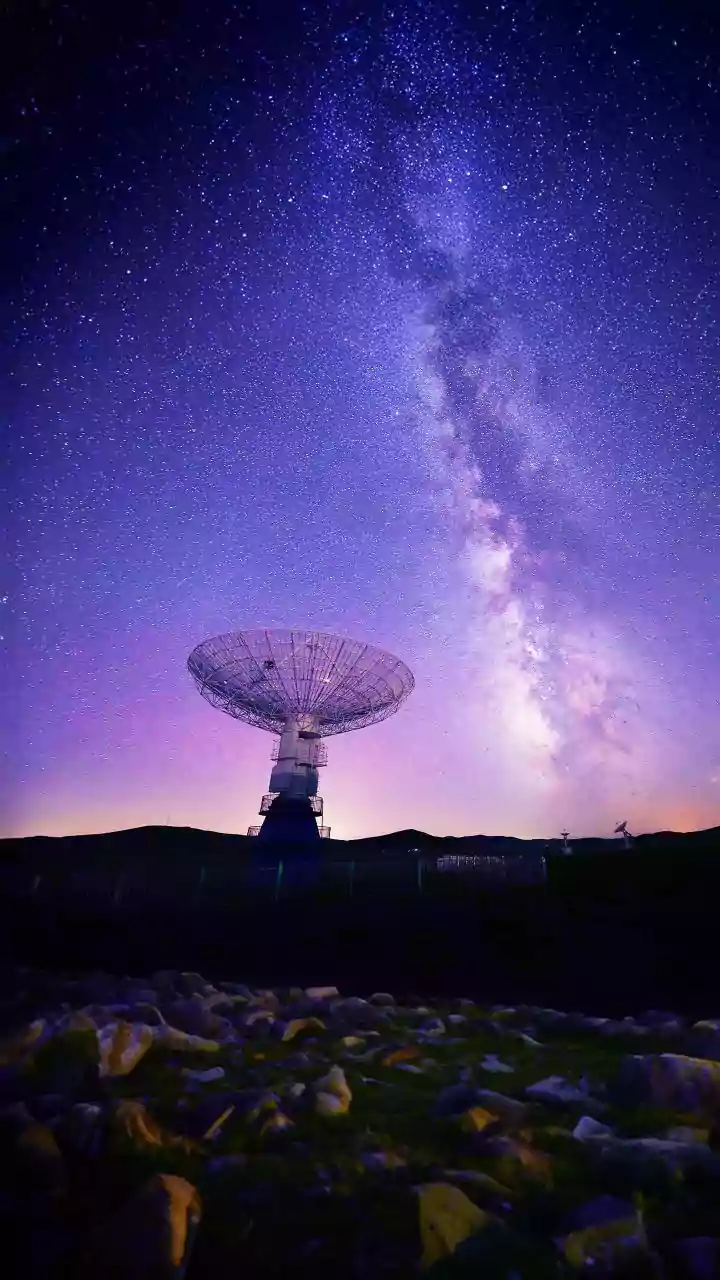
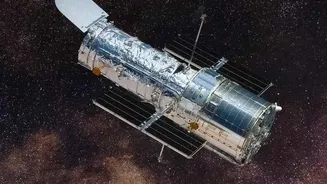
Modern telescopes generate an overwhelming flood of data, capturing millions of celestial objects every night. It's impossible for human astronomers to manually inspect every image. AI, however, excels at this task. Machine learning algorithms are now indispensable tools for finding rare cosmic phenomena. They have been trained to spot the faint dips in starlight that indicate a passing exoplanet, leading to the discovery of new worlds. AI is also exceptionally good at identifying gravitational lenses—instances where the gravity of a massive foreground galaxy bends and magnifies the light from a much more distant object, as predicted by Einstein. These lenses are crucial for studying dark matter and the early universe, and AI has already helped find thousands of new candidates, dramatically expanding the catalogue available to astronomers.
Life-Saving Drugs and Proteins
One of the most powerful applications of AI is in the field of medicine, particularly in the design of new protein-based drugs to treat diseases like cancer and diabetes. Proteins are incredibly complex molecules, and understanding their 3D structure is key to determining their function—a problem that has historically been incredibly difficult and expensive to solve. AI systems like AlphaFold, developed by Google's DeepMind, have revolutionised this field by predicting the structures of over 200 million proteins, covering nearly all cataloged proteins known to science. This breakthrough provides scientists with an unprecedented library of potential drug targets. Going a step further, generative biology uses AI to design entirely new proteins from the ground up, moving from identifying targets to creating the molecules that can interact with them. This can drastically shorten the preclinical drug discovery process, bringing new medicines to patients faster than ever before.