





The All-Too-Common AI Shortcut
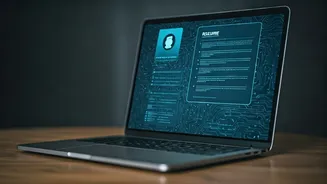
The habit recruiters are tired of is the 'copy-paste-and-pray' approach to resume writing. This is when a job seeker feeds a generic prompt into an AI tool like ChatGPT, such as "write a resume for a marketing manager," and then copies the output directly
into their application without significant editing or personalization. The result is a document filled with polished, professional-sounding language that ultimately says nothing specific about the candidate. Recruiters report seeing the same buzzwords, the same sentence structures, and even the same examples across dozens of applications, making it obvious who has used AI as a ghostwriter instead of an assistant. One recruiting manager noted that multiple candidates for one role submitted responses using the exact same 'flower shop' example, a clear sign of unedited AI output.
Why It Immediately Raises Red Flags
To a hiring manager, a generic AI-written resume signals low effort and a lack of genuine interest in the role. If a candidate couldn’t be bothered to tailor their own resume, a recruiter might assume they won’t be a proactive or engaged employee. These resumes are often filled with what recruiters call "AI-speak": vague verbs and buzzwords like "leveraged synergies," "spearheaded initiatives," and "results-driven professional" that lack any concrete evidence or context. The language sounds impressive on the surface but fails to communicate what the candidate actually did or achieved. A recent survey found that 62% of employers are more likely to dismiss a resume if it lacks personalization, seeing it as a major red flag. The document feels robotic and devoid of the personality and unique voice that helps a candidate stand out.
The Authenticity and Credibility Gap
Beyond sounding generic, AI-generated resumes often create a credibility gap. The tools are known to invent or "hallucinate" details, adding skills a candidate doesn't possess or creating metrics that have no basis in reality. When a resume lists expertise in 25 different software programs for an entry-level role, it becomes suspicious. The most reliable way for recruiters to spot this is during the interview. A candidate with a perfectly polished resume who can't speak in detail about their supposed achievements immediately loses credibility. If you claim to have "increased efficiency by 35%," you must be able to explain exactly how you did it, what you measured, and what the challenges were. When a candidate can’t back up their own resume, the interview is effectively over.
Using AI as Your Assistant, Not Your Author
The solution isn't to avoid AI altogether. When used thoughtfully, it's an incredibly powerful tool. The key is to see it as a collaborator, not a replacement for your own thinking. Instead of asking AI to write your resume from scratch, use it for specific, targeted tasks. Start by writing your own experiences and achievements in your own words. Then, use AI to refine them. For example, you can paste in a bullet point and ask the tool to "rephrase this to be more concise using stronger action verbs." You can also upload a job description and ask AI to identify the key skills and keywords, which you can then authentically weave into your own experience. This approach keeps you in control, ensuring the final product reflects your actual skills and personality.
From Generic to Genuine: A Quick Guide
To harness AI effectively, you need to provide it with rich, specific context. Don't just give it a job title; give it your raw material. Collect your proudest projects, the specific problems you solved, and the measurable results you achieved. Feed these details into your prompts. For instance, instead of a lazy prompt, try: "I increased client retention from 70% to 85% by implementing a new feedback system. Help me write a bullet point for my resume that highlights this achievement using the STAR (Situation, Task, Action, Result) method." This smarter prompting process turns AI from a generic writer into a helpful editor. Always review and rewrite the AI's suggestions to ensure they sound like you and are 100% accurate. The goal is to enhance your story, not have a machine invent one for you.