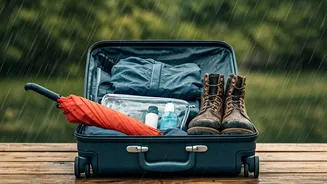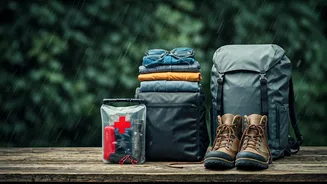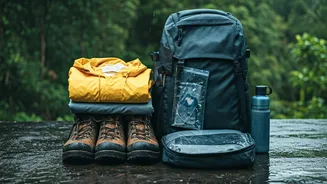







1. Prioritise Synthetic Fabrics
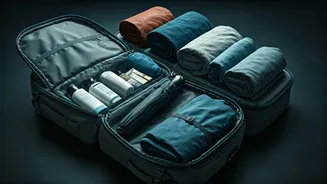
This is the golden rule of monsoon travel. Leave your beloved cotton clothes at home. Cotton absorbs moisture like a sponge and takes forever to dry, leading to a suitcase full of damp, musty items. Instead, pack clothes made from synthetic or semi-synthetic
fabrics like polyester, nylon, rayon, or blended knits. These materials wick moisture away from your skin and dry incredibly quickly, often overnight even in a humid room. They are also lightweight and wrinkle-resistant, making them perfect for a travel wardrobe.
2. Choose Your Footwear Wisely
Your shoes will bear the brunt of the monsoon. Leather is a definite no—it gets ruined by water and can grow mould. Instead, opt for rubber-soled footwear with good grip. Water-resistant floaters, sandals with ankle straps (like those from Crocs or Teva), or even old-school rubber gumboots are your best friends for navigating puddles and slippery streets. Pack a pair of flip-flops for your hotel room. If you must bring sneakers, ensure they are made of quick-drying mesh and stuff them with newspaper overnight to help them dry.
3. Master the Art of Double-Bagging
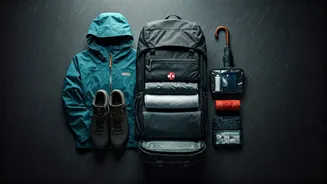
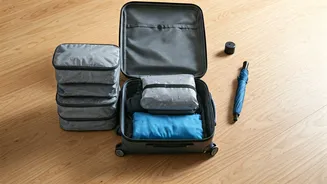
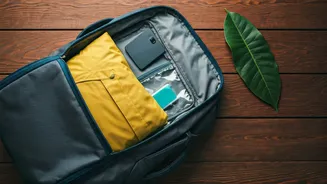
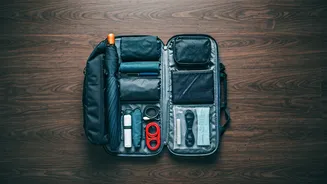
A waterproof backpack is a great start, but experienced travellers swear by the double-bagging method for total protection. Inside your main bag, use smaller waterproof dry bags or even simple zip-lock bags to compartmentalise your belongings. Keep clean clothes separate from dirty ones, and most importantly, create an impenetrable fortress for your electronics. This system not only keeps everything dry from external rain but also protects your clean items from a leaky water bottle or a damp towel packed in a hurry.
4. Armour Your Electronics Against Humidity
Rain isn't the only enemy of your gadgets; high humidity can be just as damaging. Your best defense is a handful of silica gel packets. You know, those little white packets that come in new shoe boxes and bags? Don't throw them away! Save them and toss a few into the bag or pouch where you store your camera, power bank, and charging cables. They absorb ambient moisture, preventing condensation from forming inside your precious devices. For phones, a high-quality waterproof phone pouch with a lanyard is non-negotiable.
5. Carry a Compact, Quick-Dry Towel
Hotel towels are often thick, plush, and take ages to dry. A microfibre travel towel, however, is a monsoon game-changer. These towels are ultra-absorbent, incredibly lightweight, and can go from soaked to bone-dry in a couple of hours when hung up. They pack down to a tiny size and are perfect for wiping off after an unexpected downpour, drying your hair quickly, or even using as a makeshift blanket on a chilly, air-conditioned bus.
6. Pack a Small 'Drying Kit'
Don't rely on your hotel having the perfect setup for drying clothes. Create your own mini-kit. This should include a portable, braided-elastic clothesline (which doesn't require pegs), a few safety pins or clips, and a universal sink plug. This last item is surprisingly useful for doing a quick wash of your synthetic essentials in the hotel sink. With this kit, you can create a drying station in any room, ensuring you always have a dry pair of socks or a clean shirt ready to go.
7. Don't Forget Health and Hygiene
The constant dampness can create a breeding ground for germs and fungi. Pack a small hygiene kit to stay comfortable and healthy. Include an anti-fungal powder for your feet and other areas prone to dampness. Mosquito repellent is essential, as stagnant water leads to an increase in their population. Also, carry a small first-aid kit with antiseptic wipes, waterproof plasters, and perhaps some water purification tablets as a backup for remote travel.
8. Opt for a Backpack Over a Suitcase
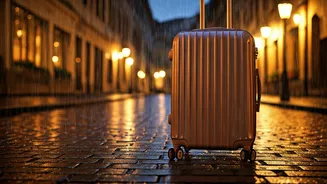
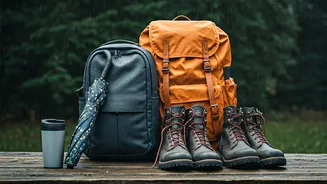
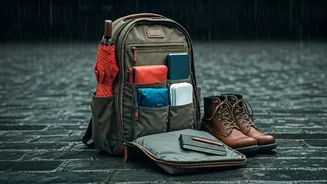
Navigating Indian streets can be challenging at the best of times, but during the monsoon, they can be filled with puddles, mud, and uneven surfaces. This is where a backpack proves its superiority over a rolling suitcase. Carrying your luggage on your back keeps it out of the muck and makes it far easier to move through crowded stations or up flights of stairs. If you choose a backpack, make sure it comes with a rain cover—this is the final, essential layer of your monsoon-proofing strategy.