


Know Before You Go
The first rule of driving in severe weather is to question if the journey is necessary at all. The India Meteorological Department (IMD) has predicted widespread showers, thunderstorms, and gusty winds for states including Tamil Nadu, Kerala, Karnataka,
Andhra Pradesh, and Telangana. Very heavy rainfall is expected in some areas between October 15 and 18. Before starting your trip, check the latest official weather alerts and traffic updates for your route. If authorities advise staying off the roads, it is best to postpone your travel. If you must drive, inform someone of your route and estimated arrival time.
A Pre-Monsoon Vehicle Health Check
A well-maintained car is your first line of defence. Before heading into heavy rain, conduct a few crucial checks. Ensure your tyres have adequate tread depth—at least 2-3 mm is recommended to provide grip on wet roads and prevent skidding. Check that your headlights, taillights, and turn signals are all working correctly; visibility is key not just for you to see, but to be seen by others. Test your windshield wipers and replace the blades if they leave streaks. Finally, check your brakes. If they feel spongy or less responsive, get them inspected, as stopping distances can double on wet roads.
Adjust Your Driving Technique
Driving on wet roads is fundamentally different from driving in dry conditions. The most important adjustment is to reduce your speed significantly—by at least 30-40% from what you would normally drive. This gives you more time to react and reduces the risk of hydroplaning, which occurs when your tyres lose contact with the road and float on a layer of water. To avoid this, steer gently and avoid sudden braking or acceleration. Increase your following distance to at least double what you would normally leave, giving you a larger safety cushion for braking. Also, avoid using cruise control, as it can interfere with your ability to respond to a loss of traction.
The Dangers of Waterlogged Roads
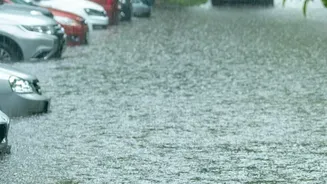
Waterlogged streets are one of the biggest dangers during heavy downpours in India. It is impossible to know the depth of standing water or what hazards—like open manholes or deep potholes—lie beneath. As a rule, never attempt to drive through a flooded road. It takes only about six inches of water to stall most cars, and two feet can sweep a vehicle away. If you absolutely must cross a shallow patch of water, drive slowly and steadily in a low gear. Try to stay in the centre of the road where the ground is often highest. After clearing the water, gently tap your brakes to help them dry off.
What to Do in an Emergency
If your car stalls in water, do not try to restart the engine. Doing so can cause catastrophic damage, a condition known as hydrostatic lock. The best course of action is to turn off the ignition. If water levels are rising, abandon the vehicle and move to higher ground immediately. Many flood-related deaths occur when people try to stay in or move a stalled vehicle. If you start to hydroplane, ease your foot off the accelerator and steer in the direction you want the car to go, but avoid making sudden turns or braking hard. If visibility becomes so poor that you cannot see the road ahead, pull over to a safe location away from traffic, turn on your hazard lights, and wait for the rain to subside.