








A New Chapter in an Ancient Quest
The Underwater Archaeology Wing (UAW) of the Archaeological Survey of India (ASI) has recently resumed explorations off the Mahabalipuram coast, nearly two decades after its last major surveys. Armed with advanced technology, including a Remotely Operated
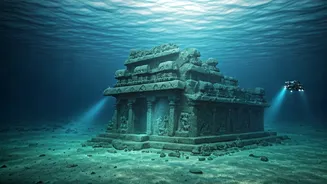
Vehicle (ROV) capable of capturing high-resolution imagery, the team is building on previous discoveries to map the submerged heritage of this UNESCO World Heritage site. These new efforts aim to solve the long-standing riddle of the shore temple complex, which local legends and early European travelers' accounts claim is just one of seven ancient pagodas. The rest, the stories say, were consumed by the sea.
The Legend of the Seven Pagodas
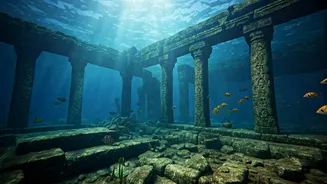
The myth of Mahabalipuram's seven temples has been a powerful oral tradition for centuries. According to lore, the city was so beautiful that the gods grew envious and sent a great flood to submerge it, leaving only the iconic Shore Temple standing as a solitary survivor. This narrative gained traction among European sailors and merchants, who referred to the site as the 'Seven Pagodas'. For generations, local fishermen have passed down stories of glimpsing the glittering tops of submerged temples beneath the waves on calm days. These tales, once dismissed as folklore, have provided the inspiration for decades of archaeological investigation.
What the Science Reveals
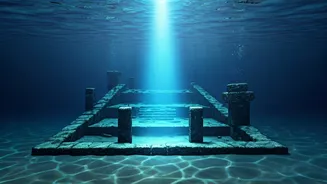
Previous underwater explorations, particularly those following the 2004 tsunami, provided tantalizing clues. When the sea receded dramatically, eyewitnesses reported seeing long rows of large stone blocks emerge from the water. Subsequent investigations by the ASI and the National Institute of Oceanography (NIO) confirmed the presence of man-made structures. These early dives, conducted in the early 2000s, discovered submerged walls, scattered dressed-stone blocks, and flights of stairs between 5 to 8 meters deep, located up to 800 meters from the current shoreline. One find included a 70-meter-long wall. The structures showed architectural similarities to the Pallava-era monuments on land, suggesting a much larger temple complex once existed.
Pushing Back the Timeline
While many discoveries point to the Pallava dynasty (7th-8th century CE), some findings suggest an even older history. In 2022, a team from the NIO discovered ruins that, through radiocarbon dating of marine growth, suggested a submergence event as far back as the 1st century CE, long before the Pallavas. These pre-Pallava remains, found about a kilometer from the Shore Temple, indicate that Mahabalipuram was a significant site for much longer than previously thought. The finds included moulded stones typically used in temple construction, strengthening the theory of an ancient religious complex. This ongoing work suggests multiple phases of construction and submergence, painting a complex picture of a coastline that has been reshaped by nature over millennia.
Technology Beneath the Waves
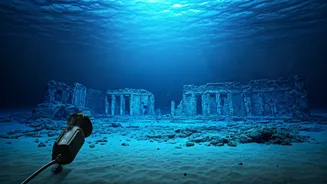
The latest phase of exploration is being driven by new technology that allows for more precise and non-invasive research. The use of an ROV enables archaeologists to survey deeper and more challenging environments safely. This high-tech approach allows the team to create detailed maps and visual records of the seabed without disturbing the fragile remains. This is crucial for preservation, as it helps experts study the layout and structure of the submerged sites before any physical excavation is attempted. This renewed push by the ASI, guided by leading archaeologists, promises to bring the hidden history of Mahabalipuram to the surface.