

The Great Monsoon Escape
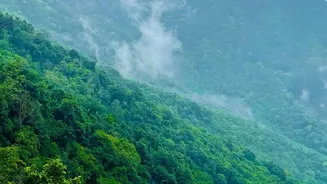
The secret to Ladakh's dry monsoon season lies in its geography. The region is located in a rain shadow, sheltered by the towering Himalayan and Zanskar ranges. These formidable mountain barriers block the moisture-laden southwest monsoon winds that bring
heavy rainfall to most of the Indian subcontinent. By the time these clouds cross the high peaks to reach Ladakh, they have already shed most of their moisture. As a result, while other hill stations contend with relentless rain and landslides, Ladakh experiences minimal precipitation, often amounting to just brief, light showers. This phenomenon creates a cold desert climate, making the months of July, August, and September an ideal window for travel, with open roads and comfortable weather.
A Landscape of Surprising Colour
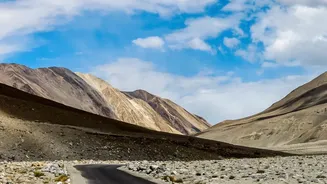
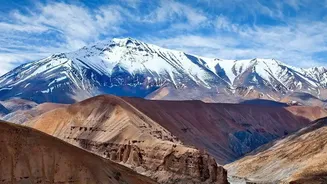
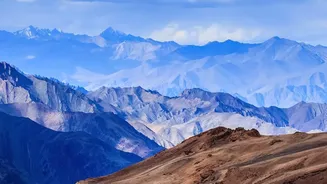
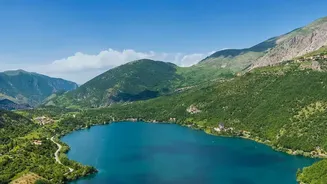
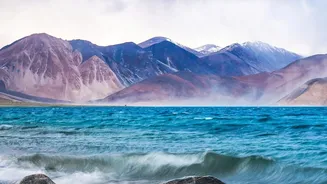
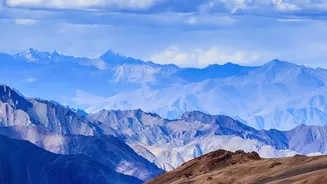
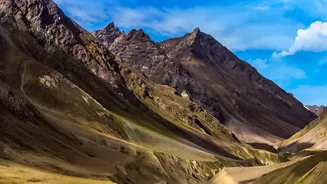
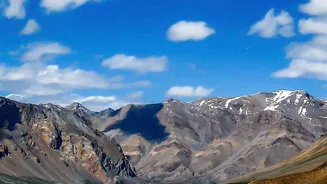
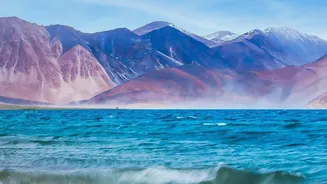
The term 'cold desert' might conjure images of a barren, monochrome landscape, but during the monsoon months, Ladakh reveals a softer, more vibrant side. The limited moisture that does arrive, combined with meltwater from glaciers, is enough to trigger a brief but beautiful greening period. Wildflowers bloom in high-altitude meadows, and the valleys along the Indus and Shyok rivers are lined with patches of green scrub. This subtle splash of colour against the stark, mineral-rich mountains of brown, grey, and ochre creates a dramatic and photogenic contrast. The skies are often a brilliant blue, and the quality of light after a fleeting drizzle can be magical, illuminating ancient monasteries and the turquoise waters of high-altitude lakes.
A Season of Cultural Vibrancy
The summer and monsoon period is also the peak of Ladakh's cultural calendar. Several important monastic festivals take place during these months, offering a fascinating glimpse into the region's living Tibetan Buddhist traditions. The most famous of these is the Hemis Tsechu, a two-day festival held at Hemis Monastery to celebrate the birth of Guru Padmasambhava. Monks don elaborate silk costumes and striking masks to perform sacred Cham dances in the monastery courtyard, a powerful spectacle of ritual and faith. Other festivals like Phyang Tsedup and the Ladakh Festival in September also provide opportunities to witness traditional music, archery, and polo.
An Adventurer's Paradise
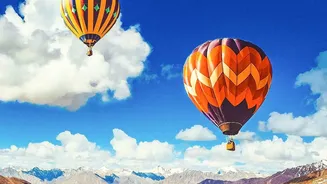
For thrill-seekers, Ladakh's dry monsoon weather offers perfect conditions for a wide range of adventures. With clear skies and manageable temperatures, it's an excellent time for trekking through remote valleys and exploring trails that are inaccessible during the harsh winter. The season is also ideal for white-water rafting on the Zanskar and Indus rivers, as the water levels are optimal. Motorcyclists and road-trippers take advantage of the fact that both major access highways—the Srinagar-Leh and Manali-Leh routes—are reliably open, offering breathtaking journeys through some of the world's highest mountain passes like Khardung La. Other popular activities include mountain biking, camping beside pristine lakes like Pangong Tso and Tso Moriri, and stargazing in the clear, unpolluted night skies of places like Hanle.
Planning Your Monsoon Getaway
While Ladakh itself is dry, the approach roads from Manali and Srinagar can be affected by monsoon rains in the lower Himalayan foothills, leading to potential landslides and delays. Building buffer days into your itinerary is a wise precaution if travelling by road. Alternatively, flying directly into Leh's Kushok Bakula Rimpochee Airport is a convenient option. Acclimatisation is crucial; spend at least two days in Leh (altitude 3,500 metres) to adjust to the thin air before ascending to higher altitudes. Packing should be done in layers: include light clothing for sunny days, a warm fleece and a windproof jacket for cold nights, and robust sun protection like sunscreen, sunglasses, and a hat, as the UV radiation is intense at high altitudes.