





The New Digital Welcome Mat
The days of scribbling your details on a paper landing card handed out by cabin crew are rapidly disappearing. Across Southeast Asia, a growing number of countries have replaced these physical forms with mandatory digital arrival cards. These online declarations,
which collect your passport, travel, and health details, are now a standard part of the entry process. For Indian tourists, popular destinations like Singapore, Malaysia, Thailand, Indonesia, and the Philippines have all implemented their own versions of these free, official systems. The core idea is to digitise and streamline the immigration process, but for the unprepared traveller, it can be a source of confusion and stress upon landing.
Breeze Through Immigration Queues
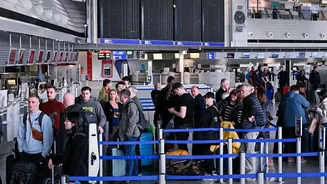
The most immediate and satisfying benefit of completing your form in advance is skipping the arrival-hall chaos. Airports in major hubs like Singapore, Kuala Lumpur, and Bangkok are incredibly busy. Instead of searching for a designated kiosk, struggling with spotty airport Wi-Fi, and then filling out the form on a small phone screen while juggling your luggage, you can walk straight to the immigration counter. With your details already in the system, officers can process your entry much faster. This means less time under the harsh fluorescent lights of the arrivals hall and more time starting your actual holiday. In some cases, like Malaysia, it can even grant you access to faster e-gate lanes, making the process even smoother.
A Quick Guide to Key Countries
While the principle is the same, each country has its own specific form and rules. It's crucial to use the official government websites, as third-party sites often charge unnecessary fees. Singapore (SG Arrival Card - SGAC): This is mandatory for all foreign visitors and must be submitted within the 3 days before you arrive. It is separate from your visa and is required for every single entry. Malaysia (Malaysia Digital Arrival Card - MDAC): Also required to be filled out within 3 days prior to arrival. Indian passport holders can often benefit from visa-free entry, but the MDAC is still a compulsory step. Thailand (Thailand Digital Arrival Card - TDAC): Replacing the old paper TM6 form, the TDAC is mandatory for all foreign nationals and should be completed within 72 hours of your arrival. Indonesia (Electronic Customs Declaration - e-CD): Now integrated into a unified 'All Indonesia' arrival system, this form must be completed within 72 hours before arrival to generate a QR code for customs. * Philippines (eTravel Card): This free digital form is mandatory for both entry and exit. You must register within 72 hours before your flight to get your QR code.
Avoid Delays and Potential Denials
Failing to complete the digital arrival card is not just an inconvenience; it can lead to significant delays. Immigration officers will simply direct you out of the queue to complete the form, forcing you to rejoin the line at the very back. While some airports have staff to assist, this is not guaranteed, and you may be left to figure it out on your own during peak hours. In a worst-case scenario, some airlines have started checking for proof of completion at the check-in counter before you even depart India. Showing up without it could put your entire trip in jeopardy, as airlines can deny boarding to passengers who haven't fulfilled the destination country's entry requirements.
The Peace of Mind Checklist
Travel is meant to be an escape from stress, not a cause of it. Taking ten minutes to fill out the necessary forms before you leave home is a simple act of self-care. It transforms a potential point of friction into a seamless experience. Once you submit the form, you'll typically receive a confirmation email with a QR code. The best practice is to save a screenshot of this QR code on your phone and also keep a printed copy in your travel wallet. This small preparation gives you the peace of mind that you are fully compliant and ready for a smooth entry, allowing you to step off the plane and into your vacation without a single worry.