





The Twin Challenges of Power and Waste
Modern life runs on batteries, but our reliance on the dominant lithium-ion technology comes with significant costs. Mining lithium and cobalt is resource-intensive, expensive, and often raises environmental and ethical concerns. At the same time, the world
faces a massive challenge in managing agricultural waste. Every year, millions of tonnes of materials like sugarcane bagasse, rice husks, corncobs, and wood byproducts from the paper industry are either burned or left to decompose, creating pollution and wasting resources. For years, these two problems existed on separate tracks. But now, researchers have found a way to make them part of the same solution, creating a circular economy where farm waste helps power our cities.
The Solution: Carbon from Plants
The breakthrough lies in creating a special type of carbon, known as 'hard carbon', from biomass. Unlike the graphite typically used in lithium-ion battery anodes (the negative electrode), hard carbon has a disordered, non-graphitizable structure. Think of it like the difference between a neat stack of paper (graphite) and a crumpled ball of paper (hard carbon). This messy internal structure is actually a major advantage. It creates more space and pathways for ions to move in and out, which is essential for storing and releasing energy. The key insight was that lignin—the natural polymer that makes wood and plant stems rigid—is an excellent precursor for producing this valuable hard carbon.
How Farm Waste Becomes a Battery Anode
The transformation from plant matter to battery component is a high-tech version of making charcoal. The process is called pyrolysis, which involves heating the dried agricultural waste (like corncobs or wood dust) to very high temperatures, often between 700°C and 1500°C, in an environment with no oxygen. This intense, oxygen-free baking burns off almost everything except the carbon, restructuring it into the disordered 'hard carbon' needed for battery anodes. Scientists can precisely control the temperature and other conditions to fine-tune the final material's properties, such as its porosity and interlayer spacing, to maximise its ability to store energy. The resulting black powder is then used to manufacture the anode, which is a critical part of the battery where energy is stored during charging.
Why This Pairs Perfectly with Sodium-Ion Batteries
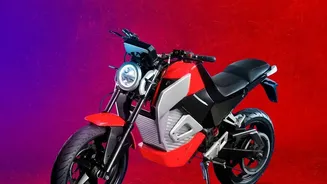
While this biomass-derived carbon can be used in lithium-ion batteries, it's particularly well-suited for a promising alternative: sodium-ion batteries. Sodium is one of the most abundant and cheapest elements on Earth, making it a far more sustainable and cost-effective option than lithium. The larger size of sodium ions means they struggle to fit into the tightly packed structure of graphite, but they fit perfectly within the more spacious, disordered structure of hard carbon made from biomass. This synergy makes agricultural waste a key enabler for sodium-ion technology, which is rapidly gaining traction for applications like e-bikes, e-rickshaws, and stationary energy storage.
Are These Batteries Truly 'High-Performance'?
The 'high-performance' claim holds up surprisingly well, especially for the intended applications. While sodium-ion batteries generally have a lower energy density than premium lithium-ion cells—meaning they might be heavier for the same range—they excel in other crucial areas. Lab tests show these bio-based hard carbon anodes have excellent capacity and can endure hundreds or even thousands of charge-discharge cycles with minimal degradation. Furthermore, sodium-ion batteries are known for their enhanced safety, as they are less prone to overheating. They also perform exceptionally well in extreme temperatures, both hot and cold, which is a significant advantage for vehicles used outdoors in diverse climates like India's.