








The Data Deluge from Above
Every day, hundreds of Earth observation satellites circle the globe, capturing immense volumes of high-resolution imagery. They see everything from developing weather patterns and agricultural trends to urban expansion and maritime traffic. The problem
isn't capturing the data; it's getting it back to Earth. Satellites can only transmit information when they are in contact with a ground station, and the bandwidth is limited. This creates a significant delay, often hours or even days, between when an image is taken and when a useful insight can be derived from it. For time-critical events like disaster response or security alerts, this delay can render the data far less valuable. Essentially, we are collecting mountains of raw data and then spending precious time and resources sifting through it on the ground to find the important bits.
A Smart Solution in Orbit
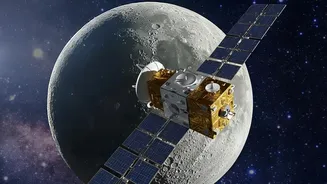
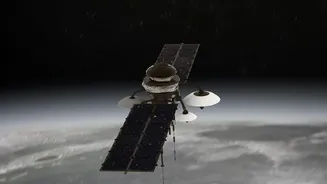
Instead of sending enormous raw files to Earth for processing, a new generation of satellites is being designed to analyze the data right in orbit. This is often called 'edge computing' in space. Bengaluru-based space-tech startup GalaxEye is at the forefront of this shift with its 'Drishti' satellite. Scheduled for launch, this satellite will carry powerful processors, like Nvidia's Jetson Orin platform, capable of running artificial intelligence models directly on the spacecraft. This allows the satellite to 'think' for itself: it can pre-process images, identify features of interest—like a new construction site or the spread of a wildfire—and transmit only the processed insights or a much smaller, prioritized dataset. This drastically cuts down on the volume of data that needs to be downlinked, freeing up bandwidth and accelerating the delivery of actionable intelligence.
From Raw Data to Real-Time Answers
The implications of this shift from 'data provider' to 'intelligence provider' are huge. For a disaster management agency, it could mean receiving a map of flooded areas within minutes of a satellite pass, instead of waiting hours. For defense and maritime security, it means the potential for near real-time alerts about unauthorized vessels or activity, a capability that Lt. Gen. AK Bhatt (Retd.) of the Indian Space Association has called a “pivotal shift” toward persistent intelligence. Commercial sectors also stand to benefit significantly. Agriculture companies could get faster updates on crop health and irrigation needs, while infrastructure firms could monitor project progress or detect potential issues with pipelines and power lines more efficiently. GalaxEye is pioneering this with a unique sensor that combines both optical and all-weather radar imaging, ensuring it can see day or night and through clouds.
India's New Space Race
This innovation is part of a much larger story: the rapid rise of India's private space industry. Since the government opened the sector in 2020, the number of space-tech startups has surged to over 400. Companies like GalaxEye, Skyroot Aerospace, and Pixxel are now building everything from rockets to sophisticated satellite constellations. This boom is fueled by a combination of policy reforms, a growing pool of talent from institutions like IIT Madras, and increasing private investment. The government's IN-SPACe agency acts as a bridge, giving these private firms access to ISRO's world-class infrastructure and expertise. With India's space economy projected to grow from around $8 billion to $44 billion by 2033, innovations like orbital AI are not just technological feats—they are critical to securing a larger share of the global market.