







Why Ankle Stability Is Your Unsung Hero
We often don't think about our ankles until we trip over a loose paving stone or twist one during a morning jog. But ankle stability is the foundation of almost every move you make. It's not just for athletes; it’s crucial for walking confidently, climbing
stairs, carrying groceries, and even just standing. Strong, stable ankles act as your body’s shock absorbers and balance controllers. They allow the force of each step to be distributed correctly up your legs, knees, and hips, preventing a chain reaction of strain and potential injury. Weak ankles, on the other hand, can lead to recurrent sprains, chronic pain, and a general feeling of unsteadiness that can limit your activities and diminish your confidence.
The Power of One Simple Exercise
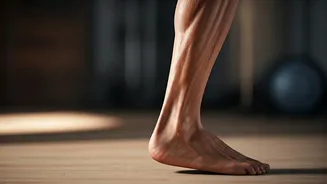
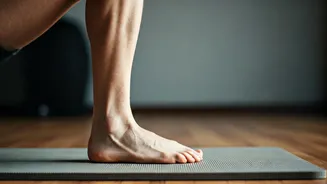
You don't need a fancy gym membership or complicated equipment to build a stronger foundation. The single leg raise, also known as a calf raise on one leg, is a powerhouse exercise for ankle health. Its beauty lies in its simplicity and effectiveness. When you lift your heel off the ground, you engage the gastrocnemius and soleus muscles in your calf. These muscles are key players in controlling the fine movements of your ankle joint. More importantly, balancing on one foot forces the smaller stabiliser muscles around your ankle to fire up and work together, improving your proprioception—your body's awareness of its position in space. This is the very skill that helps you instinctively correct your balance and avoid a fall.
Your Step-by-Step Guide to the Perfect Raise
To perform the single leg raise safely and effectively, follow these steps. Form is more important than the number of repetitions. 1. **Start Position:** Stand tall with your feet hip-width apart. Place your hands on a wall or the back of a sturdy chair for balance. Shift your weight onto your right leg, keeping a slight, soft bend in the knee—do not lock it. 2. **Lift Off:** Slowly lift your left foot off the floor. You can bend it behind you or hold it just above the ground in front of you. Engage your core to keep your body stable and your posture upright. 3. **The Raise:** Press down through the ball of your right foot to slowly lift your heel as high as you comfortably can. Imagine a string pulling the back of your heel straight up towards the ceiling. Hold this top position for a second, feeling the contraction in your calf muscle. 4. **Controlled Descent:** This is the most important part. Slowly and with full control, lower your heel back to the floor. The lowering phase should take at least twice as long as the lifting phase. Aim for a three-second descent. Repeat for 10-15 repetitions before switching to the left leg. Aim for 2-3 sets on each side.
Common Mistakes to Avoid
To get the most benefit and prevent strain, watch out for these common errors. First, avoid using momentum. Don't bounce up and down; the movement should be deliberate and controlled. Second, don't lean heavily on your support. The wall or chair is for balance, not to hold your body weight. Your standing leg should be doing the work. Third, keep your ankle straight. Don’t let it roll inwards or outwards as you lift and lower. If you notice this happening, reduce the height of your raise and focus on keeping the movement vertical. Finally, maintain good posture. Don't let your hips jut out to the side or hunch your shoulders. Keep your body in a straight line from head to heel.
Ready to Progress? Try These Variations
Once you can comfortably perform 3 sets of 15 repetitions with perfect form, you can challenge yourself further. The easiest way to progress is to remove the support. Try performing the raises with your hands on your hips. This will force your ankle stabilisers to work much harder. Another excellent progression is to perform the exercise with your eyes closed. This removes visual feedback and dramatically increases the proprioceptive challenge. For an even greater test, try doing the raises while standing on a slightly unstable surface, like a thick rug, a cushion, or a folded yoga mat. Always master one level before moving to the next.