
A Treasure Map for the Moon
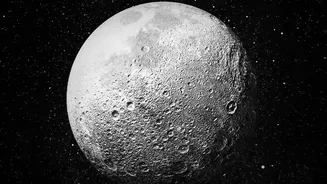
Imagine a map that doesn't lead to buried treasure, but to the very resource needed to build a future in space. That's essentially what scientists have created for the Moon's South Pole. Using data from orbital instruments, they have developed the most
detailed maps to date showing the concentration of hydrogen, which is the key indicator of water ice. These maps pinpoint areas within permanently shadowed craters where water ice is most likely to be found in significant quantities. Previous missions have confirmed the presence of hydrogen, but these new maps provide a much higher resolution, moving from a regional overview to something more like a local guide. This allows mission planners for programs like NASA's Artemis to identify the most promising locations for landing and resource extraction, turning a vast, cold wilderness into a landscape of strategic interest.
Seeing Water Without Seeing It
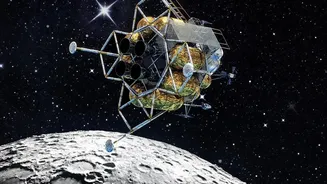
So how do you map water from orbit, buried under lunar soil? The answer lies in a clever technique using an instrument called a neutron spectrometer. The Moon's surface is constantly bombarded by high-energy particles from space called cosmic rays. These rays collide with the lunar soil, or regolith, and kick up a spray of particles, including neutrons. A neutron spectrometer counts these escaping neutrons. However, if there is a lot of hydrogen in the soil—a key component of water (H₂O)—it acts like a moderator, absorbing some of the neutrons' energy. The instrument detects this deficit of medium-energy neutrons, signaling a high concentration of hydrogen below the surface. By flying over the lunar pole, the spectrometer can build a detailed map of these hydrogen-rich zones, effectively showing scientists where to find the water without ever needing to drill.
The Most Valuable Resource in Space
On Earth, water is essential for life. In space, it's that and so much more. The discovery and mapping of lunar water ice is a game-changer because of what it can become. Beyond providing drinking water for astronauts, water can be separated into its core components: oxygen and hydrogen. The oxygen can be used for breathable air inside a lunar habitat. The hydrogen, along with oxygen as an oxidizer, is a powerful and efficient rocket propellant. The ability to create air and rocket fuel on the Moon is called in-situ resource utilization (ISRU), and it is the key to making a permanent human presence sustainable. It dramatically reduces the mass and cost of what missions need to launch from Earth, potentially enabling a self-sustaining lunar economy.
Paving the Way for Artemis and Beyond
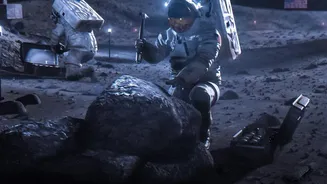
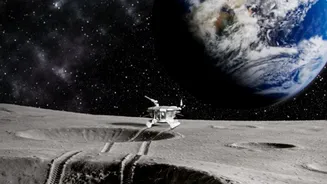
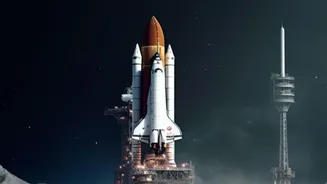
These new ice maps are not just an academic exercise; they are a critical piece of operational intelligence for upcoming lunar missions. NASA's Artemis program, which aims to establish a long-term human presence on the Moon, is heavily reliant on finding and using lunar water. Knowing exactly where the most accessible, high-concentration ice deposits are located allows NASA and its commercial partners to select safer and more efficient landing sites. Upcoming missions like the joint Japanese-Indian LUPEX rover will carry their own neutron spectrometers to verify these orbital findings on the ground. By providing a detailed resource prospectus, these maps reduce mission risk and increase the likelihood of establishing a successful outpost, which could one day serve as a stepping stone for human missions to Mars.
Challenges Remain on the Lunar Surface
While the orbital maps are a monumental step forward, they are just the beginning. The data tells us where the hydrogen is, but not its exact form or accessibility. Is it mixed in with soil like a frost, or is it in thick, pure ice sheets? Recent studies have also suggested that surface ice might be less abundant or more patchy than hoped, potentially buried under a layer of regolith. The permanently shadowed regions where the ice is found are some of the coldest places in the solar system, with temperatures that make operating rovers and mining equipment an immense engineering challenge. Future robotic and human missions will need to land in these difficult environments, drill into the surface, and confirm the quality and quantity of the ice before we can truly turn this lunar resource into a usable asset.