




A New Generation of Launch Pioneers
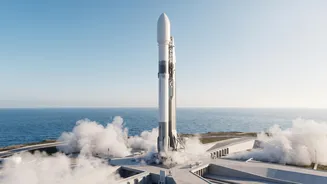
The roar of rockets is no longer just the sound of ISRO. A vibrant ecosystem of private space-tech companies is taking flight, led by ambitious startups. Hyderabad-based Skyroot Aerospace made history on July 18, 2026, with the successful orbital launch
of its Vikram-1 rocket. This milestone made India only the third country, after the US and China, to have a private company with orbital launch capability. Skyroot, founded by former ISRO scientists, aims to make satellite launches faster and more affordable for a growing global market. Another key player, Agnikul Cosmos, incubated at IIT Madras, has also achieved significant breakthroughs. On May 30, 2024, it successfully launched 'Agnibaan SOrTeD', a suborbital technology demonstrator powered by the world's first single-piece 3D-printed, semi-cryogenic engine. This launch was also the first from a private launchpad in India. These successes are not isolated events but the culmination of years of development by the more than 400 space startups now active in the country.
Government Policy Unlocks the Sector
This private-sector boom was made possible by a fundamental shift in government policy. In June 2020, the Indian government announced historic reforms to open the space sector, which had been dominated by the state-run Indian Space Research Organisation (ISRO) for over five decades. The creation of the Indian National Space Promotion and Authorisation Centre (IN-SPACe) was a game-changer. IN-SPACe acts as an independent, single-window agency to promote, authorise, and supervise the activities of private space companies, or Non-Governmental Entities (NGEs). The Indian Space Policy 2023 further clarified this new framework. It allows private companies to undertake end-to-end space activities, from building and launching rockets to operating satellites and even engaging in the commercial recovery of asteroid resources. Crucially, the policy enables NGEs to use ISRO's world-class infrastructure and facilities, which was previously a major bottleneck for startups.
Finding a Niche in the Small Satellite Market
Indian space startups are not trying to compete directly with heavy-lift behemoths like SpaceX's Falcon 9. Instead, they are targeting the burgeoning market for small satellite launches. The global demand for launching small satellites, for everything from Earth observation to communications, is surging. However, satellite operators often face long waits to hitch a ride on larger rockets, which fly on rigid schedules. Companies like Skyroot and Agnikul aim to provide a more flexible, on-demand 'cab service' to orbit for these smaller payloads. Skyroot's Vikram-1 is designed to carry payloads of around 350 kg to low Earth orbit. Agnikul's in-development Agnibaan vehicle is targeting a similar payload class. By focusing on this underserved segment, Indian firms can offer dedicated, faster, and potentially more cost-effective launches, carving out a significant share of a global space economy projected to reach nearly $1.8 trillion by 2040.
Challenges on the Path to Orbit
Despite the recent successes, the path ahead is not without significant challenges. Access to capital remains a major hurdle. Space-tech ventures are high-risk and have long development cycles, which can make investors cautious. While funding has been increasing, with investments reaching over $600 million by early 2026, startups often struggle to secure the large, growth-stage capital needed to scale their operations. Another challenge is bridging technology gaps and building a robust domestic supply chain, as India still relies on imports for certain advanced components. Perhaps most importantly, a talent crunch looms. While India produces many engineers, there's a shortage of experienced professionals in highly specialised fields like propulsion and avionics. As the sector grows, competing for and retaining this top-tier talent will be critical for success.