








The dream of sending a text from a remote Himalayan trail or a forgotten village using your regular smartphone is closer than ever. But while SpaceX's Starlink has big plans for direct-to-cell service, a spectrum deal is just the first step.
What is This Satellite-to-Phone Technology?
The technology
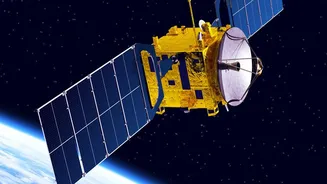
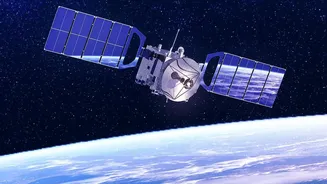
at the heart of this discussion is called 'direct-to-cell' or D2C. In simple terms, it aims to turn low Earth orbit (LEO) satellites into floating mobile towers. These satellites, equipped with special antennas and modems, can communicate directly with standard 4G or 5G smartphones on the ground, without any need for special hardware or apps. The goal is to provide a layer of connectivity that kicks in wherever traditional terrestrial networks—the cell towers we're used to—don't reach. For a country like India, with vast rural and geographically challenging regions, the potential is transformative for bridging the digital divide. Starlink has already secured key licenses, such as the Global Mobile Personal Communication by Satellite (GMPCS) licence, and has been setting up ground infrastructure in India.
Why a Spectrum Deal is Crucial
Think of spectrum as the invisible highway that radio signals travel on. Just like different radio stations broadcast on different frequencies, mobile data and calls need dedicated frequency bands to operate without interference. For a company like SpaceX to offer mobile services, it needs legal rights to use specific spectrum bands. Recently, SpaceX made headlines in the US by agreeing to acquire low-band 800 MHz spectrum, which is excellent at penetrating walls and providing indoor coverage—a historical weakness of satellite signals. This move signals an ambition to become a full-fledged mobile carrier, combining satellite coverage with a ground-based network. In India, however, the process is still ongoing. While Starlink has its licenses, the final rules for spectrum assignment and the associated costs are still being finalized by the government.
Hurdle 1: The Immense Regulatory Maze
Securing a license and spectrum is just the beginning of a long regulatory marathon in India. The government has strict security requirements for telecom operators, especially foreign-controlled ones like Starlink. All user traffic must be routed through gateways located within India, and companies must provide lawful interception and monitoring capabilities. Starlink is still awaiting final security clearances, which are a mandatory step before any commercial launch can happen. These measures are designed to ensure government control over connectivity during national security events and to protect user data. Adding to the complexity, some satellite phones like Thuraya are prohibited in Indian waters, and the use of others like Iridium is restricted, showing the government's cautious approach to satellite communications.
Hurdle 2: Major Technical and Hardware Challenges
Even with regulatory approval, the technology itself faces hurdles. Connecting a small, low-power smartphone to a satellite hundreds of kilometres away is an engineering feat. It requires the satellite to have a massive, highly sensitive antenna and for the system to constantly correct for the satellite's incredible speed. This process consumes significantly more power than connecting to a nearby cell tower, which could drain your phone's battery much faster. Furthermore, while many modern phones might support the necessary frequency bands, ensuring stable, reliable connections across India's diverse terrain and weather conditions is another massive challenge for device makers and network operators alike. The rollout will likely be gradual, starting with text messaging before moving on to voice and data services as the satellite constellation becomes more robust.
The Timeline: Think 5G Rollout, Not Instant Magic
Anyone who followed the rollout of 5G in India knows that network launches are not like flipping a switch. Even after spectrum auctions, it took years for carriers to build out infrastructure and for services to become widely available with meaningful coverage. The path for direct-to-cell satellite service will be similar, if not longer. Starlink needs to not only get all its approvals but also launch hundreds more satellites with the necessary D2C payloads. While the company has already built 20 ground gateway sites in India and established partnerships with Jio and Airtel, the final service launch remains pending. Expect a phased approach, likely starting in select areas or with limited capabilities, rather than an overnight nationwide launch.