
From Function to Focal Point
For decades, lighting was often an afterthought in interior design—a practical necessity chosen for its ability to simply light a room. That mindset has fundamentally changed. Today, designers and homeowners are choosing fixtures that function as 'daytime
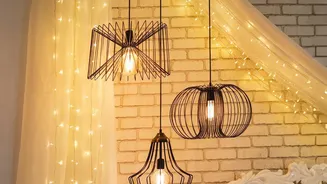
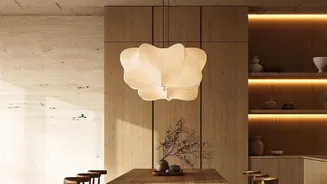
sculptures', pieces that command attention and spark conversation even when switched off. This shift reflects a desire for our homes to be more personal and expressive. Instead of a painting above the dining table, the chandelier itself becomes the art. Lighting is now being used to define zones in open-plan spaces, create atmosphere, and serve as the emotional anchor of a room.
The Rise of Organic Forms
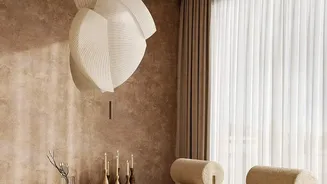
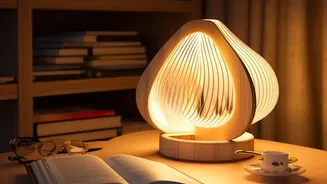
One of the most significant trends is the move away from rigid, strict geometry towards softer, more fluid shapes inspired by nature. Designers are embracing 'hyper-organicism', with fixtures that feature liquid-like curves, asymmetrical lines, and biomorphic silhouettes that mimic shells, seeds, or pebbles. These organic forms introduce a sense of movement and ease, softening modern interiors and creating a gentle, calming atmosphere. Rigid geometric shapes are retreating in favour of these more natural, flowing designs that feel both spontaneous and intentional.
A Celebration of Tactile Materials
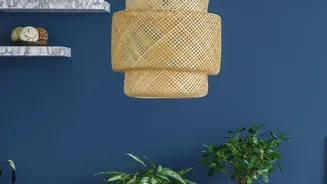
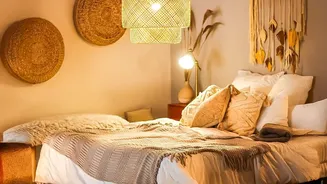
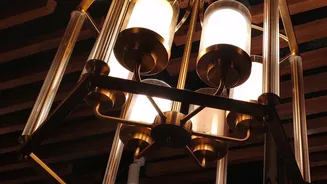
Texture is making a major comeback, adding warmth and depth to minimalist spaces. The materials of the moment are natural, tactile, and full of character. Fixtures made from plaster, ceramic, and stone like marble and travertine are increasingly popular, prized for their earthy, raw appeal. Alongside these are soft, diffusing materials like linen and ribbed or fluted glass, which create a warm, inviting glow instead of a harsh glare. There's also a strong emphasis on mixed materials, combining elements like wood with metal or stone with brass to create rich, layered compositions. This focus on artisanship means that subtle variations in hand-worked glass or stone are now seen as marks of quality and uniqueness.
Colour and Warmth Return
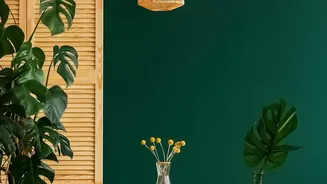
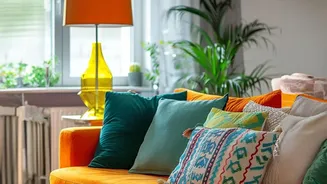
The era of cold, clinical lighting is over. The aesthetic for 2026 is all about warmth, driven by earthy colour palettes. Tones like terracotta, olive green, and rust are appearing in fixtures, often paired with warm metals like brass rather than cooler chrome or nickel. Coloured glass, especially in shades of blue, green, and amber, is another way designers are turning lamps into deliberate focal points. This move toward colour and warmth is part of a larger trend focused on 'emotional atmosphere', aiming to make our homes feel like sanctuaries that support well-being.
The Untethered Sculpture
Perhaps the most liberating development is the rise of the portable, rechargeable statement lamp. Technology has evolved to a point where beautiful, sculptural lamps are no longer tied to the nearest electrical socket. These cordless wonders can be placed on a bookshelf, a dining table, or a stack of books, functioning exactly like a small sculpture that also happens to glow. This flexibility allows homeowners to curate their space with even greater freedom, moving their 'art' to wherever it is needed most, further blurring the line between a decorative object and a functional fixture.