


The Ancient Spiritual Roots
Yoga's story begins more than 5,000 years ago in ancient India. Early evidence traces back to the Indus-Sarasvati civilization, where archaeological findings depict figures in meditative poses. The earliest written references are found in the Vedas, sacred
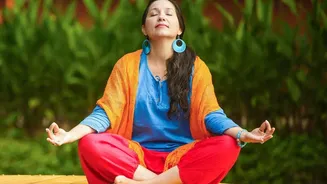
texts that emphasized rituals, breath control, and a connection to the divine. In these early days, yoga was not about physical fitness; it was a comprehensive spiritual practice aimed at uniting the mind, body, and soul to achieve a state of enlightenment. The word 'yoga' itself comes from the Sanskrit root 'yuj,' meaning 'to unite'.
Patanjali and the Codification of Yoga
A pivotal moment in yoga's history was the compilation of the Yoga Sutras by the sage Patanjali sometime between 500 BCE and 400 CE. This text systemized the practice and philosophy of yoga, providing a clear framework. Patanjali outlined the 'eight limbs of yoga,' a progressive path to purposeful living and spiritual liberation. These limbs include ethical principles (Yamas), personal observances (Niyamas), physical postures (Asana), breath control (Pranayama), sense withdrawal (Pratyahara), concentration (Dharana), meditation (Dhyana), and enlightenment (Samadhi). Notably, the physical postures, or asanas, were just one part of a much larger, holistic system designed to prepare the body for long periods of meditation.
The Journey to the Western World
For centuries, yoga was primarily a practice confined to the Indian subcontinent. Its introduction to the West is often credited to Swami Vivekananda, an Indian monk who captivated audiences at the 1893 Parliament of Religions in Chicago. Vivekananda spoke of yoga as a 'science of the mind' and focused on its philosophical aspects, particularly Raja Yoga, rather than the physical postures. His influential lectures sparked a deep interest in Eastern spirituality among Westerners and opened the door for other Indian gurus to share their knowledge.
Pioneers of Modern Postural Yoga
The 20th century saw a significant shift, with an increasing emphasis on the physical side of yoga. Tirumalai Krishnamacharya, often called the 'father of modern yoga,' was a key figure in this evolution. Though he never traveled abroad, his disciples—including B.K.S. Iyengar, Pattabhi Jois, and Indra Devi—were instrumental in popularizing postural yoga globally. Iyengar developed a method emphasizing precision and alignment, using props to make asanas accessible to everyone. Jois developed the dynamic and physically demanding style of Ashtanga yoga. These teachers adapted ancient practices for a modern, global audience, laying the groundwork for yoga as a form of physical exercise.
From Counter-Culture to Mainstream Craze
After a 1965 change in US immigration law allowed more Indian teachers to travel to the West, yoga's popularity surged. It was embraced by the 1960s counter-culture movement, which was drawn to its spiritual and anti-materialistic ethos. As its health benefits—such as increased flexibility, strength, and stress reduction—became more widely recognized, yoga began its slow march into the mainstream. Fitness centers and gyms started offering classes, and what was once a niche spiritual pursuit became a staple of the modern wellness movement.
The Billion-Dollar Global Lifestyle
Today, yoga is a massive global industry, with worldwide revenue estimated at over $80 billion. There are more than 300 million practitioners globally. The modern yoga lifestyle encompasses everything from yoga classes and teacher trainings to high-end yoga apparel, mats, and international retreats. This commercialization has made yoga more accessible than ever, but it has also sparked debates about authenticity and cultural appropriation. The transition from a deeply spiritual practice to a commercialized wellness product highlights the profound evolution of this ancient Indian wisdom in the modern world.