



The Rise of the 'Puff'
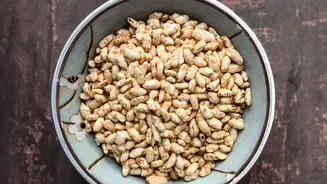
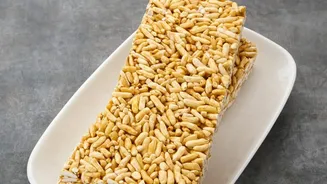
Puffed grains are everywhere, from breakfast cereals to granola bars and yogurt toppings. The process typically involves heating the grain or seed under high pressure, which causes it to expand and become light and airy. This method creates that signature
crispy texture without needing to be deep-fried, making puffed ingredients a popular base for snacks marketed as healthier alternatives. Their airy volume can also help with satiety, making you feel full with fewer calories compared to denser ingredients. While puffed rice is a long-standing staple, puffed quinoa has emerged as a premium alternative, often associated with a higher nutritional value.
Nutritional Face-Off: Protein and Fibre
When you compare them gram for gram, puffed quinoa has a clear nutritional advantage over puffed rice. Quinoa is a seed, not a grain, and is celebrated for being a complete protein, meaning it contains all nine essential amino acids. This translates to the puffed version as well. Puffed quinoa offers significantly more protein and fibre than puffed rice. For instance, a serving of puffed quinoa can provide around 4 grams of protein and 2.5 grams of fibre, whereas puffed rice often contains just 1 gram of protein and minimal fibre. This higher protein and fibre content makes puffed quinoa more effective at promoting fullness and providing sustained energy. Puffed rice, while much lower in calories, offers little in the way of these key macronutrients.
Beyond Macros: Micronutrients and Glycemic Index
Quinoa's superiority extends to its micronutrient profile. It is a good source of minerals like magnesium and iron, which are largely absent in puffed rice. Another important factor is the glycemic index (GI), which measures how quickly a food raises blood sugar levels. Puffed rice generally has a high GI, meaning it can cause a rapid spike and subsequent crash in energy. Cooked quinoa, by contrast, has a moderate GI of around 53, thanks to its protein and fibre content, which slow down digestion. This makes puffed quinoa a better option for maintaining stable blood sugar levels, an important consideration for sustained energy and overall health.
Texture, Taste, and Durability
When it comes to the eating experience, there are distinct differences. Puffed rice is famously light, airy, and has a very neutral flavour, making it a versatile, albeit less nutritious, base. However, its delicate structure means it can become soggy quickly when mixed into yogurt or milk. Puffed quinoa offers a heartier, nuttier flavour and a more robust crunch. Its smaller, denser structure helps it retain its texture better, making it an excellent crunchy topping for parfaits, salads, and smoothie bowls where it won't immediately soften.
The 'In Context' Problem
Here is where the 'context' in the headline becomes critical. While puffed quinoa is nutritionally superior on its own, its health benefits can be easily negated by how it's used in commercial snack bars and parfaits. Ingredients on a food label are listed by weight. If a 'healthy' quinoa puff bar lists sugar, glucose syrup, or high-fructose corn syrup as one of its first ingredients, you're likely consuming a candy bar in disguise. The nutritional halo of quinoa can be used to mask high levels of added sugars, unhealthy fats like palm oil, and other fillers. Always read the full nutrition panel. Compare the 'per 100g' values to get a true sense of a product's sugar and fat content, and check for a short, recognizable ingredient list.