






The Great Monsoon Misconception
One of the most persistent skincare myths is that sunscreen is only for bright, sunny days. During the Indian monsoon, when the sun is often hidden, many people skip this crucial step. The cool, damp weather creates a false sense of security. However,
what we can't see can still affect our skin. The threat isn't the visible light or the heat from the sun; it's the invisible ultraviolet (UV) radiation that is present year-round. Dermatologists consistently warn that skipping sunscreen during the monsoon is one of the biggest mistakes you can make for your skin's health. Even on the most overcast days, a significant amount of UV radiation penetrates the cloud cover and reaches your skin.
Not All Rays Are Created Equal
To understand why cloudy days are still a risk, we need to know the difference between the two main types of UV rays that reach us: UVA and UVB. Think of it this way: UVB rays are the 'burning' rays. They have a shorter wavelength and are the primary cause of sunburn. Clouds do block a good portion of these, which is why you're less likely to get a painful sunburn on a gloomy day. UVA rays, on the other hand, are the 'ageing' rays. They have a longer wavelength that allows them to penetrate clouds, haze, and even glass much more effectively. These rays travel deeper into the skin, where they break down collagen, leading to premature ageing, wrinkles, and hyperpigmentation. Up to 95% of the UV radiation reaching the Earth's surface is UVA, making it a constant, year-round concern.
Do Clouds Offer Real Protection?
While thick, heavy clouds can reduce UV radiation, they are not a foolproof shield. Studies show that up to 80% of UV rays can still pass through cloud cover. In some conditions, such as with scattered clouds, the UV intensity can even be higher than on a perfectly clear day due to a phenomenon called the 'broken-cloud effect', where rays are reflected and scattered, amplifying your exposure. Furthermore, wet surfaces like rain-slicked roads and puddles can reflect UV rays, increasing the amount that hits your skin. This is why relying on the sky as your guide is misleading. The UV Index, a measure of UV intensity, can remain in the moderate to high range in India even during the monsoon.
Choosing Your Monsoon Shield Wisely
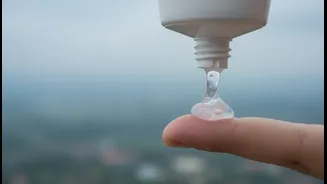
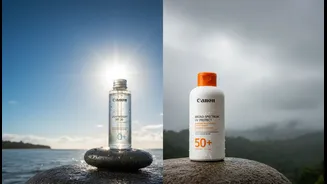
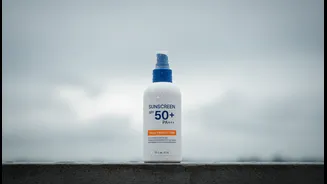
The conversation around monsoon sunscreen shouldn't be about whether you need it, but which kind is best for the humid, sticky conditions. The marketing hype around ever-higher SPF numbers can be confusing. While important, SPF primarily measures protection against UVB (burning) rays. For the Indian climate, where pigmentation and photo-ageing are major concerns, protection against UVA is just as critical. Look for the term 'Broad-Spectrum' on the label, which means it protects against both UVA and UVB. Also, check for a PA rating, ideally 'PA++++', which indicates the highest level of UVA protection. For the humid monsoon weather, dermatologists recommend lightweight gel-based or fluid sunscreens that are 'non-comedogenic' (won't clog pores). These formulas feel more comfortable on the skin and are less likely to feel greasy or cause breakouts.